
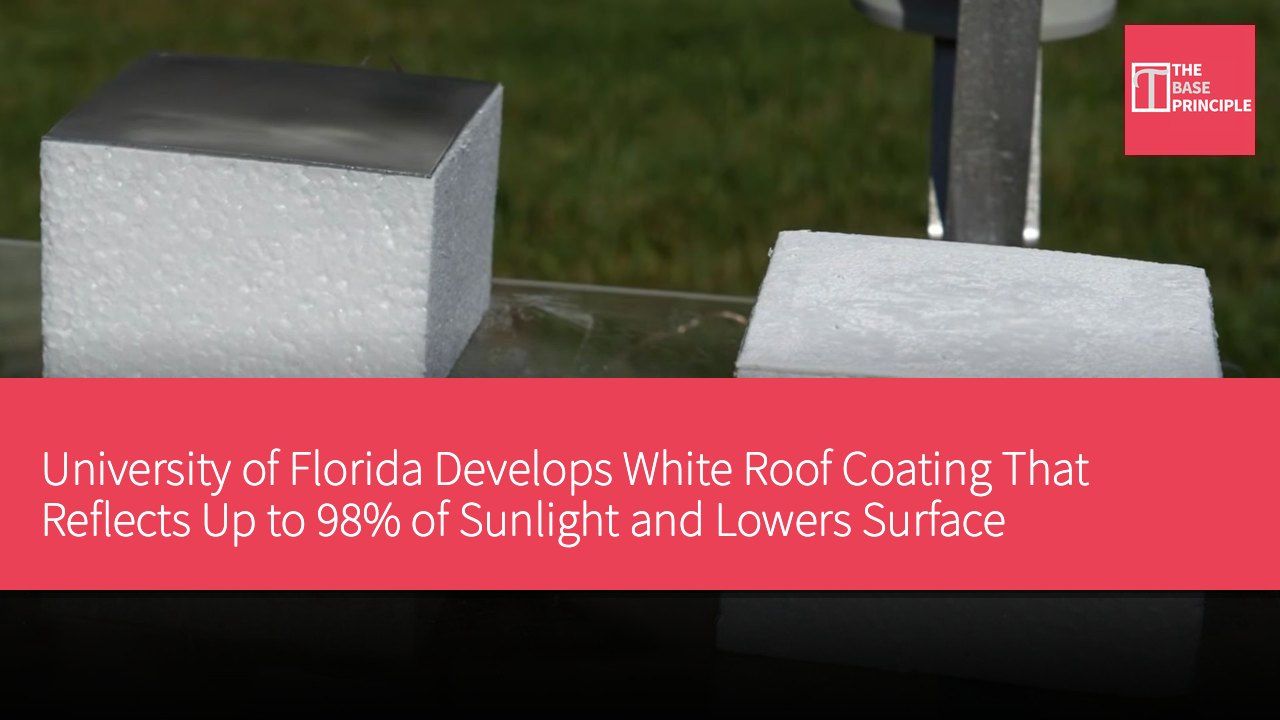
- The white roof coating developed by the University of Florida can reflect up to 98% of sunlight.
- The coating can reduce building energy costs by an estimated 50%.
- The coating manages heat by reflecting sunlight and releasing heat.
- The team is working to commercialize the coating and has filed a patent application.
A white roof coating developed by the University of Florida maintained the test surface temperature below the surrounding air temperature during a 28-day outdoor test in Tampa. This coating, created by a team led by distinguished professor Yogi Goswami, can reflect up to 98% of sunlight and releases heat at wavelengths that penetrate the Earth's atmosphere. Researchers designed this coating to reduce heat entering buildings through the roof, potentially lowering the energy required for air conditioning. Goswami noted that rising temperatures and increasing demand for cooling have driven this work.
The Tampa tests measured surface temperatures, while the potential savings in building energy costs remain an estimate. Goswami anticipates that this coating could reduce energy costs for buildings by up to 50%.
Heat Management Mechanism of the Coating
The coating manages heat in two ways. First, it reflects most of the incoming sunlight, limiting the solar energy absorbed by the surface. Second, it releases heat in the form of infrared radiation. Researchers designed the coating to emit radiation at specific wavelengths through a relatively transparent atmospheric window. This window allows some heat to escape into space. When the heat lost from the coating's surface exceeds the heat gained from sunlight and the surrounding environment, its temperature can even drop below that of the surrounding air, even during the day. Goswami's team developed the coating using natural materials at the university's TECO Clean Energy Research Center.
The team prepared three samples, each covered with aluminum foil on thermal insulation material. One sample was coated with the experimental paint, another with a commercial cool roof paint, and the third was left uncoated. Thermometers attached to each sample recorded temperatures from 10 AM to 5 PM during the 28-day testing period. The test surface of the experimental coating consistently remained below the ambient air temperature. The commercial paint provided the team with a benchmark to compare the performance of the new formulation against an existing product designed to limit heat absorption.
The outdoor comparisons allowed researchers to observe the samples under varying daytime conditions.
Commercialization Progress and Challenges
Goswami stated, "Previous external studies tested the coating only in controlled indoor environments, which are not the conditions needed for cooling. Our coating has proven effective in the field, and now that we have succeeded, we are working to commercialize it." The team has submitted a provisional patent application and is developing a transparent protective layer to help the coating withstand the elements. The challenge lies in maintaining its ability to reflect sunlight and release heat while providing protective coating. Goswami expects commercial buildings to be among the first to use the coating, followed possibly by residential applications.
The outdoor trials tested the coating samples, not a complete roof. The next question is how much cooling energy the coating can save in an existing building, as insulation, local weather, and air conditioning usage will all affect the results. This will determine how much the reduction in surface temperature can translate into lower energy costs.
Potential Impact of the New Roof Coating
The development of this white roof coating is significant for addressing climate change and reducing building energy consumption. As global temperatures rise, the demand for high-performance building materials is increasing. This coating not only effectively lowers the surface temperature of buildings but also helps reduce the burden on air conditioning systems, thereby lowering energy costs. Successful commercialization will enable its widespread adoption in the construction industry, further promoting sustainability and the use of environmentally friendly building materials.