
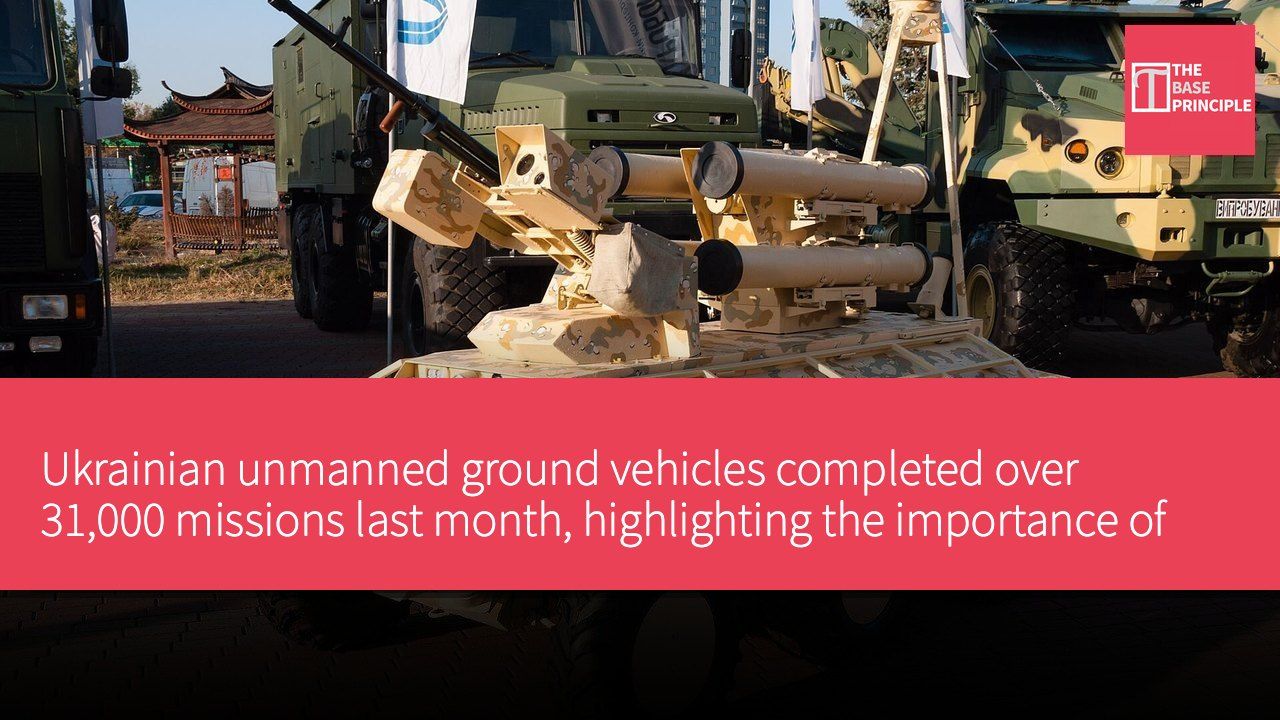
- Ukraine completed over 31,000 missions using unmanned ground vehicles last month, showcasing their technological significance.
- UGVs can reduce risks to frontline personnel and perform a variety of tasks.
- The concept of the "kill zone" has significantly increased the use of unmanned vehicles.
- Ukraine's electronic points system is linked to performance, potentially affecting the prioritization of military operations.
According to the Ukrainian Ministry of Defense, the country's armed forces completed a record 31,398 missions using unmanned ground vehicles (UGVs) last month. This data was recorded through the country's Delta situational awareness software. These figures demonstrate the significance of such technology in modern warfare. The total number of UGV missions in October was more than four times the 7,511 missions recorded in January, representing an increase of approximately 318%. This also means that the average daily robotic missions exceeded 1,000 throughout the month. This growth indicates that UGVs have evolved from a primarily experimental technology to a cornerstone of Ukraine's defense, and it shows that UGVs are increasingly being used for tasks traditionally performed by soldiers.
The Ministry of Defense stated: "UGVs are a technology that can reduce risks to frontline personnel."
Diverse Functions of Unmanned Ground Vehicles
The importance of UGVs is continuously rising. UGVs are remotely operated ground robotic platforms available in various configurations, including small wheeled or tracked platforms capable of transporting ammunition, food, water, and medical supplies. Some are used for evacuating injured soldiers, while others are equipped with weapons, perform mine-clearing tasks, or launch aerial drones. Most importantly, they can operate in areas where deploying traditional vehicles and their crews would be extremely dangerous. So why has their usage seen such a dramatic increase? The main concept is the "kill zone." In the past, militaries typically positioned logistical equipment, personnel, and vehicles close to the front lines, but the proliferation of inexpensive first-person view (FPV) aerial drones has made this practice exceedingly dangerous.
The kill zone is the area where logistical needs overlap with the attack range of FPVs. To address this challenge, Ukraine can deploy relatively small unmanned vehicles that can still deliver supplies without exposing drivers to attacks. This does not mean that the robots are invulnerable, but it does shift many immediate risks from humans to replaceable equipment.
Impact of the Electronic Points System
Regarding the country's "electronic points system," this is also an interesting element of the story. This system essentially provides verified operational points to military units, which can be redeemed for more drones, electronic warfare (EW) systems, or other military equipment. It is, in effect, a performance-linked procurement mechanism. Units do not have to rely entirely on traditional top-down equipment distribution; instead, they can earn purchasing rights by completing verified missions. This seems like a reasonable system, but it may inadvertently encourage misconduct among Ukrainian units. For instance, it could incentivize units to optimize activities that yield the most points rather than actions that address frontline needs and the actual requirements of Ukraine's defense.
Currently, it remains unclear, but understanding how important UGVs are becoming will be quite interesting.
The Role of Unmanned Ground Vehicles in Modern Warfare
Unmanned ground vehicles (UGVs) are becoming increasingly important in modern warfare, particularly on the battlefield in Ukraine. With advancements in technology, UGVs can not only perform transportation tasks but also engage in mine-clearing and weapon deployment, making their application in high-risk areas more common. The concept of the kill zone further emphasizes this need, as they effectively reduce the risk of personnel exposure to attacks. While the electronic points system offers an innovative resource allocation method, it may also lead to a misalignment of military operations' priorities away from actual needs, which requires further attention and adjustment.