
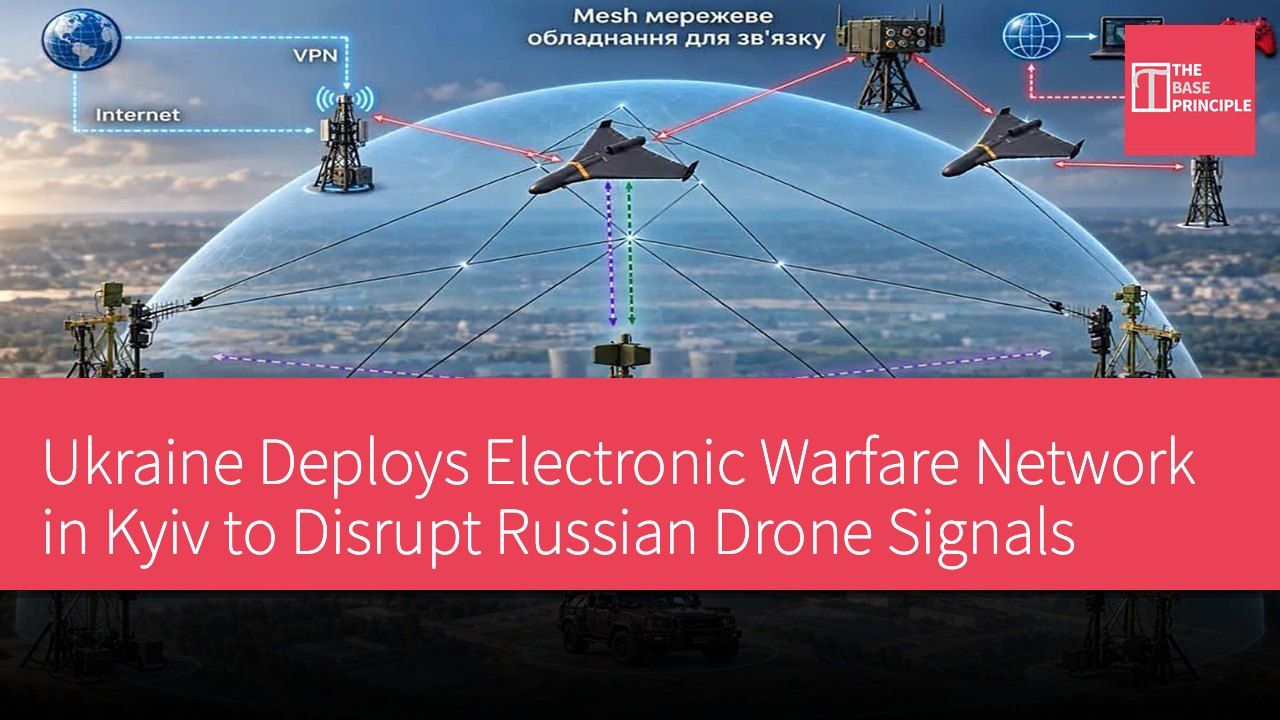
- Ukraine has deployed an electronic warfare network in Kyiv to disrupt Russian drone signals.
- The network covers hundreds of locations and needs to be completed within weeks.
- Claims mentioned in the reports have not been independently verified.
- Ukrainian companies are developing intercept drones aimed at Russian drones.
Ukraine has installed a citywide electronic warfare network in Kyiv to interfere with the radio connections used by Russian operators to control the Shahed jet attack drones, according to presidential advisor Serhii Flash. Ukrainian media outlet Militarnyi reported on the project, citing the advisor's social media posts. Electronic warfare involves using equipment to prevent or disrupt enemy radio signals. Flash, a radio technology expert, stated that Russian operators control certain Shahed drones launched from within Russia via radio modems mounted on the drones.
The so-called protective shield aims to disrupt that signal. This work covers hundreds of locations and needs to be completed within weeks, Flash stated, adding that it forces the Russians to pause and upgrade their Shahed drones. These claims come from a single official source, and Militarnyi has not released any independent verification.
How the Electronic Warfare Network Works
What is a MESH network? In traditional networks, most connections go through a central point, such as a router or server. If that central point fails, the network can become incapacitated. A MESH network has no such single point of failure. Its nodes, or individual devices, connect directly to each other or through intermediary devices, with one possibly connecting to the broader internet, according to Militarnyi. The network dynamically selects the most efficient path for data at any given moment. If one route goes down, traffic will shift to another route.
In the case of the Shahed, reports indicate that Russian operators send commands to the drone's modem via radio. Flash mentioned in his original post that these operations are "large-scale and ambitious," and antennas and equipment must be installed at hundreds of locations throughout the city. Militarnyi reported that all major electronic warfare equipment manufacturers are working diligently to produce and install these devices.
However, these claims have not been verified. The report is based on a single advisor's social media post, and Militarnyi did not report how many jammers have been installed or how many drones have been disrupted, nor did it cite any independent measurement data. Flash's assertion that the Russians have paused Shahed drone attacks to upgrade their drones has not been confirmed. Even if there is a pause, it does not mean that the overall volume of Russian attacks has decreased. His own description of the Russian upgrades suggests that any advantage may be temporary. Jamming is just one layer of drone defense.
Ukraine's Drone Defense Measures
According to Militarnyi, Ukrainian company F-Drones is developing the F-Jet 80, a jet interceptor drone designed to counter Russian jet strike drones. Flash stated that the Russians have sought other solutions, but the report did not specify what those solutions are or whether they are effective. The report also did not provide a timeline for further work on the Kyiv system. With changes in Russian drones, it remains unclear whether jamming will still be effective. Flash indicated that the General Staff, the Ministry of Defense, and other agencies are involved in the project, but the report did not provide any external assessment of the electronic warfare system.
The Impact of Electronic Warfare on Drone Warfare
The electronic warfare network deployed by Ukraine in Kyiv aims to disrupt Russian drone operations, highlighting the importance of electronic warfare in modern conflict. As drone technology advances, jamming drone signals has become one of the defensive strategies. Although current reports lack independent verification, this action may force the Russians to adjust their drone strategies and seek new solutions. In the future, as both sides' technologies evolve, the effectiveness of electronic warfare will continue to be challenged, affecting the balance of power on the battlefield.