
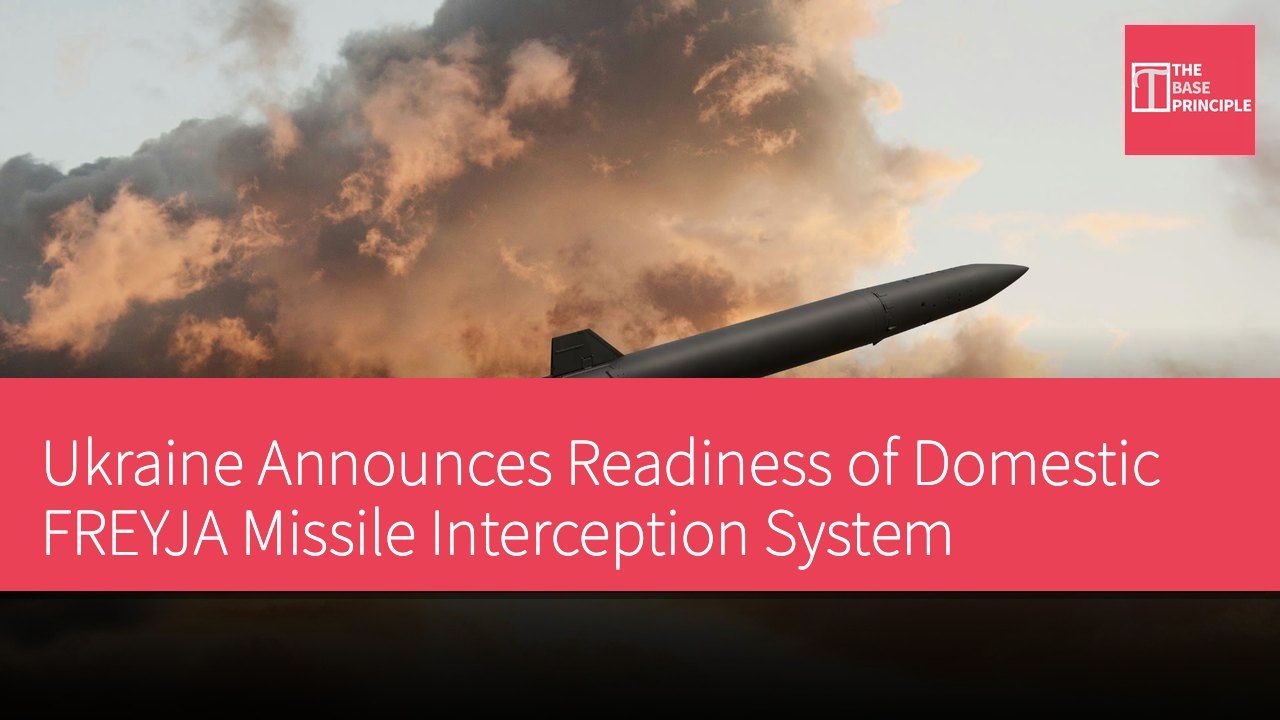
- The FREYJA missile interception system developed by Ukraine is ready.
- The core of the FREYJA system is the FP-7 X interceptor missile, capable of reaching speeds of Mach 6.5.
- The system aims to reduce Europe's dependence on U.S. military technology and lower costs.
- Ukraine hopes to become an internationally recognized weapons developer, changing its reliance on the West.
Ukrainian President Volodymyr Zelensky announced that the domestically developed FREYJA missile interceptor and launcher are now ready. The project was developed in collaboration with European partners, with Ukraine's Fire Point leading the initiative. The plan primarily aims to provide an alternative to the U.S. Patriot system. In this initiative, Ukraine is responsible for manufacturing the missiles, while European partners supply the necessary advanced electronics, such as radar. The main goal of the system is to intercept and destroy ballistic missiles, such as Russia's Iskander-M.
This is a challenging task, especially compared to intercepting drones or conventional cruise missiles. Ballistic missiles can travel at several times the speed of sound, leaving defenders with little time to detect, calculate their trajectory, and launch interceptors to destroy incoming missiles.
Technical Challenges of the FREYJA System
However, this is precisely the task faced by the FREYJA project members. As of November 13, Ukraine has fulfilled its agreements, preparing the missiles and launchers. Denmark has also reported the completion of the system's radar components. This is good news for the project, but it does not mean the system is ready for deployment. The core of the system is the FP-7 X interceptor missile, developed domestically in Ukraine. According to Fire Point, this missile is designed to reach speeds of Mach 6.5 and can intercept ballistic threats at altitudes between 12.4 miles (20 kilometers) and 15.5 miles (25 kilometers).
The expected operational range of the interceptor is about 50 miles (80 kilometers). Initially, a blast fragmentation warhead will be used, although future versions may employ direct hit capabilities for destruction.
Why the FREYJA System is Needed
Once fully operational, the project is expected to produce approximately 2,000 missiles annually. This sounds promising, but why is this system necessary? There are three main reasons. First, Europe aims to reduce its dependence on U.S. military technology, such as the Patriot system. These systems are expensive, difficult to manufacture quickly, and available in limited quantities. The rationale is that if Europe can produce equivalent protection faster and cheaper, it would yield significant benefits. Secondly, there is a cost issue; Fire Point estimates each missile will cost around $1 million, while the Patriot PAC-3 MSE interceptor costs approximately $4 million to $5 million.
The third reason is that Ukraine is eager to become an internationally recognized weapons developer, rather than just a consumer. If successful, this would mark a significant shift in Ukraine's historical dependence on Western allies for defense. Despite significant progress, the system is still a considerable distance from actual deployment. Enabling the interceptor to accurately locate and hit missiles traveling at speeds of Mach 5 or 6 will require precise target acquisition, tracking, and real-time updates to the guidance system calculations. Even minor errors could lead to complete misses. Looking ahead, the integration and testing of the overall system remain major obstacles.
Fire Point previously indicated that it hopes to conduct the first ballistic missile interception test of the system around July 2027.
Strategic Significance of the FREYJA System for Ukraine
The development of the FREYJA system is not only a technical challenge but also an important step for Ukraine in repositioning itself on the international military stage. As the global security environment shifts, Ukraine aims to reduce its reliance on traditional allies and enhance its defense capabilities. The success of this system will contribute to Ukraine achieving breakthroughs in defense autonomy and may alter the extent of Europe's dependence on U.S. military technology. Despite facing multiple challenges, the development of FREYJA signifies Ukraine's progress in weapons manufacturing, with future tests and actual deployment being crucial.