
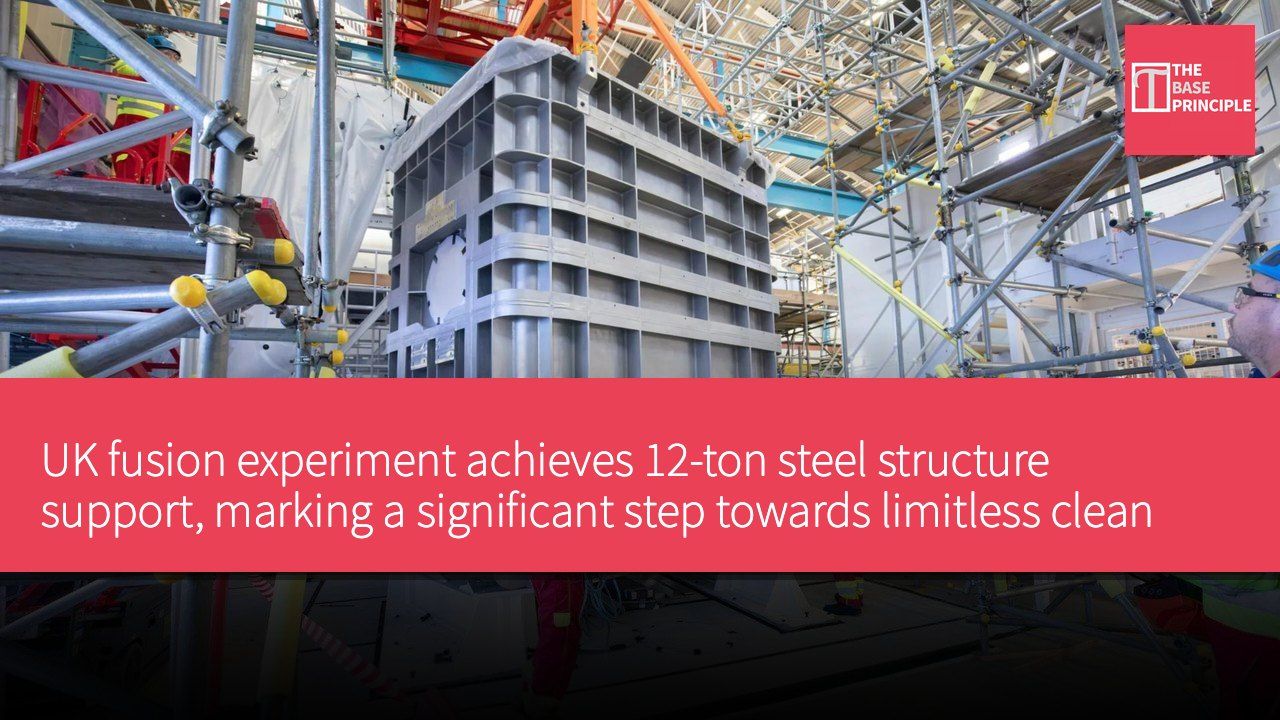
- 12-ton steel structure installed in Oxfordshire marks fusion experiment milestone.
- The dual beam box will increase neutral beam heating power to 8.8 megawatts.
- The new system will provide extreme conditions to test the fusion reactor.
- Engineers expect to complete internal equipment installation by 2027.
Engineers in Oxfordshire, UK, have installed a 12-ton (approximately 13-ton) steel structure, marking a critical engineering milestone for the country's first fusion experiment and paving the way for the realization of limitless clean energy. This component, known as the dual beam box, has been installed at the UK Atomic Energy Authority (UKAEA) facility at Culham Campus as a significant upgrade to the MAST upgrade facility, a compact spherical fusion device designed to test reactor physics. The new dual beam box will house two neutral beam injectors, which can inject high-energy neutral atoms directly into the superheated gas or plasma.
This bombardment heats the fuel to the extreme temperatures required for commercial fusion.
Dual Beam Box Enhances Heating Power
Once completed, this dual-layer system will increase the machine's neutral beam heating power from 4.4 megawatts to 8.8 megawatts, with the core plasma temperature expected to soar from 30 million degrees Celsius to around 60 million degrees Celsius. Achieving such high temperatures is crucial for the UK's long-term fusion goals, as the extreme environment will provide researchers with an ideal testing platform to evaluate STEP (Spherical Tokamak for Energy Production), a commercial prototype plant planned for construction in Nottinghamshire. Andrew Thornton, who oversees the MAST upgrade operations, stated that the successful lifting operation represents a significant step forward for the facility.
He noted that doubling the power allows the team to explore extreme conditions that were previously inaccessible.
Material Selection and Technical Challenges
These experiments will test whether the reactor's exhaust system can withstand the challenges posed by such high-performance plasma without degrading. Building this hardware requires specialized metallurgical techniques. The container is made from 316L stainless steel, an alloy trusted for its strength and corrosion resistance in medical implants and offshore platforms. Since fusion reactors must recreate the vacuum of outer space, this steel also maintains ultra-high vacuum and minimizes gas outgassing and leakage. When the entire container is assembled with its top lid, it will weigh approximately 15 tons (about 16.5 tons) and enclose around 20 cubic meters of space.
The lifting operation is part of the ongoing transformation of the Culham site. Technicians are currently installing an electron Bernstein wave microwave system to inject additional heat into the plasma core. Nearby teams are repurposing surplus electrical equipment from the decommissioned Joint European Torus (JET) reactor, which closed in 2023. Further work includes constructing positive ion injectors and installing internal cryopumps to maintain high vacuum within the dual beam box. This engineering work follows scientific successes earlier this year. In August, MAST upgrade operators completed the facility's fifth experimental campaign, executing over 1,100 plasma pulses and achieving record plasma pressure without instability.
Preventing unstable plasma from tearing apart is one of the most challenging puzzles facing fusion. Engineers expect to install all remaining internal equipment by the end of autumn 2027. Once the container is sealed and undergoes vacuum testing, the next phase of scientific experiments will begin in 2028.
Key Advances in Fusion Energy Research
The UK has made significant strides in fusion energy research by installing a 12-ton steel structure to enhance the performance of its experimental facilities. This new system will not only increase neutral beam heating power but also create extreme testing environments that are crucial for future commercial fusion reactors. As technology advances, the challenges faced by engineers are also increasing, particularly in maintaining high vacuum and selecting materials that can withstand high temperatures. These efforts not only advance scientific research but may also pave the way for future clean energy solutions.