
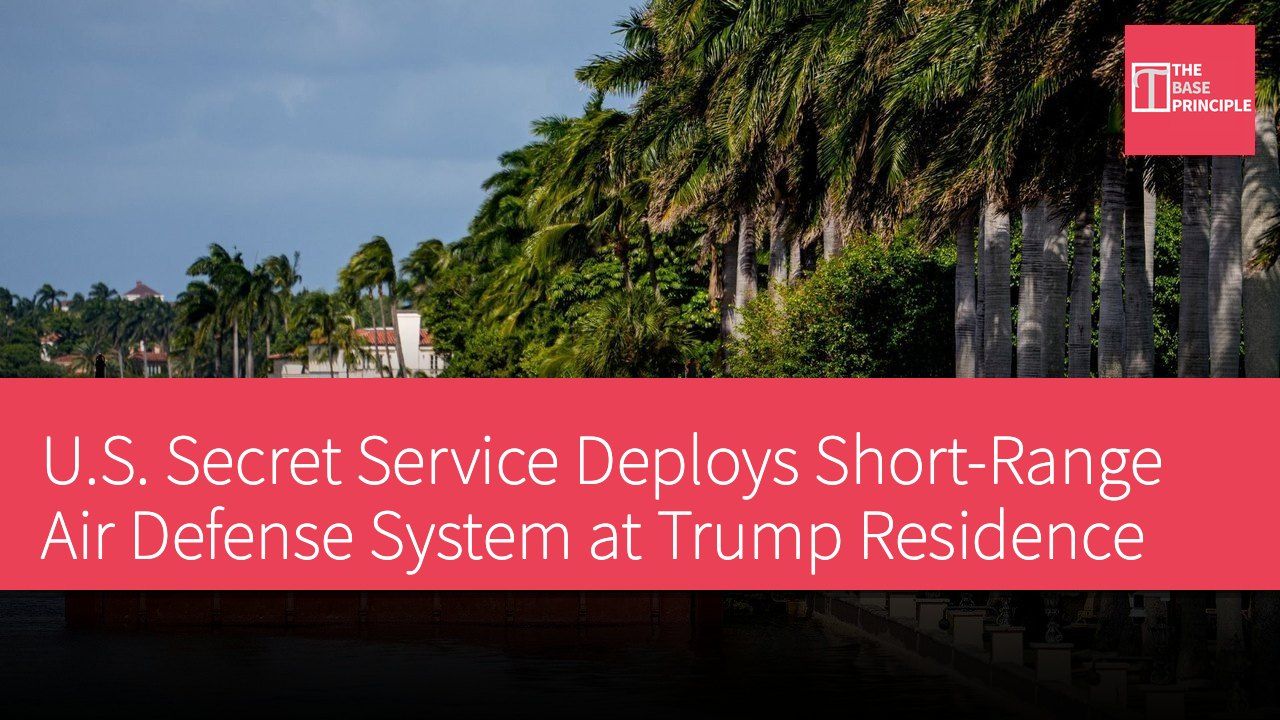
- The U.S. Secret Service has deployed a short-range air defense system near Trump's residence to enhance security.
- The Avenger system is capable of launching FIM-92 Stinger missiles and operates in all weather conditions.
- This system provides immediate protection against various aerial threats, including drones.
- North American Aerospace Defense Command has also deployed anti-drone systems to support the Secret Service.
Amid growing concerns for the safety of U.S. President Donald J. Trump, the U.S. Secret Service has deployed the AN/TWQ-1 Avenger short-range air defense system (SHORADS) near Mar-a-Lago in Palm Beach, Florida. These systems, manufactured by Boeing, are mounted on 4X4 military trucks used by the U.S. Army, specifically the High Mobility Multipurpose Wheeled Vehicle (HMMWV), commonly known as Humvee. A similar system has also been installed approximately three miles west of Donald J. Trump International Airport.
The Avenger mobile missile system features a 360-degree rotating turret and is equipped with two missile launchers mounted on the heavy chassis of the Humvee, capable of firing FIM-92 Stinger missiles. Each launcher can hold four of these guided surface-to-air missiles and operates day and night in various weather conditions. Operators are responsible for protecting the Avenger and operating the launchers from a firing station located between the two missile launchers. The team can also operate the weapon system from several meters away using a remote control unit.
Features of the Avenger System
As operational demands change, the highly mobile Avenger system can be redeployed to counter incoming aerial threats, providing air defense for maneuvering forces. The upgraded missile system offers immediate protection for ground troops and homeland security operations against aerial threats, including drones. These infrared-guided weapons were initially designed to counter helicopters, aircraft, cruise missiles, and larger drones, capable of intercepting aerial targets at low altitudes and focusing on protecting specific locations rather than defending entire areas.
According to photos shared on online platforms, two such Avenger systems have been deployed near Trump International Airport. In addition to the Avenger missile system, North American Aerospace Defense Command (NORAD) has reportedly deployed anti-drone systems to support the Secret Service. These rapidly deployable anti-drone kits assist in identifying, classifying, and tracking drones, and can utilize passive and active sensor systems, such as electro-optical and infrared cameras or Ku-band radar, to address detected drone threats.
Deployment of Anti-Drone Systems
The Pulsar electronic warfare system component can use radio frequency signals to detect and disrupt enemy drones, relying on jamming the global positioning system (GPS) signals of the enemy drones to neutralize or spoof them. However, if jamming fails, these kits can call upon kinetic interceptors or other defeat mechanisms. Earlier this week, the U.S. military tested rapidly deployable anti-drone systems and conducted training on Trust Automation's Rapidly Deployable Small Unmanned Aerial Defense System (RD-SUADS), a portable anti-drone system.
RD-SUADS is an air-transportable member of Trust Automation's small unmanned aerial defense system series, designed to detect, track, identify, and defeat small drones at bases and deployment locations. The company designed this system for quick transport and installation without relying on local power sources.
Significance of Air Defense Measures at Trump's Residence
The deployment of a short-range air defense system by the U.S. Secret Service near Trump's residence reflects a heightened emphasis on high-level security. With the rise of new threats such as drones, traditional defense measures have become inadequate, prompting the introduction of the Avenger system to enhance protective capabilities. This consideration extends beyond Trump's personal safety, indicating a strategic adjustment by the U.S. in addressing aerial threats. The deployment of anti-drone systems further strengthens this defensive network, showcasing collaboration between the military and the Secret Service in protecting key individuals and facilities.