
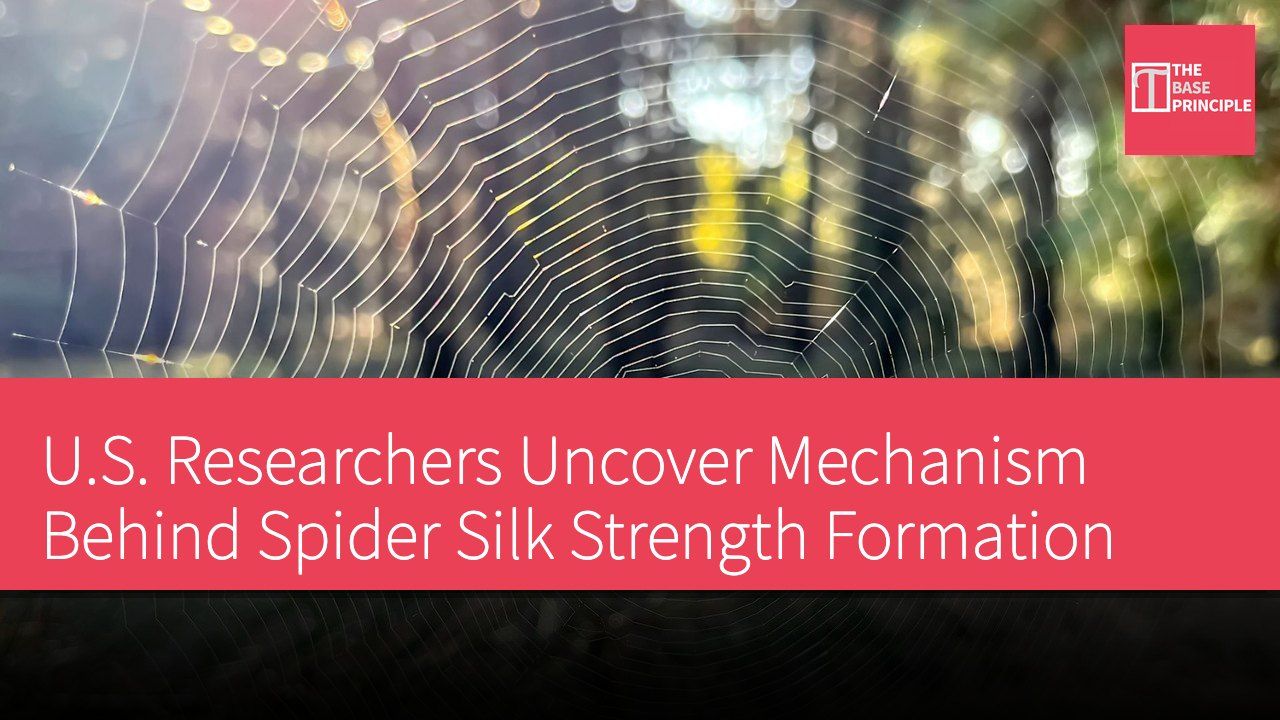
- Spider silk can achieve a tensile strength of up to 150 Newtons per square millimeter, comparable to steel.
- Researchers are seeking methods for artificially producing spider silk to overcome yield limitations.
- Researchers at the Swedish University of Agricultural Sciences have demonstrated more efficient protein production.
- The team is exploring medical applications of spider silk and conducting related tests.
Spider silk can withstand a tensile strength of up to 150 Newtons per square millimeter before breaking. Researchers are exploring methods for artificially producing spider silk, as the amount produced by each spider is relatively small. The key challenge lies in converting the liquid silk proteins from the spider's specialized glands into actual fibers.
Spider silk is a biological material produced by these arachnids, primarily existing in the form of filamentous fibers, characterized by high elasticity and strength comparable to steel. The interesting aspect of this silk is that it exists in various forms, each with its specific uses. While fine threads are the most common form used by spiders to weave webs, these animals also utilize several other forms, such as for capturing prey, protecting eggs, or serving as safety lines.
Among its many properties, the tensile strength of spider silk is particularly remarkable, reaching up to 15 gigapascals (GPa), which means it can withstand a tensile force of 150 Newtons per square millimeter, comparable to high-grade steel. Due to its tensile strength, toughness, lightweight nature, and biodegradability, spider silk holds potential applications in the textile industry.
Challenges in Artificial Production of Spider Silk
Due to the relatively small amount of silk produced by each spider and the inability to farm them on a large scale like silkworms, as they are cannibalistic, researchers are seeking methods for artificially producing spider silk. Professor Sarah Stellwagen of the University of North Carolina (UNC) noted in an interview that the challenge lies in converting the liquid silk proteins from the spider's specialized glands into actual fibers. “Researchers have created large amounts of protein mixtures, as spiders do, but unlike spiders, they have not yet been able to spin these proteins into solid threads on a publicly available scale.”
Professor Stellwagen is an assistant professor in the Department of Biological Sciences at UNC Charlotte.
The Production Process of Spider Silk
Spiders achieve this process by passing liquid from their glands through narrow ducts, altering its chemical environment and assembling it into a tightly packed structure known as a β-sheet. The fibers are then expelled in solid form from their spinnerets. However, research has also made some progress. Researchers at the Swedish University of Agricultural Sciences (SLU) have shown that proteins can be produced in larger and more efficient ways, which also helps reduce production costs. Researchers Anna Rising and Benjamin Schmuck previously received a €200,000 grant from the H&M Foundation and are currently working on producing fibers and yarn from proteins for textile testing.
The team is also exploring the medical applications of these fibers. Professor Rising stated, “This grant (funding and support program) gives us the opportunity to take the next step: to conduct more experiments, improve the production process, and produce enough material to test yarns and textiles.” Early research from King’s College London and California State University, San Diego, has decoded the “molecular tags” that make spider silk stronger than steel and tougher than Kevlar.
Future Potential of Artificial Spider Silk Production
Spider silk has garnered widespread attention for its superior strength and toughness, particularly for potential applications in textiles and medicine. As researchers work to overcome the challenges of low spider silk yields, the development of artificial production technologies could transform relevant industries. Through improved protein production and textile testing, large-scale production is anticipated in the future, paving the way for the commercialization of biobased materials and providing new options for environmentally friendly materials.