
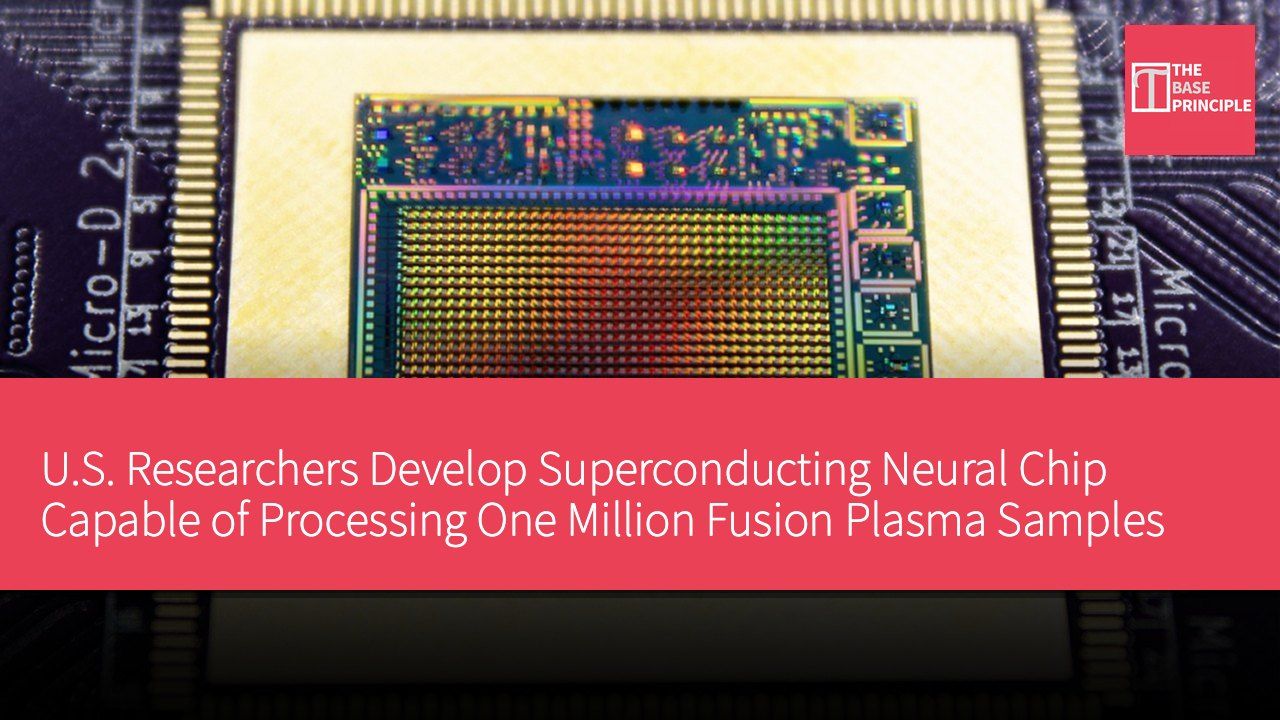
- Scientists have developed a superconducting neural chip that can process approximately one million samples per second.
- The chip can simulate human neural networks, improving monitoring and control of fusion reactors.
- Experiments show the chip can effectively detect plasma anomalies and predict instabilities.
- The chip may find applications in quantum computing and cybersecurity in the future.
Scientists in New York have created a groundbreaking superconducting neural chip that reportedly can process approximately one million fusion plasma samples per second. This new Super Intelligence (SI) computer chip was designed by researchers at the U.S. Department of Energy's Brookhaven National Laboratory (BNL). The project collaborates with the Princeton Plasma Physics Laboratory (PPPL), the DIII-D National Fusion Facility, and the Colorado-based tech company Great Sky.
Functionality of the Superconducting Neural Chip
BNL notes that the chip relies on superconducting circuits to simulate human neural networks, potentially improving the way fusion reactors monitor and control hot plasmas. Laboratory tests indicate that the chip can detect anomalous plasma behavior and predict instabilities. Richard Buttery, director of DIII-D, stated, "It is truly remarkable to see the team using this groundbreaking chip to process our tokamak data." The team believes this technology can support faster and more reliable fusion reactor control systems.
Fusion reactors utilize magnetic fields to confine hot plasma at extreme temperatures ranging from 100 to 150 degrees Celsius (180 to 270 degrees Fahrenheit), approximately ten times hotter than the core of the sun. However, plasma conditions can change rapidly, making real-time monitoring crucial for maintaining stability. This requires computers capable of processing vast amounts of data almost instantaneously, but traditional silicon-based computing systems struggle to handle such large data volumes quickly. This innovative superconducting neural chip can process signals at extremely high speeds and uses superconducting circuit arrangements to simulate the connections present in the human brain.
To conduct tests, scientists collected data from the DIII-D tokamak fusion research facility in California, with two tests assessing the chip's ability to identify anomalous plasma activity and predict disturbances. Data was collected at a rate of one million samples per second, and the chip successfully managed this speed.
Shinjae Yoo, director of the CDS AI department and the principal investigator of the project, stated, "This is a powerful new platform for implementing many of the SI algorithms developed by our Brookhaven Laboratory team." Additionally, a third experiment conducted by the team involved simulated plasma data generated by TORAX, a differentiable tokamak core transport simulator developed by Google DeepMind's fusion team. During the experiment, the chip analyzed signals to predict the occurrence of sawtooth instabilities, which involve rapid changes in plasma conditions.
Potential Applications of the Chip
The results indicate that superconducting neural networks could support real-time plasma monitoring and stabilization. Steven Cowley, director of PPPL, emphasized the importance of creating faster control systems for fusion reactors. He added, "We are building fusion machines for the SI era, and this chip directly acquires data from the tokamak at millions of samples per second while maintaining speed."
Great Sky stated that this device is its largest superconducting neural chip to date. Similar chips may find applications in quantum computing, cybersecurity, and high-speed X-ray data analysis. Currently, the team is developing a new chip that is ten times the scale of existing designs, with plans to showcase the hardware at BNL in early 2027, followed by testing at the DIII-D tokamak later that year. Jeff Shainline, founder and CEO of Great Sky, remarked in a press release, "This is just the beginning; the design of this AI hardware holds tremendous potential for applications in fusion and other cutting-edge technologies."
Impact of the Superconducting Neural Chip on Fusion Technology
The development of the superconducting neural chip marks a significant advancement in fusion technology, as it can process large amounts of data at extremely high speeds, which is crucial for maintaining plasma stability. As fusion reactor technology continues to evolve, the demand for real-time monitoring and control systems is increasing. The successful application of this chip could not only enhance current fusion research but also drive advancements in other high-tech fields, demonstrating its potential for future technological applications.