
- China is rapidly expanding its nuclear submarine fleet, facing increasingly severe underwater challenges.
- The Type 093B submarine (also known as the Shang III) has seen significant improvements in acoustic stealth and missile launch capabilities.
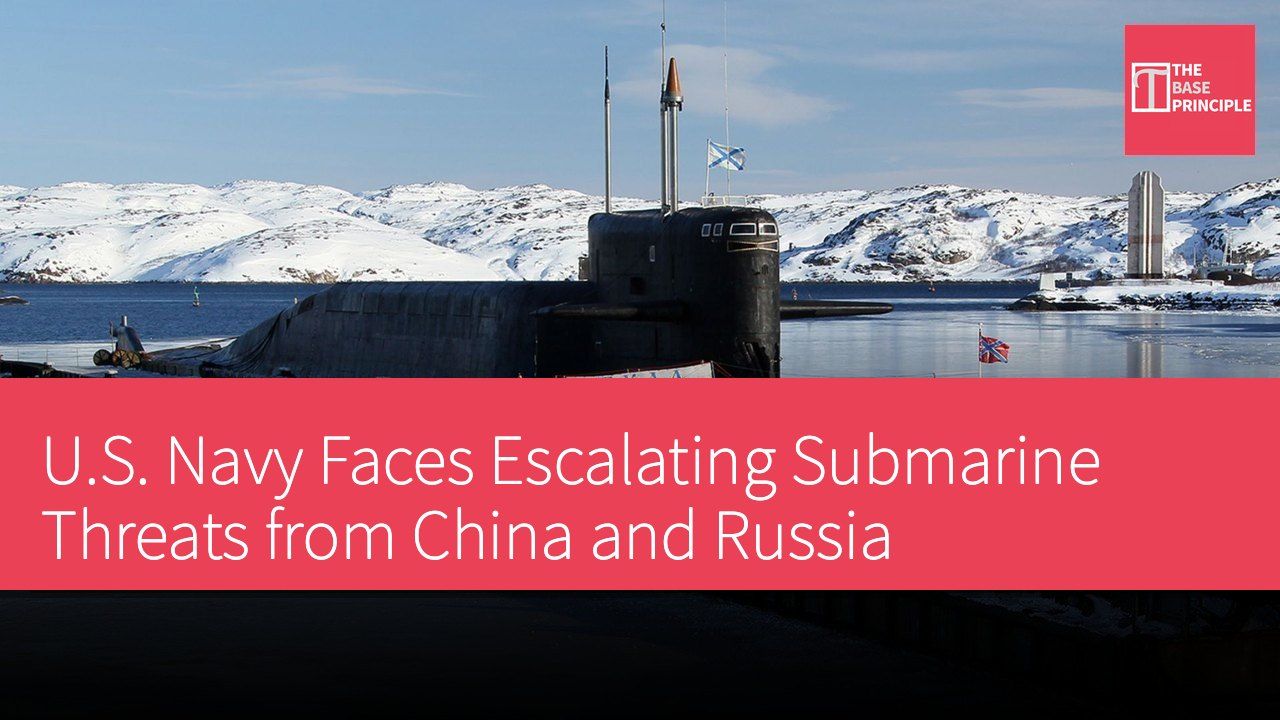
- Russia's Borei-class submarines pose a significant threat to the U.S. Navy.
- The operational capabilities of North Korea's submarine program have yet to be independently verified.
The U.S. Navy is facing increasingly severe underwater challenges as China rapidly expands its nuclear submarine fleet, while Russia continues to invest in advanced underwater weapons and strategic missile submarines. Rear Admiral Chris Cavana, commander of the U.S. Pacific Fleet's submarine forces, highlighted this growing threat at the Navy Submarine League's 2026 annual conference. His assessment underscored the increasing number of adversary submarines, as well as improvements in their capabilities, support infrastructure, and underwater surveillance networks.
According to a report by Navy Times, the People's Liberation Army Navy has commissioned eight Type 093B (Shang III) nuclear attack submarines in less than four years. Cavana indicated that U.S. assessments suggest Chinese shipyards could maintain a similar production rate for at least the next decade, potentially adding another 20 to 40 Shang III or improved submarines during that time. The U.S. Naval Institute News reported on Cavana's remarks, emphasizing his warning that the increase in the number of Chinese submarines is accompanied by enhancements in the capabilities of each vessel. The Shang III submarines represent a significant advancement over China's earlier nuclear attack submarines.
Key Developments in China's Submarine Program
Cavana noted that the Shang III submarines have improvements in acoustic stealth, changes to the propulsion system, and 24 vertical launch system cells capable of accommodating missiles. He suggested that the scale of these changes effectively makes the Shang III a new class of submarine rather than just a simple upgrade. China is also developing the Type 095 nuclear-powered missile submarine and the Type 096 ballistic missile submarine, which will enhance its sea-based nuclear deterrent capabilities. The latter is particularly important for China's second-strike capability, which refers to the ability to retaliate with nuclear weapons after a first strike.
Cavana also emphasized that China's investments in oceanographic research, seabed mapping, unmanned underwater vehicles (UUVs), and support infrastructure are increasing. These activities may provide Chinese submarines with a better understanding of the underwater environment, including information on currents, temperature layers, and seabed geography. Such information can affect a submarine's navigation, stealth, and ability to detect other vessels. A Reuters investigation into China's seabed mapping activities documented research and monitoring operations around Taiwan, the Philippines, Guam, and Hawaii. While these activities can be used for legitimate scientific purposes, military experts told Reuters that the data obtained could also aid in preparing for submarine operations.
Threats from Russian Submarines
Russia poses another significant challenge to the U.S. Pacific submarine forces. Cavana pointed out that Russia's Borei-class nuclear-powered ballistic missile submarines, including the newer 955A variant, are a critical component of its sea-based nuclear deterrent. He also mentioned the Yasen-class missile submarines, known for their ability to carry various cruise missiles and other advanced munitions. Their stealth technology and weapon capacity pose a major threat to U.S. naval forces. Another concern is Russia's proposed nuclear-powered, nuclear-armed unmanned underwater vehicle Poseidon, which is designed for long-range underwater operations and represents an unconventional supplement to Russia's strategic nuclear capabilities.
Concerns Over North Korea's Submarine Program
North Korea's submarine program is another concern in Cavana's assessment. The country has revealed plans for a new nuclear-powered submarine and claims to have made advancements in torpedo and propulsion technology. However, the U.S. Navy remains cautious about the actual operational capabilities reflected in these announcements. The submarine's actual performance and the maturity of its systems have yet to be independently verified. Overall, developments in China, Russia, and North Korea point to an increasingly complex underwater operational environment. Cavana warned that the growth of adversary submarine fleets may make it more challenging for the U.S. Navy to maintain vigilance across the vast Pacific.
The challenges lie not only in keeping pace with the number of submarines being built but also in maintaining the necessary sensors, infrastructure, technology, and fleet capabilities to detect and track them.
Impact of Submarine Threats on the U.S. Navy
As the submarine capabilities of China, Russia, and North Korea strengthen, the U.S. Navy faces an increasingly complex underwater operational environment. The increase in the number and technological advancement of Chinese submarines, particularly improvements to the Shang III, indicates a bolstering of its sea-based nuclear deterrent capabilities. Russia, through its Borei and Yasen-class submarines, further reinforces its nuclear strategy. While North Korea's submarine program is not yet mature, it still poses a potential threat to the U.S. Navy. These developments compel the U.S. Navy to remain vigilant both technologically and strategically to address the growing submarine threats.