
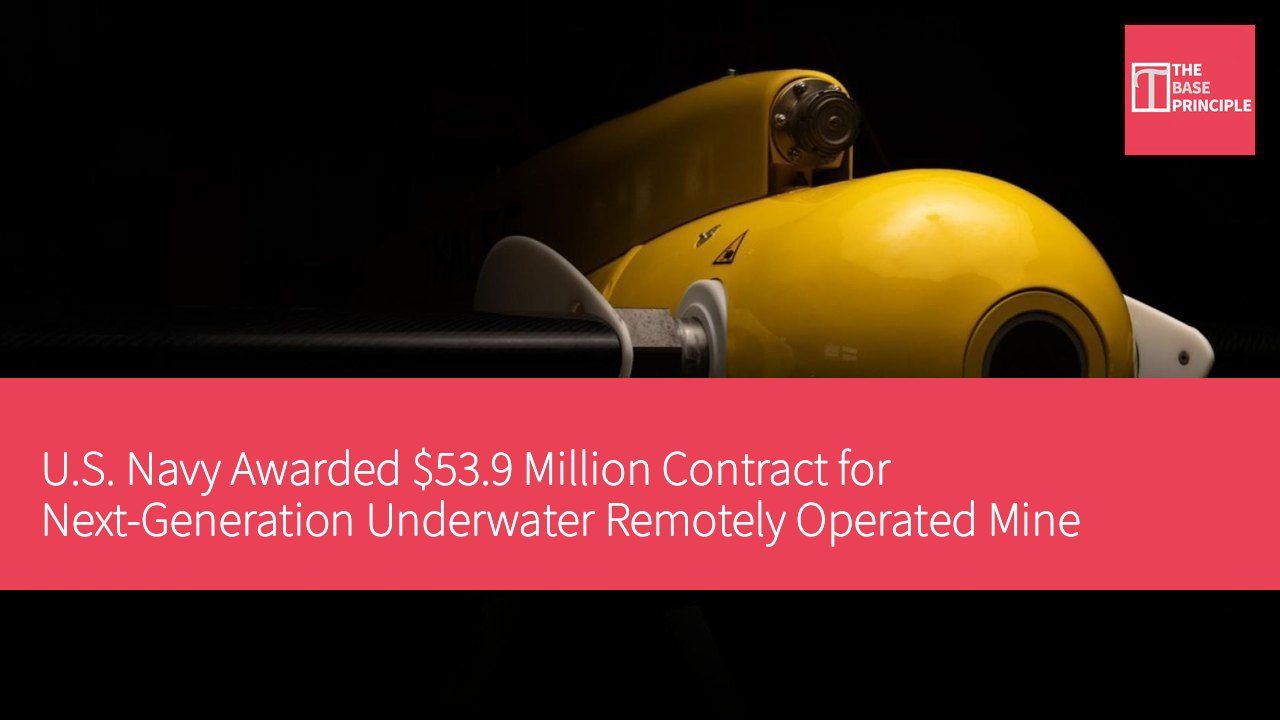
- The U.S. Navy has secured a $53.9 million contract for a new underwater mine countermeasure system.
- The system integrates advanced sonar and artificial intelligence to enhance the safety of mine clearance operations.
- Multi-angle towed synthetic aperture sonar can generate high-resolution underwater images.
- The new technology will strengthen the Navy's mine countermeasure capabilities and operational effectiveness.
The U.S. Navy has awarded a contract worth $53.9 million (approximately HK$42,012,000) for the delivery of two next-generation underwater remotely operated mine countermeasure modules. This mine countermeasure system is designed to improve unmanned mine clearance operations by remotely detecting and classifying underwater mines, thus reducing risks to sailors and naval vessels. This capability is expected to assist the Navy in more quickly identifying and responding to maritime threats, particularly in competitive operational environments. The contract was awarded to U.S. maritime warfare technology developer Advanced Acoustic Concepts (AAC), a subsidiary of Thales.
Technical Features of the Mine Countermeasure Modules
AAC has secured the $53.9 million Navy contract to produce and deliver two integrated mine countermeasure modules and provide engineering support. The contract includes options for additional modules, which could potentially raise its total cumulative value to approximately $196.2 million (around HK$153,036,000). The system is designed to assist the Navy in remotely detecting, locating, and classifying underwater mines, allowing sailors to conduct mine clearance operations from a safer distance. The system combines advanced sonar, AI-assisted target recognition, mission management software, and remote-operated vehicle technology to form an integrated solution.
This technology supports the Navy's established "detect, identify, and neutralize" mine countermeasure strategy, which involves detecting potential mine threats, determining their precise location and identity, and subsequently taking action to eliminate the danger. The core component of the mine countermeasure modules is a multi-angle towed synthetic aperture sonar (SAS), designed to generate high-resolution underwater images that enable operators to identify potential mine threats on the seabed. Unlike traditional sonar methods that rely on lower-resolution acoustic images, synthetic aperture sonar combines multiple acoustic measurements collected as the sensor moves through the water, effectively creating a larger virtual sonar aperture that enhances image resolution and helps distinguish objects from surrounding seabed features.
The multi-angle configuration provides additional perspectives for observing underwater objects, assisting operators in more effectively inspecting potential threats. According to Thales, this technology is also designed to reduce false alarm rates, potentially limiting the time spent investigating non-mine objects. This capability is particularly important in mine clearance operations, as distinguishing actual explosive threats from rocks, debris, and other seabed objects can be a time-consuming process.
The RMH solution also incorporates AI-enhanced automatic target recognition (ATR) software applications, aimed at helping sailors process, classify, map, and manage the vast amounts of data generated during sonar-based mine countermeasure missions. The software assists operators in identifying objects that may represent mine threats and organizes the information needed for operational decision-making. By automating certain aspects of the target recognition and classification process, the system aims to reduce the time required to locate and identify potential mine positions.
Future Plans for the Integrated System
Thales states that this technology is intended to improve target certainty while accelerating the Navy's ability to move from initial detection to threat assessment. The combination of high-resolution sonar imagery and AI-assisted analysis aims to make mine clearance missions more effective, especially in environments where underwater threats may be difficult to distinguish from natural seabed features. The integrated system also utilizes mission management software to coordinate the various technologies within the RMH module suite. Remote-operated vehicle technology is another component of the system, enabling operations without requiring sailors to approach suspicious mine locations directly.
The company is integrating sonar, classification software, and future remote neutralization capabilities into a single operational solution. The planned remote neutralization technology integration aims to help shorten the process from detecting mines to taking action. The system is also designed to support operations involving both manned and unmanned surface vessel platforms. Experts note that the initiative will enhance the Navy's mine countermeasure capabilities, fleet readiness, and operational effectiveness. By combining acoustic sensing, AI-based target recognition, and remote operation systems, the RMH initiative aims to reduce the risks associated with traditional mine clearance operations while improving the speed and accuracy of underwater threat detection.
Impact of the New Mine Countermeasure System on Naval Operations
The U.S. Navy's new mine countermeasure system significantly enhances the efficiency and safety of underwater mine clearance by integrating high-resolution sonar with artificial intelligence technology. This not only reduces risks to sailors but also accelerates the identification and response to maritime threats. In the current competitive maritime environment, this capability is particularly crucial, effectively supporting the Navy's mine countermeasure strategy and having far-reaching implications for enhancing the overall operational effectiveness of the fleet.