
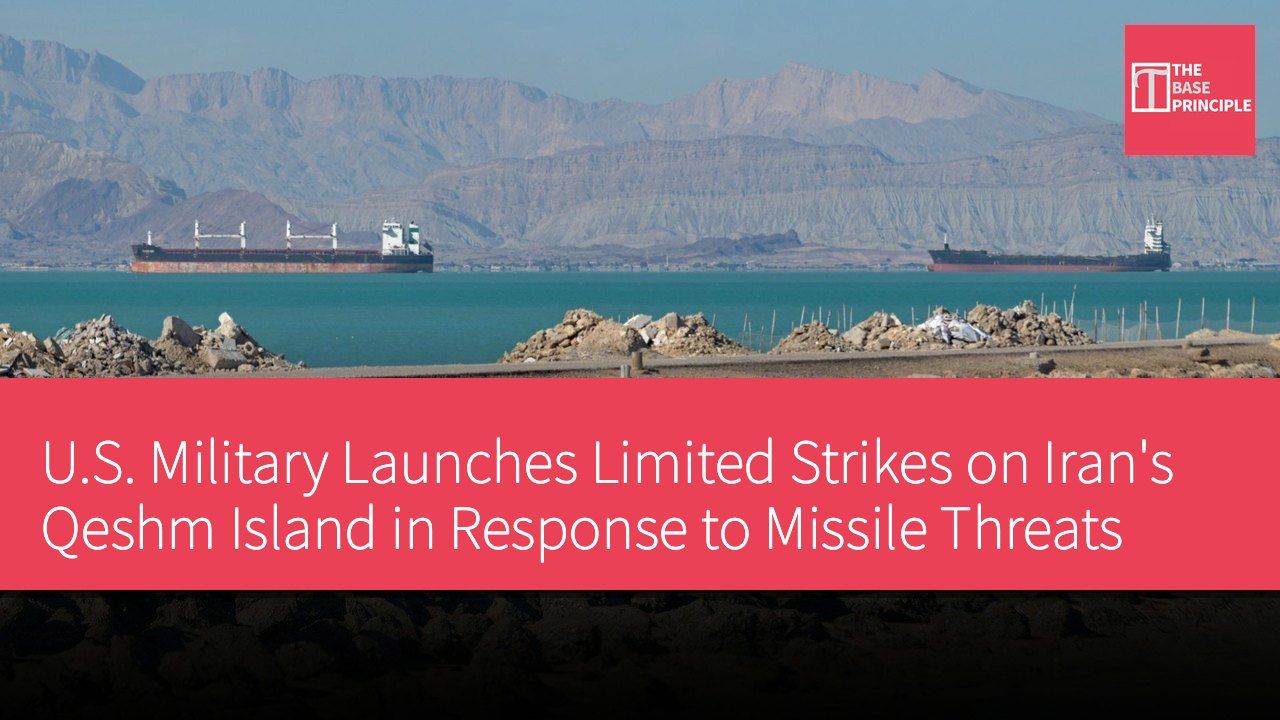
- The U.S. conducted limited strikes on Iran's Qeshm Island in response to missile threats.
- Qeshm Island is located near the Strait of Hormuz and hosts significant military infrastructure.
- U.S. officials stated that multiple secret attacks have occurred recently, but there are no plans for ground operations.
- Trump has softened his stance on resuming military action, suggesting the possibility of negotiations.
The U.S. military has quietly expanded its operations against Iran, conducting limited strikes on Qeshm Island as Washington weighs diplomatic options while preparing for the possibility of resuming larger-scale operations. U.S. officials confirmed the action on Monday, describing it as a defensive response to Iran's surface-to-air missile threats against U.S. assets. The strikes also aim to limit Tehran's ability to threaten commercial shipping near the Strait of Hormuz. This action indicates that U.S. forces remain active, despite President Donald Trump's public assertion that the conflict is largely over. At the same time, it raises questions about whether Washington can maintain its military pressure without provoking another major confrontation.
Strategic Importance of Qeshm Island
Qeshm Island occupies a critical position near the Strait of Hormuz, one of the world's most important energy transportation routes. Iran has strategic military infrastructure on the island, including underground missile facilities and a naval base. The island also features a large desalination plant, making it a vital component of regional infrastructure. Its geographical location provides the Iranian military with a strategic position near the shipping lanes used by commercial vessels. Reports on social media indicated explosions in multiple areas of Qeshm Island on Monday. The U.S. had previously targeted this island during the early stages of the conflict.
Reports suggest that Washington has also considered occupying the area. However, Monday's strikes appeared to be limited and showed no signs of preparation for ground operations. U.S. officials told The Wall Street Journal that Washington had conducted similar secret attacks in recent weeks. The government has avoided publicly announcing these actions to prevent implying a return to large-scale war.
U.S. Military Plans and Diplomatic Considerations
The latest strikes were launched after weeks of military planning within the Trump administration. Senior officials discussed additional airstrikes and presented several options to the president. These options included strengthening economic sanctions and expanding trade restrictions against Iran. The U.S. Central Command has also prepared for broader military actions. Central Command chief Brad Cooper visited the White House last week to brief Trump on the conflict and possible military responses. In recent weeks, the Pentagon has bolstered its regional deployments, with U.S. forces delivering more missile defense systems and munitions to the area.
Washington has also warned Gulf states of potential short-term and intense military actions following Tuesday's midterm elections. These preparations indicate that the government aims to retain the capability for rapid escalation.
Trump has recently softened his public stance on resuming military actions. On Monday, he dismissed suggestions of significant strikes occurring immediately after the elections. In conversations with reporters, Trump stated that the U.S. has already achieved victory in its confrontation with Iran. He questioned whether the current situation could even be termed a war. The president also hinted that negotiations might lead to an agreement. Vice President JD Vance reiterated this assessment, stating that Washington and Tehran have made progress in ending hostilities. Iranian officials, however, insist that any agreement depends on U.S. concessions.
State Department spokesperson Ismail Baqai stated that Tehran has clearly communicated its demands. Supreme Leader Mohsen Khamenei warned that if Washington reignites the conflict, Iran will retaliate. His threats are not limited to the Middle East. These competing signals create an uncertain military outlook for the region. Washington continues to strike Iranian targets while keeping diplomatic channels open. Whether these negotiations can prevent another major confrontation remains unclear. The limited actions against Qeshm demonstrate that the U.S. has not abandoned its military pressure.
U.S. Military Pressure and Diplomatic Strategy Towards Iran
The limited strikes on Qeshm Island reflect the U.S. military strategy in the face of Iran's missile threats. Although the Trump administration has publicly expressed a softened stance on resuming military actions, the U.S. continues to conduct secret attacks to maintain military pressure on Iran. This strategy illustrates Washington's delicate balance between military action and diplomatic negotiations, attempting to sustain its influence in the Middle East without provoking large-scale conflict.