
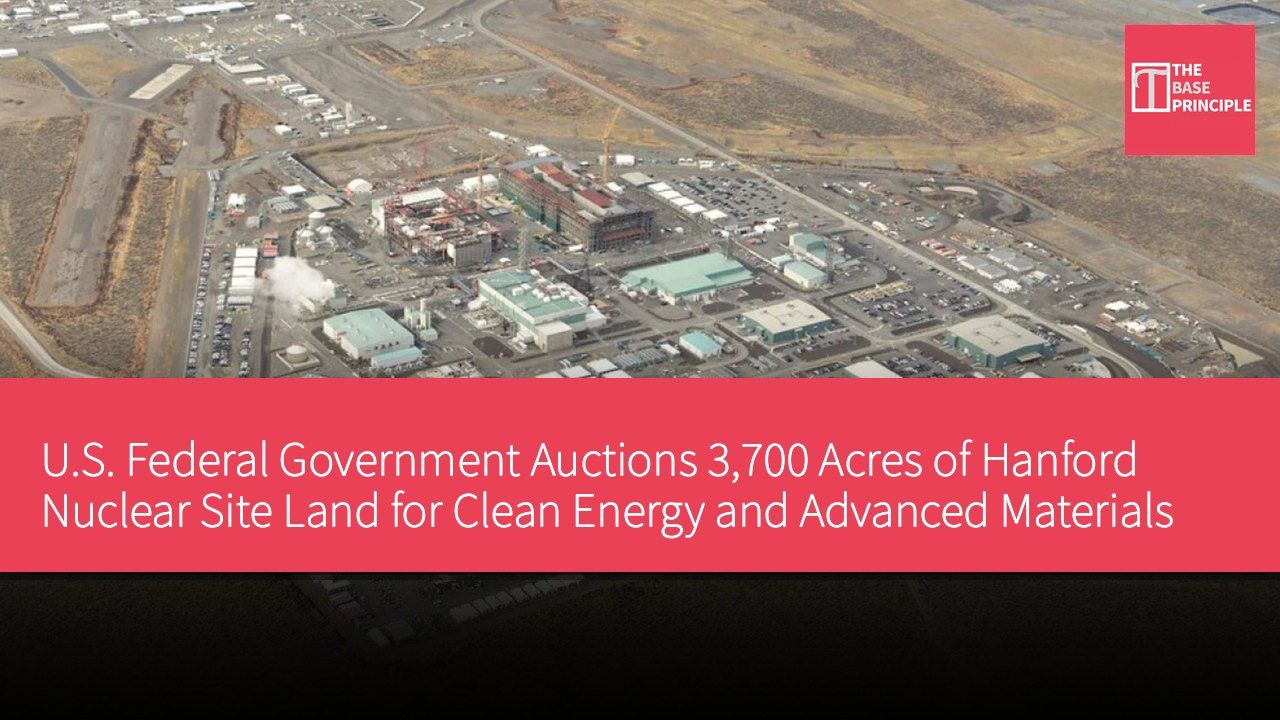
- The U.S. government plans to convert land in the Hanford area into a clean energy hub.
- The initial bidding includes the 1,876-acre Tract 1, with the possibility of opening Tract 2.
- Bidders must adhere to energy supply regulations to ensure no impact on the local grid.
- Environmental remediation efforts in the Hanford area have progressed to a point where commercial industry can be safely reintroduced.
The Hanford area, once a hub for nuclear weapons production, is set for an unprecedented industrial transformation. Federal officials have initiated a formal bidding process to lease thousands of acres of land in the Hanford region to private enterprises. The goal is to convert land that was cleared for wartime weapon production into a commercial center for clean energy, high-performance computing, and advanced materials. The Department of Energy's Office of Environmental Management (DOE-EM) has confirmed that it is offering up to 3,700 acres of land under its U.S. Energy Center initiative. This move marks a shift toward economic recovery for the region after a long history of complex environmental cleanup.
Bidding Parcels and Background
The bidding begins with an initial parcel called Tract 1, comprising 1,876 acres. Depending on demand, the adjacent 1,249-acre Tract 2 may also be opened. These parcels are located along the Columbia River in southeastern Washington, a vital waterway for the region. The designated land faces another major low-carbon energy project. An alliance of Amazon, X-energy, and regional utility company Energy Northwest is developing the Cascade Advanced Energy Facility.
The project plans to deploy up to 12 Xe-100 high-temperature gas-cooled small modular reactors (SMRs). Establishing new commercial infrastructure next to next-generation nuclear facilities provides a strategic advantage for businesses that require large amounts of power, particularly data centers and heavy industrial manufacturing.
Modern data centers and advanced factories consume vast amounts of electricity, prompting regulators to introduce protective measures. Bidders must adhere to energy supply regulations for "construction, introduction, or purchase." Tenants cannot simply draw power from the existing regional grid if doing so would strain local supplies. Instead, developers must either build dedicated power generation facilities on-site or externally, import power from outside the region, or purchase guaranteed commercial reserves. They must also independently fund all utility interconnection access and bear the full lifecycle costs from construction to decommissioning.
Environmental Remediation and Commercial Reconstruction
This measure aligns with Washington state's commitment to user protection, aimed at preventing energy-intensive commercial developers from driving up electricity costs for nearby communities. From 1943 to 1989, Hanford produced about two-thirds of the plutonium needed for all U.S. nuclear warheads. Production ceased after the Cold War, leading to one of the world's most stringent environmental remediation projects, regulated by state and federal authorities. Local officials state that environmental remediation efforts have progressed sufficiently to safely reintroduce commercial industry. The latest land auction follows an agreement reached in February with technology company General Matter.
Under that agreement, the company leased the 190,000-square-foot fuel and materials inspection facility in Hanford, which has been vacant since 1993, to develop advanced nuclear fuel processing technologies.
Proposals for the newly offered parcels will be evaluated based on technical feasibility, financial backing, environmental compliance, and formal collaboration with local municipalities and U.S. tribal nations. "Exploring these opportunities is the next logical step in advancing cleanup at this site, which is particularly important for a community that has long supported a diverse American energy and innovation portfolio," said Ray Geimer, manager of the Hanford site.
Economic Transformation and Energy Policy in the Hanford Area
The land transformation plan in the Hanford area reflects the strategic importance the U.S. places on clean energy and advanced materials. As environmental remediation progresses, the economic recovery of the region becomes possible, attracting the attention of businesses. Bidders must adhere to strict energy supply regulations, which not only protect the energy needs of local communities but also promote sustainability. Such policies reflect the government's cautious approach to energy-intensive projects and emphasize the importance of maintaining environmental and community interests while driving economic growth.