
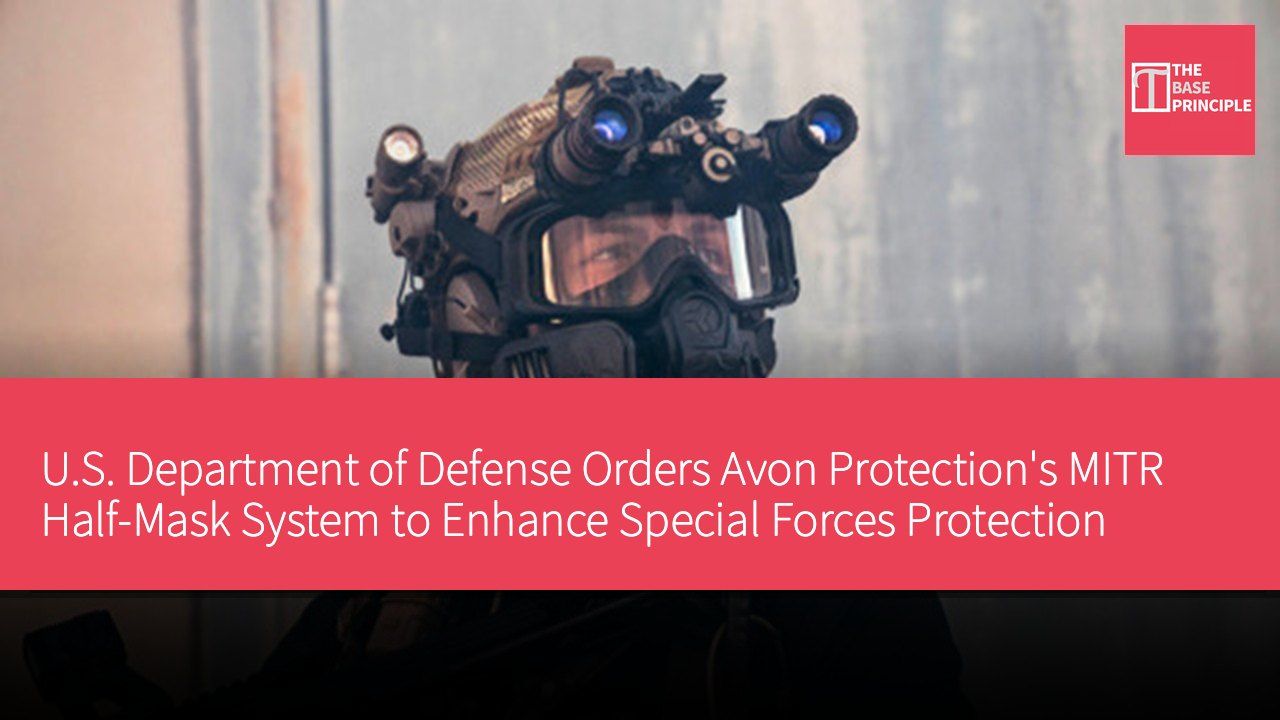
- The U.S. Department of Defense has ordered Avon Protection's MITR system to enhance special forces protection capabilities.
- The MITR-M1 half-mask provides flexible respiratory protection suitable for tactical environments.
- The MITR-PG1 powered goggles are designed to be used with the half-mask, providing eye protection.
- This order reflects a continued focus on the health of personnel.
The U.S. Department of Defense has ordered Avon Protection's MITR system, which includes a half-mask and powered goggles designed to provide scalable facial protection for special operations personnel without the need for a full-face respirator, the company announced on October 9. This order covers the MITR-M1 half-mask and MITR-PG1 powered goggles for use by U.S. special operations forces and includes two types of filters and integrated helmet and communication accessories for mission-specific modularity. Avon did not disclose the specific scale or value of the order.
Design Features of the MITR System
Avon promotes the system as an alternative to full-face respirators, allowing users in tactical threat environments to increase protection as mission dynamics change. The MITR-M1 half-mask is NIOSH certified, providing lightweight, flexible respiratory protection for the nose and mouth. Its smooth, contoured profile allows wearers to aim weapons, while voice amplification and projection devices help them maintain communication. The helmet mounting kit allows the mask to be directly clipped onto the helmet, enabling wearers to don it without removing their helmets.
The MITR-PG1 powered goggles are designed to be used in conjunction with the half-mask, protecting the eyes from riot agents. Its integrated air exhaust system continuously expels air to keep the lenses clear. The lightweight, anti-fog tactical black design is suitable for combat helmets and night vision systems, and Avon states that it remains comfortable even during extended wear.
The MITR-PF compact particle filter uses folded high-efficiency elements to protect against biological and pharmaceutical agents, while the MITR-RF compact riot filter adds an activated carbon layer for protection against riot agent vapors. Both meet NIOSH P100 standards, capable of removing over 99.97% of harmful airborne particles.
Significance and Impact of the Order
According to the company, this order makes the U.S. the second "Five Eyes" nation to choose the MITR-M1, following Canada’s selection in May 2026. Avon Protection President Steve Elwell stated that this award is the result of nearly four years of collaboration with end users to develop solutions that meet their mission needs. He noted that the Department of Defense's return as a customer reflects a continued focus on the health of personnel, both in the short and long term.
Elwell stated that for tactical operators, the MITR is not just about protection for current missions, but also about reducing lifetime exposure to hazardous particles to prevent long-term health issues, ensuring that service members remain healthy after retirement. He described this award as an important step in bringing this capability to a broader user community. Avon did not disclose when deliveries would begin or how many systems the Pentagon ordered.
Long-Term Impact of the MITR System on Special Forces
The introduction of the MITR system is not only a response to current tactical needs but also a consideration for the long-term health of special forces. This design provides immediate protection while also reducing potential future health risks, demonstrating the military's commitment to personnel safety. As technology advances, such scalable protective equipment may become standard in future special operations, further enhancing operational efficiency and personnel health safeguards.