
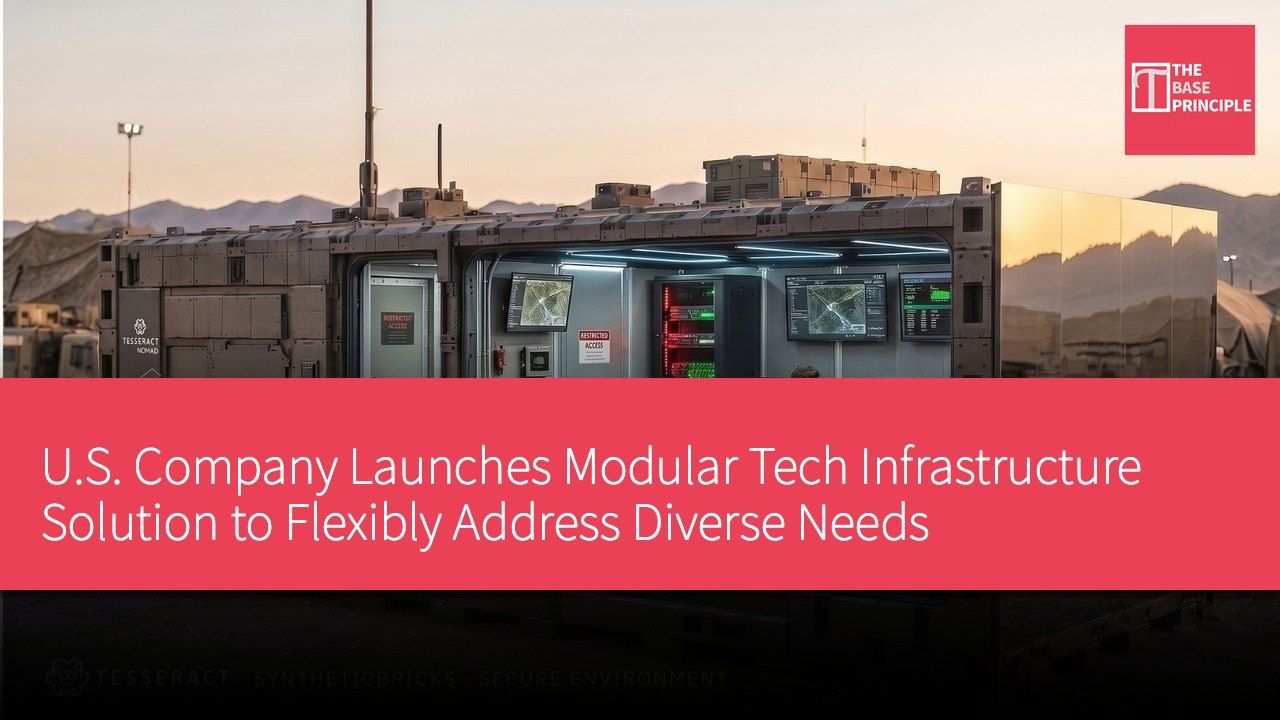
- The modular construction concept can flexibly meet diverse needs.
- The Tesseract synthetic brick technology kit integrates technology within the structure.
- Standardized technology components are reusable, reducing the need for redesign.
- The technology kit will serve defense, construction, critical infrastructure, and agriculture.
Two U.S. companies are working to bring the concept of modular construction to life, allowing for the assembly of offices, security checkpoints, or robotic facilities using building blocks similar to Lego. Tesseract Ventures, based in Florida, announced on Tuesday a collaboration with Kentucky's Lok-N-Blok to develop modular technology infrastructure aimed at rapid deployment and customization for various applications. This infrastructure is known as the Tesseract synthetic brick technology kit, which will utilize Lok-N-Blok's modular building components that resemble Lego blocks.
The company stated that these kits are designed to integrate technology into the structure from the outset, rather than adding technology to traditional buildings or shipping containers.
Advantages of Modular Construction
According to the company, these systems can undergo digital design, be packaged for transport, assembled near deployment sites, expanded as needs change, and can be disassembled and redeployed to other locations. Tesseract will customize the final solution based on customer requirements. Depending on the application, these kits may include sensors, cameras, communication devices, drone storage and launch systems, robotic manufacturing equipment, and other integrated technologies. John Boucard, founder and CEO of Tesseract Ventures, stated, "We see an opportunity to rethink the relationship between infrastructure and technology."
The Tesseract synthetic brick technology kit allows us to design structures around missions rather than cramming technology into boxes designed for other purposes."
Company officials noted that these kits can start with small installations using standard building blocks and technology modules, then expand to larger operational environments. John Lewis, CEO of Lok-N-Blok, remarked, "The founding of Lok-N-Blok is based on the idea that construction can become more modular, efficient, and flexible. Tesseract brings a powerful technological aspect to this concept. We have the opportunity to explore how modular construction can serve as the foundation for smart, rapidly deployable operational environments."
Potential for Multi-Domain Applications
In addition to rapid deployment, the two companies have positioned reusability as another key advantage. Standardized technology components can be reused to create different configurations without the need to redesign the entire system for each deployment. This collaboration may also enable Tesseract to develop reusable technology packages, such as those for access and security, smart spaces, drone operations, communications, sensors, and forged manufacturing kits, all of which can be incorporated into various structural configurations. Initially, the companies expect the technology kits to serve four primary markets: defense, construction, critical infrastructure, and agriculture.
In the defense sector, these systems can support drone operations, forward command centers, communication nodes, sensor hubs, and mobile manufacturing capabilities. Construction applications include project command centers, secure workspaces, security stations, and automated drone inspection stations. In critical infrastructure, these kits can serve as remote operation centers, emergency response facilities, utility inspection centers, and communication nodes. In agriculture, these systems are envisioned as field operation centers, drone stations, equipment hubs, and distributed farm intelligence facilities.
Future Outlook for Modular Tech Infrastructure
The launch of the modular tech infrastructure solution marks a significant innovation in the construction industry. This approach not only enhances the flexibility and efficiency of buildings but also allows for rapid adaptation to diverse needs, particularly in critical areas such as defense and agriculture. Through standardized and reusable technology components, businesses can reduce costs and time, facilitating faster deployment. As market demand for flexible infrastructure increases, the development of this technology could transform traditional construction models, driving the industry toward smarter and more efficient solutions.