
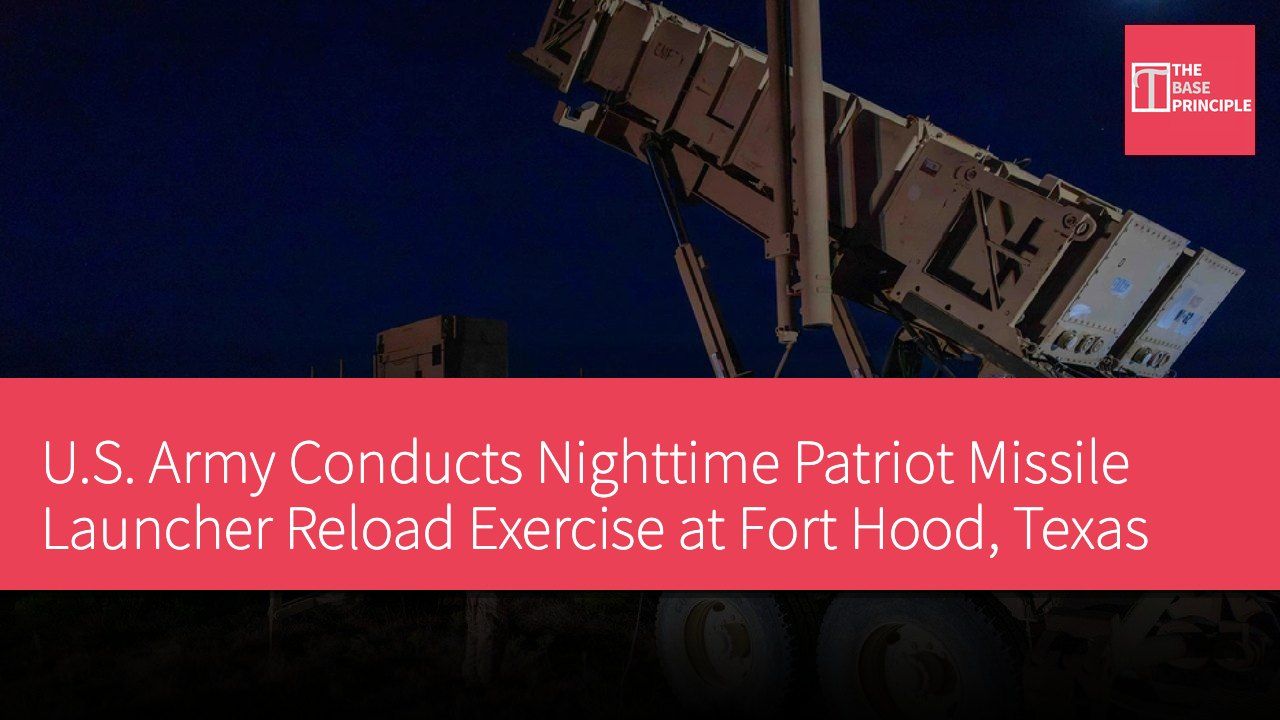
- The U.S. Army conducted a nighttime reload exercise for Patriot missile launchers in Texas.
- Soldiers used modified M985 heavy trucks for missile reloading.
- The exercise emphasized soldiers' ability to coordinate and operate in the dark.
- The drill utilized training canisters to test safety and team collaboration.
The U.S. Army conducted a nighttime reload exercise for Patriot missile launchers at Fort Hood, Texas, on October 23, aimed at ensuring air defense batteries can continue firing after the initial intercept missile launch, according to Defense Industry Europe. Soldiers from Delta Battery of the 1st Battalion, 62nd Air Defense Artillery participated in the exercise as part of the battalion's mission readiness training, the Army stated. The exercise began on October 19 and assessed how the launch battery, command post, and support personnel establish, operate, and maintain the Patriot air defense system in the field.
During the nighttime reload process, soldiers used a modified M985 heavy tactical truck and a heavy crane to remove and replace training missile canisters from the Patriot M903 launcher. In this process, the M985 served as the missile transport vehicle, responsible for delivering the reloaded missiles to the launcher, which became a critical task after the battery fired its first intercept missiles. Soldiers lifted, positioned, and secured each canister while coordinating the crane's movements and communicating. Headlamps illuminated the work area, but visibility was limited, so soldiers also had to be mindful of the movements of personnel and equipment around them.
Challenges of Nighttime Reloading
One soldier served as the signal commander, while others were responsible for the canister ropes and crane commands.
The Patriot launcher can hold up to 16 new PAC-3 interceptors or four older PAC-2 missiles, necessitating the use of a crane for reloading. Captain Grace Ko, commander of Delta Battery, stated, "It's not enough just to deploy the Patriot system; our soldiers must be able to keep it operational." She noted that nighttime reloading provided soldiers with experience in facing real mission challenges, emphasizing, "We need to be prepared to fight continuously."
Organization and Leadership of the Drill
The exercise was led by junior leaders and their teams. First Sergeant Pattrick Harris stated that battery leaders set standards, provide resources, and allow teams to execute, which builds confidence and demonstrates the team's capabilities. The signal commander for the reload team, Sgt. Kobly Bagley, mentioned that this experience taught him to trust his safety awareness and the coordination of the personnel around him.
The battalion conducted regular training at Fort Hood. In July, Delta Battery performed a field setup exercise, moving, setting up, and securing an air defense station, including the M903 launcher, AN/MSQ-104 intercept control station, OE-349 antenna mast group, and Patriot power generation plant. During this exercise, Delta Battery deployed an M903 launcher on October 21, while other batteries maintained another launcher, set up the antenna mast group, and deployed missile transport vehicles.
This reload exercise utilized training canisters rather than live rounds. The Army stated that the drill tested soldiers' ability to safely remove and replace canisters while enhancing team collaboration and maintaining Patriot operations.
Nighttime Exercises Enhance Soldiers' Response Capabilities
This nighttime reload exercise not only tested soldiers' technical skills but also emphasized collaboration and communication in low-visibility environments. Through hands-on operations, soldiers gained experience in responding to real missions, which is crucial for enhancing overall combat effectiveness. The use of training canisters during the exercise allowed soldiers to practice in a safe environment, further boosting their confidence and teamwork skills, preparing them for potential real-world missions.