
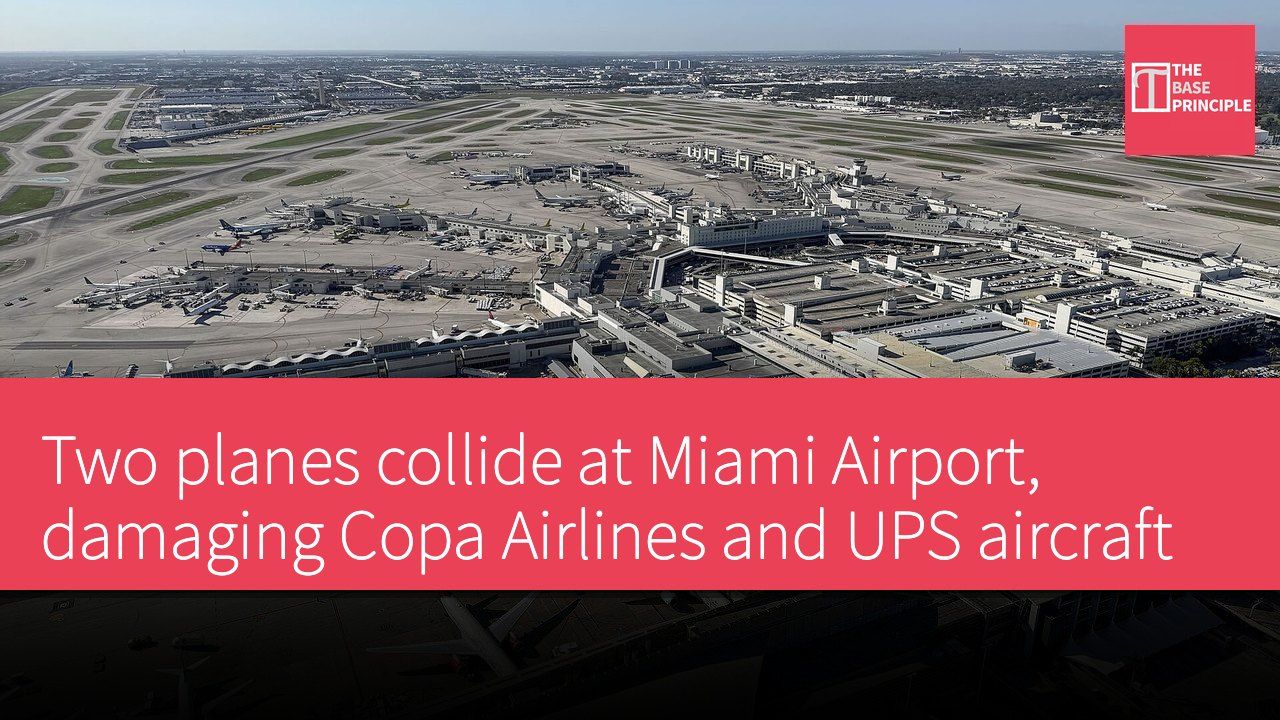
- The two planes collided on the taxiway at Miami Airport, causing damage.
- The wingtip of the Copa Airlines aircraft struck the nose of the UPS plane, resulting in two injuries.
- The cause of the accident is still under investigation, but it appears related to taxiway right-of-way instructions.
- The investigation will analyze factors such as human error, crew awareness, and airport layout.
The two planes collided on the taxiway at Miami International Airport in the United States at 9:15 PM local time on November 14. Reports indicate that a Boeing 737 from Copa Airlines struck the nose of a UPS Boeing 767 with its wingtip, causing damage to both aircraft and injuring two people. The specific cause of the accident has not yet been determined, but it appears to be related to the failure to yield on the taxiway rather than any technical malfunction of the aircraft. The Federal Aviation Administration (FAA) stated: "The wingtip of the Copa Airlines Boeing 737 struck the nose of the UPS Boeing 767 while taxiing."
A passenger, Cesar Ferreira, described, "In the cabin, we felt the plane suddenly sway to the side. At first, some passengers began to panic, but the Copa crew quickly responded and instructed everyone to remain seated." At the time, both planes were approaching the intersection of two taxiways. Air traffic control had instructed the UPS crew to yield to the Copa Airlines flight, but the UPS crew apparently proceeded too far forward, causing its nose to enter the path of Copa Airlines' left wing.
Incident Overview and Response
Unfortunately, when the Copa Airlines 737 was taxiing, there was not enough space, and the wingtip struck the nose of the UPS 767.
According to reports, the Copa Airlines pilots told air traffic control after the collision: "Someone hit us." The UPS pilots responded: "Yes, we went too far, and then his wing scraped us." In terms of damage, the right side of the nose of the UPS 767 suffered severe denting and penetrating damage, while the wingtip of the Copa Airlines 737 was sheared off. The incident occurred just one day after the FAA lifted a nationwide flight grounding order due to issues with the national air traffic control communication infrastructure.
Investigation Focus and Future Improvements
Initial explanations indicate that maintenance work replacing aging copper telecommunications connections with fiber optic infrastructure led to system overloads, affecting communication and radar information. Although operations resumed on the night of November 13 (Friday), the repercussions continued over the weekend as aircraft and crews failed to position themselves properly. However, it is noteworthy that this does not appear to be the cause of the collision. The National Transportation Safety Board (NTSB) and the FAA will conduct an investigation into the incident, expected to analyze the causes of the issues and how to improve. Investigators may closely examine taxiway yield instructions, stop positions, crew situational awareness, and other factors such as human error and fatigue.
They will also review the existing layout of the airport, particularly whether larger gap areas are needed at intersections like this one.
Potential Impacts of Taxiway Incidents
This aircraft collision incident highlights safety issues on airport taxiways, especially regarding traffic management during busy periods. While the specific cause of the accident is still under investigation, the instructions from air traffic control and the crew's responses indicate that human error may be a significant factor. As the investigation unfolds, there may be a reevaluation of airport layouts and taxiway designs to prevent similar incidents in the future, ensuring the safety of passengers and crew.