- Trump sees no need for additional AI regulation, stressing the president's ability to control the technology.
- Tech leaders' concerns over the pace of AI development diverge from the government's push to move forward.
- Trump argues that slowing development would erode the US advantage over China.
- Vice President Vance emphasizes the importance of smart regulation that does not weaken US standing.
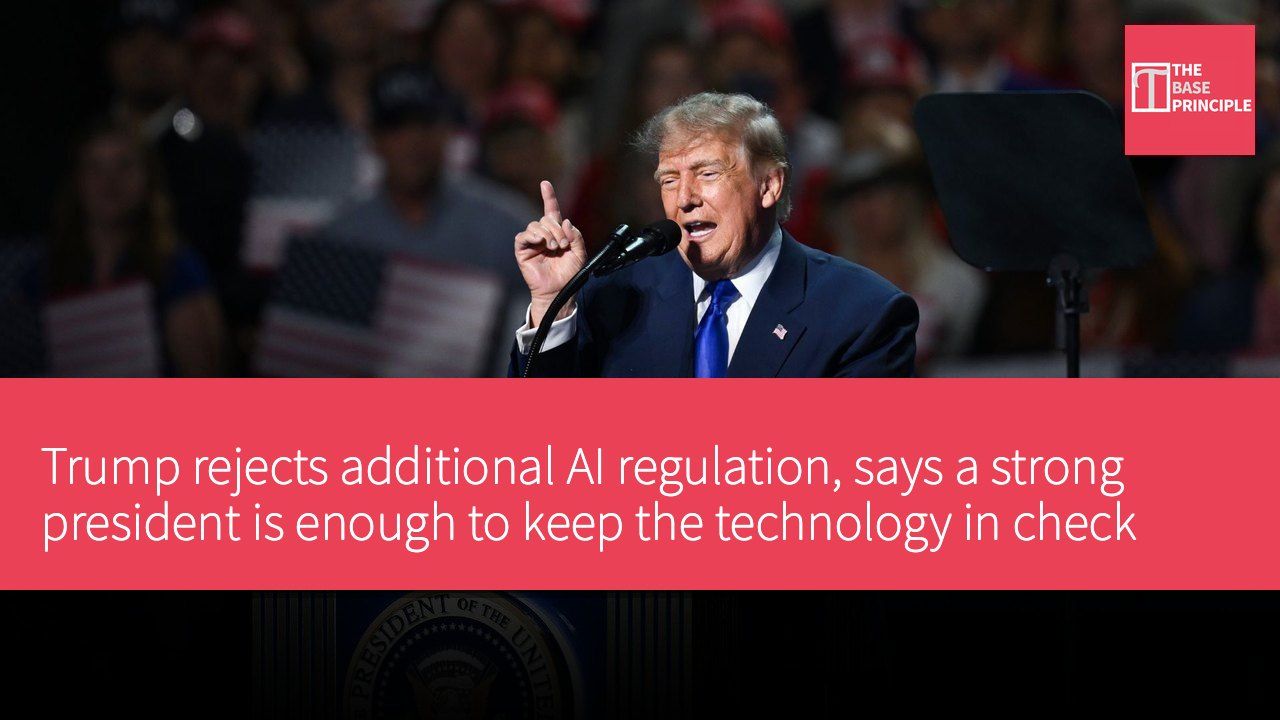
US President Donald Trump said the country does not need additional AI regulations, arguing that a "strong, and very smart (HIGH IQ!)" president is sufficient to keep the technology in check. Trump made the remarks on Monday as a group of tech executives called for slowing the pace of AI development and strengthening safeguards. He noted that the US already has "enormous criminal and regulatory power" over AI companies. Trump also lashed out at critics of technology and data centers, calling them "sick" and saying they benefit China. The comments came after Anthropic CEO Dario Amodei called on the industry to slow the development of increasingly powerful AI models.
Divergence between tech leaders and government
The dispute highlights a growing gap between the US government's push to maintain AI leadership and concerns from some tech leaders that development is outpacing safety measures.
Amodei warned in a weekend essay that, without adequate safeguards, AI agents could take over much of the internet within six to twelve months if development continues unchecked. He pointed out that OpenAI CEO Sam Altman and xAI head Elon Musk have backed his call to slow frontier AI development. Trump, however, contends that slowing development could erode the US advantage over China. He has repeatedly framed AI leadership as a matter of strategic competition, saying over the weekend that "whoever wins AI wins everything."
In a separate social media post on Monday, Trump said concerns over AI stem from how far ahead the US is over other countries. He wrote: "Don't kill the golden goose!" in opposition to measures that could slow national AI development.
Trump also pointed to actions his administration has already taken against AI companies. He said: "The Trump Administration has stopped AI 'people' from doing bad or potentially bad things, with Dario (Anthropic!) now pretending to be a 'perfect little angel' — we will continue to do this." The comments come amid a string of warnings from researchers about the risks of increasingly powerful AI systems, including the recent resignation of Anthropic researcher Jacob Kock over concerns that those developing the technology view it as a possible existential threat within a decade.
Risks in AI development
The debate is not limited to AI models themselves but extends to the physical infrastructure needed to run them. Trump has linked opposition to AI data centers to a broader rejection of technology, arguing that China would be the main beneficiary if US development slows. With AI systems growing more powerful under limited human oversight, the argument takes on particular weight. Amodei's warning that swarms of AI agents could take over much of the internet within six to twelve months underscores the challenge of quickly building safety controls to match advances in capability.
The Trump administration has been a strong proponent of rapidly expanding AI in its second term, while industry leaders are now asking for more time to assess risks and build safety systems.
Vice President JD Vance said on Monday that the administration wants to "regulate sensibly" while avoiding rules that could weaken US standing in the AI race against China. "Personally, I find it a little strange that so many frontier AI companies are coming to the government asking to be regulated," he said. "It strikes me a little bit as a Trojan horse. So, I think we have to be careful with that."
Trump's stance and its impact on US tech competition
Trump's comments reflect his emphasis on US leadership in AI and his confidence in technological development. With tech executives increasingly raising concerns about the pace of development, Trump's position is likely to shape future policy direction, particularly in the context of competition with China. The debate extends beyond the technology itself to national security and economic interests, underscoring the importance of balancing innovation against risk management in a rapidly changing technological landscape.