
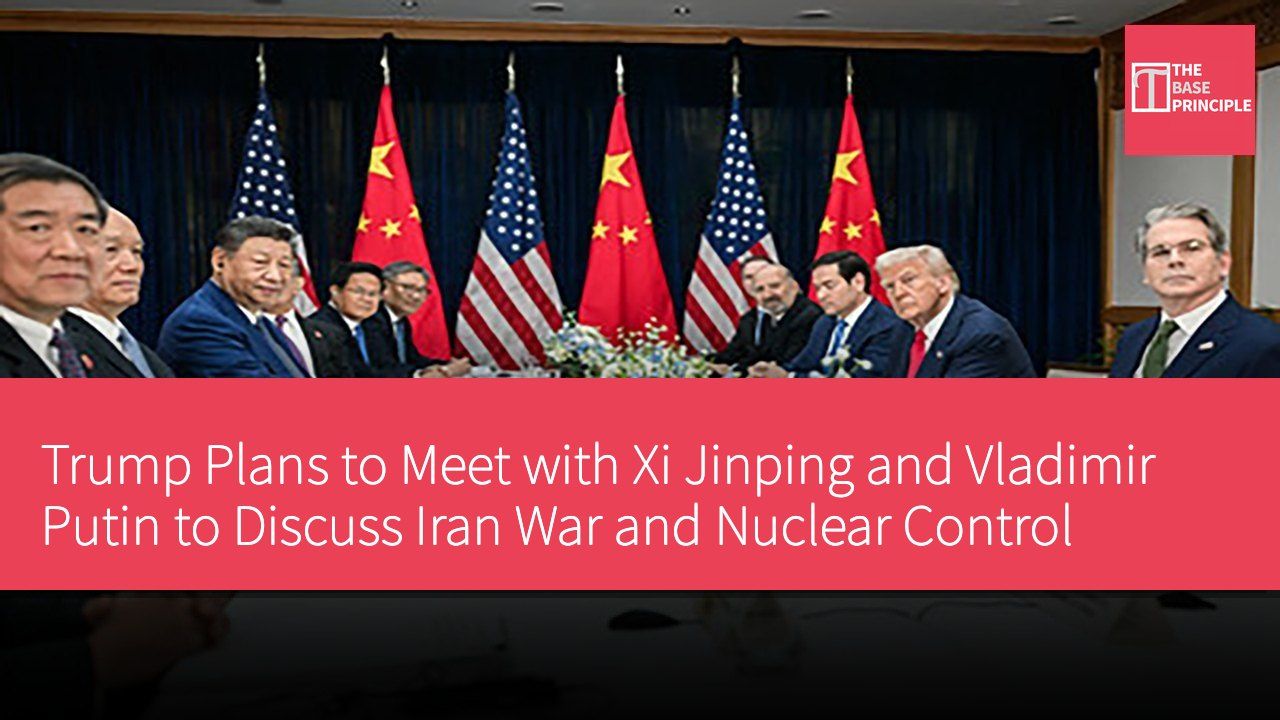
- Trump is expected to meet with Xi Jinping and Putin next week to discuss the Iran war and nuclear weapons control.
- The Chinese Foreign Ministry stated it is in contact with other parties regarding the meeting but did not disclose specific details.
- Putin has proposed using the meeting to discuss the Ukraine issue, while Trump believes the meeting will help end the war in Iran.
- China resists participating in arms control negotiations with the U.S. and Russia, citing its relatively small arsenal.
U.S. President Donald Trump stated on November 8 that he expects to meet with Chinese President Xi Jinping and Russian President Vladimir Putin next week to discuss ending the war between the U.S. and Iran and issues related to nuclear weapons control. The Chinese Foreign Ministry announced on November 9 that it is in contact with other parties regarding the meeting but did not provide further details. Trump noted in a press interview before flying from Florida to Washington that he will attend the Asia-Pacific Economic Cooperation (APEC) summit scheduled for November 18 and 19 in Shenzhen.
The war between the U.S. and Iran began on February 28, and there remain disagreements between the two sides in the critical oil transit route of the Strait of Hormuz. According to the South China Morning Post, Trump did not provide specific details regarding nuclear issues.
Main Topics of the Meeting
The Kremlin announced on October 21 that it is preparing for the first trilateral meeting. Putin has proposed using the meeting to discuss the Ukraine issue, according to the Wall Street Journal. Trump stated that he believes one of the meetings in Shenzhen will be with Xi Jinping and Putin. "We are trying to end the war in Iran," he noted in an interview, according to Reuters. On the same day, in a phone interview with CNN, he described the likelihood of the U.S. launching renewed attacks on Iran as "extremely low," while negotiations regarding Tehran's nuclear program and the Strait of Hormuz are ongoing.
The strait is the only maritime route between the Persian Gulf and the Gulf of Oman.
China's Position in Nuclear Negotiations
Foreign Ministry spokesperson Hua Chunying stated on November 9 that China is continuously communicating with relevant parties regarding the meeting but did not provide further information. When asked about reports of Washington seeking Beijing's assistance to end the war, he stated that prolonging the conflict is not in the common interest of either side and called for dialogue. According to the Foreign Ministry's records, Li Weijian, a Middle East researcher at the Shanghai Institute for International Studies, indicated that "both sides are now willing to engage in dialogue." According to the South China Morning Post, Chinese observers believe Beijing may become a neutral host for negotiations.
Reasons for China's Resistance in Nuclear Negotiations: China has consistently resisted arms control negotiations with Washington and Moscow aimed at limiting arsenals, citing its relatively small stockpile. The report noted that the Stockholm International Peace Research Institute estimated that China had approximately 620 nuclear warheads as of January. The last U.S.-Russia arms treaty expired on February 5, removing constraints on both sides' arsenals. Trump expressed openness to trilateral negotiations in October. China has not confirmed the meeting, and Trump's remarks along with Putin's proposal are the only publicly disclosed agenda clues.
Reports regarding the U.S. seeking China's assistance came from a columnist at the Washington Post, which did not receive confirmation from the Foreign Ministry.
Analysts' perspectives come from researchers in China. To date, neither side has released draft agreements concerning Iran or arms control, so the content of any agreement remains unclear. Whether the trilateral meeting will take place and what it will involve should become clear when the summit opens on November 18.
Potential Impact of the Trilateral Meeting
The meeting between Trump, Xi Jinping, and Putin could represent a crucial opportunity to address the Iran war and nuclear weapons issues. As the conflict between the U.S. and Iran continues, the success or failure of the trilateral meeting will influence regional stability. China, as a potential neutral host, may play a key role in facilitating dialogue. Despite its cautious stance on arms control negotiations, China's role in international affairs is becoming increasingly significant, highlighting the complexity of global security issues and the necessity for multilateral cooperation.