
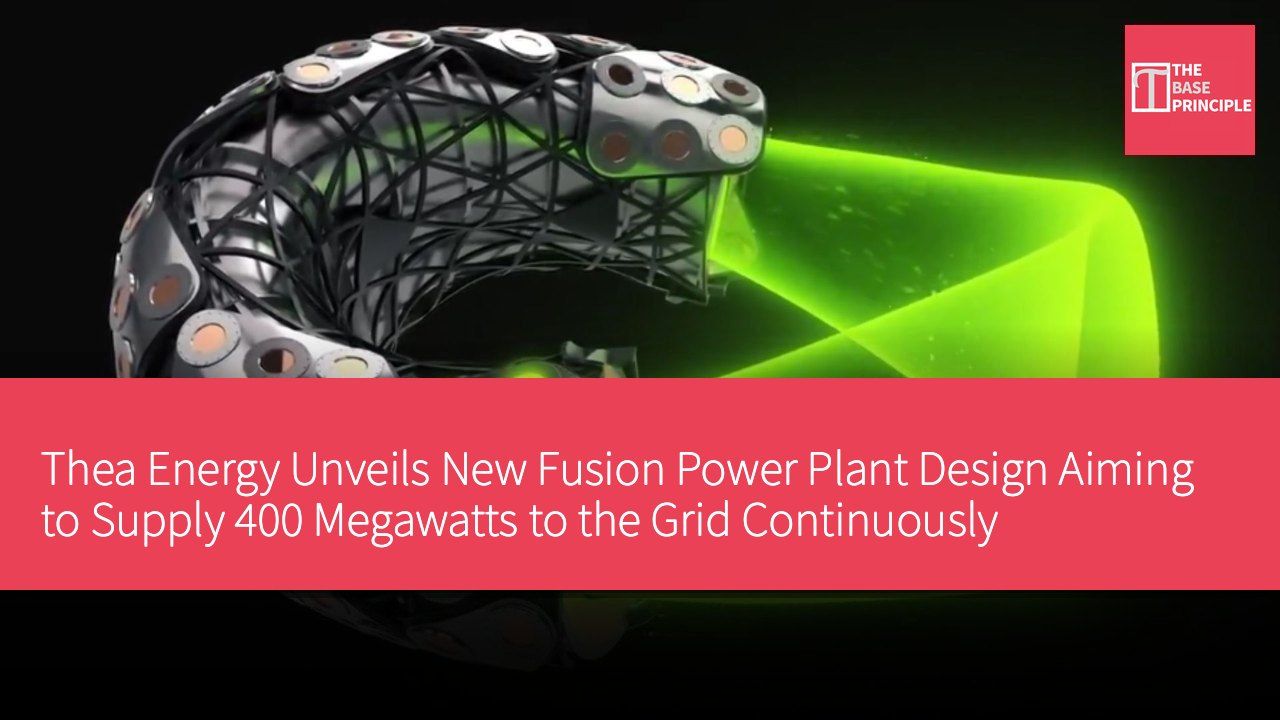
- Thea Energy has unveiled the new Helios fusion power plant, targeting a power output of 400 megawatts.
- Helios is designed for continuous operation, reducing the risk of plasma disruptions as a baseload energy source.
- Flat coil technology simplifies engineering and enhances reliability and cost competitiveness.
- Helios aims to begin operations in the 2030s and has been certified by the U.S. Department of Energy.
Fusion energy company Thea Energy has detailed a fusion power plant designed to supply approximately 400 megawatts of power to the grid continuously. The New Jersey-based firm announced the Helios architecture on September 9 through a set of 16 peer-reviewed papers in a special issue of Fusion Engineering and Design. The proposed U.S. stellarator fusion reactor combines adjustable software-controlled magnets, a continuous exhaust system, and a zone-based maintenance approach.
These technologies aim to make fusion energy reliable, cost-competitive, and suitable for commercial operation.
The Advantages of Flat Coil Technology
Flat coils simplify the engineering of stellarator fusion reactors. Stellarator fusion reactors use magnetic fields to confine the extremely high-temperature plasma required. While decades of research have established this concept as a mature fusion system, the complex three-dimensional coils traditionally used have posed significant engineering challenges. Helios replaces these intricate modular coils with a set of software-controlled flat magnets. This configuration is designed to maintain operation despite production deviations and wear over extended periods of operation.
“The Helios power plant is technically feasible, robust, and does not require a scientific miracle to achieve commercialization,” said David Gates, co-founder and Chief Technology Officer of Thea Energy. According to the company, the quasi-axisymmetric design also makes Helios more compact than other proposed optimized stellarator power plants. The system's major radius of eight meters helps reduce its physical footprint and expected cost.
The Design Philosophy for Continuous Power Supply
Continuous systems target reliable grid power supply. Unlike fusion concepts that operate in pulses, Helios is designed for continuous operation. The company states that the power plant can provide approximately 400 megawatts of power without the risk of plasma disruptions, supporting its intended role as a baseload energy source. Its architecture includes an X-point diverter that continuously removes exhaust from the stellarator fusion reactor during fusion operations. The design also divides the power plant into maintainable zones, allowing access and maintenance of equipment throughout its operational life.
“These papers introduce several innovative concepts aimed at reducing the risks traditionally associated with stellarator-based power plant designs,” said Benedikt Geiger, Associate Professor at the University of Wisconsin-Madison and co-editor of the special issue. The published research covers several systems needed to translate the fusion concept into an operating power plant, including remote handling, cryogenic technology, heat transfer, power supplies, diagnostics, instrumentation, and flat coil magnet engineering.
Helios continues to follow the U.S. Department of Energy's certified milestones. The Department of Energy previously certified Helios's preconceptual design in the first phase of its milestone-based fusion development program. Thea Energy became the first participating company to have its power plant design milestone certified after an independent expert review. Before Helios's operation, the company plans to develop Eos, its first large-scale integrated stellarator fusion reactor. Eos uses the same flat coil architecture and aims to demonstrate fusion performance relevant to commercial power plants.
Thea Energy states that Helios is still expected to begin operations in the 2030s. The newly published papers now provide the broader fusion community with detailed, multidisciplinary explanations of the physics and engineering behind this commercial goal.
The Impact of the Helios Design on Fusion Energy
Thea Energy's Helios fusion power plant design is technically feasible and does not require significant scientific breakthroughs, making the possibility of commercialization higher. Through the use of flat coil technology, Helios not only simplifies the engineering design but also enhances the system's reliability, which is crucial for the future development of fusion energy. Additionally, the continuous operation mode reduces the risk of plasma disruptions, making it a stable baseload energy source. These innovations not only advance fusion technology but also provide new possibilities for future energy supply.