
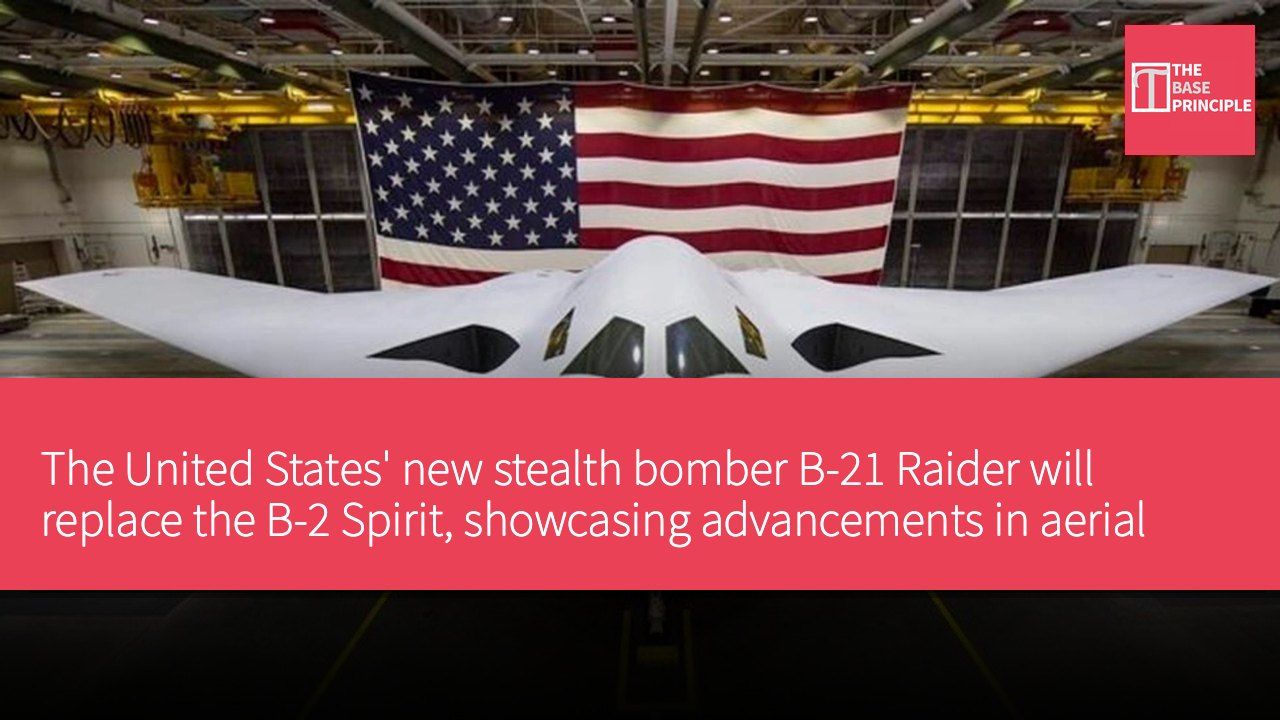
- The B-21 Raider will replace the B-2 Spirit to meet modern battlefield demands.
- The B-21 introduces advancements in low-observable materials and digital engineering.
- The B-21 is designed for long-term maintenance and affordability, reducing upkeep costs.
- The success of the B-21 relies on its ability to operate in conjunction with other military systems.
For over two decades, the B-2 Spirit has represented the cutting edge of U.S. stealth bomber technology. Its unique flying wing design, long-range capabilities, and ability to carry both conventional and nuclear weapons make it one of the most capable aircraft in the U.S. military. Today, its successor, the B-21 Raider, is preparing to take on this role, designed to meet the increasingly challenging battlefield environment. Developed by Northrop Grumman for the U.S. Air Force, the B-21 is not merely an updated version of the B-2. It incorporates advancements in stealth, networking, computing, and maintainability, reflecting the evolution of long-range aerial combat since the Spirit was first introduced in the 1990s.
The B-2 Spirit was developed during the Cold War to penetrate heavily defended Soviet airspace and strike strategic targets without being detected by radar. It made its first flight in July 1989 and was officially operational by 1997. Its flying wing configuration, composite materials, and radar-absorbent coatings help reduce radar signatures. Four General Electric F118 engines power the aircraft, which has a wingspan of 172 feet (52 meters), an unrefueled range of approximately 6,000 nautical miles, and a maximum weapon payload of 60,000 pounds (27,216 kilograms).
This bomber can carry both conventional and nuclear weapons, including precision-guided munitions and the massive GBU-57 Massive Ordnance Penetrator. In June 2025, the B-2 used a 30,000-pound bunker-busting weapon against Iranian nuclear facilities during Operation Midnight Strike.
Design Advantages of the B-21
However, the advanced design of the B-2 comes with significant maintenance demands. Its low-observable coatings and specialized structures require careful inspection and repair to maintain its stealth characteristics. Consequently, keeping the aircraft operationally ready has always been a major challenge for the Air Force. The design of the B-21 aims to address these needs while providing a more adaptable platform for future operations.
Unlike the B-2, the B-21 also features a flying wing configuration, with weapons housed internally to reduce radar signatures. However, the Raider integrates decades of advancements in low-observable materials, propulsion integration, and digital engineering. The Air Force describes it as a dual-capable penetrating strike bomber, designed to deliver both conventional and nuclear weapons against heavily defended targets. Unlike the B-2, the Raider is also developed around an open systems architecture, allowing engineers to update software, integrate new sensors, and add weapons without relying on a complete redesign of the aircraft.
This approach aims to help the bomber adapt as radar systems, electronic warfare capabilities, and other air defense technologies evolve.
The B-21 will also operate as part of a broader family of systems, involving intelligence, surveillance, reconnaissance, electronic attack, communications, and other capabilities. It is not designed solely as an independent strike aircraft but is intended to exchange information with other platforms and contribute to a connected battlefield. Many specifications remain classified. The Air Force has not disclosed its exact range, speed, payload capacity, or radar characteristics, making direct performance comparisons with the B-2 challenging.
The B-21 is also designed for long-term maintenance and affordability. Its newer materials and manufacturing methods aim to reduce the time and resources needed to maintain its low-observable features. The Air Force lists the average procurement unit cost for fiscal year 2022 at $692 million (approximately HK$54.1 billion), based on a planned minimum fleet of 100 aircraft. This figure includes costs associated with procurement and should not be directly compared to the historical unit costs of the B-2, which were calculated on a different accounting basis. The Air Force currently plans to procure at least 100 Raiders, although senior military officials have discussed the possibility of expanding the fleet.
As of 2026, the B-21 is still undergoing flight testing. The aircraft has demonstrated air refueling with the KC-135 tanker, marking an important milestone in its long-range mission configuration. The Air Force aims to deploy its first operational aircraft to Ellsworth Air Force Base in South Dakota by 2027. Production capacity has also been increased by 25% to accelerate delivery timelines.
Relationship Between B-21 and B-2
The introduction of the B-21 does not mean the immediate retirement of the B-2. The Air Force continues to invest in upgrades, maintenance, and low-observable enhancements to keep the existing fleet operational until its successor is ready. The two aircraft represent different stages in the evolution of stealth aviation. The B-2 demonstrated how large strategic bombers could leverage low-observable designs to penetrate complex air defenses. The B-21 builds on this foundation, emphasizing more flexible software, advanced networking, and sustained operational capabilities. The significance of the Raider lies not only in how difficult it is to detect but also in how effectively it can operate in conjunction with other military systems and adapt to evolving threats.
As the U.S. Air Force prepares to introduce the B-21, this transition marks a shift from Cold War-era advanced stealth technology to a new generation of remotely connected and digitally adaptive strike aircraft.
Impact of the B-21 on Future Aerial Combat
The development of the B-21 Raider marks a further evolution of the U.S. Air Force's stealth technology, particularly in adapting to modern battlefield environments. As the nature of warfare changes, the B-21 emphasizes not only stealth capabilities but also integration with other military systems, which is crucial for future joint operations. The successful experience of the B-2 Spirit provides a solid foundation for the B-21, but the Raider's design is more flexible, allowing for continuous updates as technology advances. This transition is not only a technological advancement but also a response to future strategic needs.