
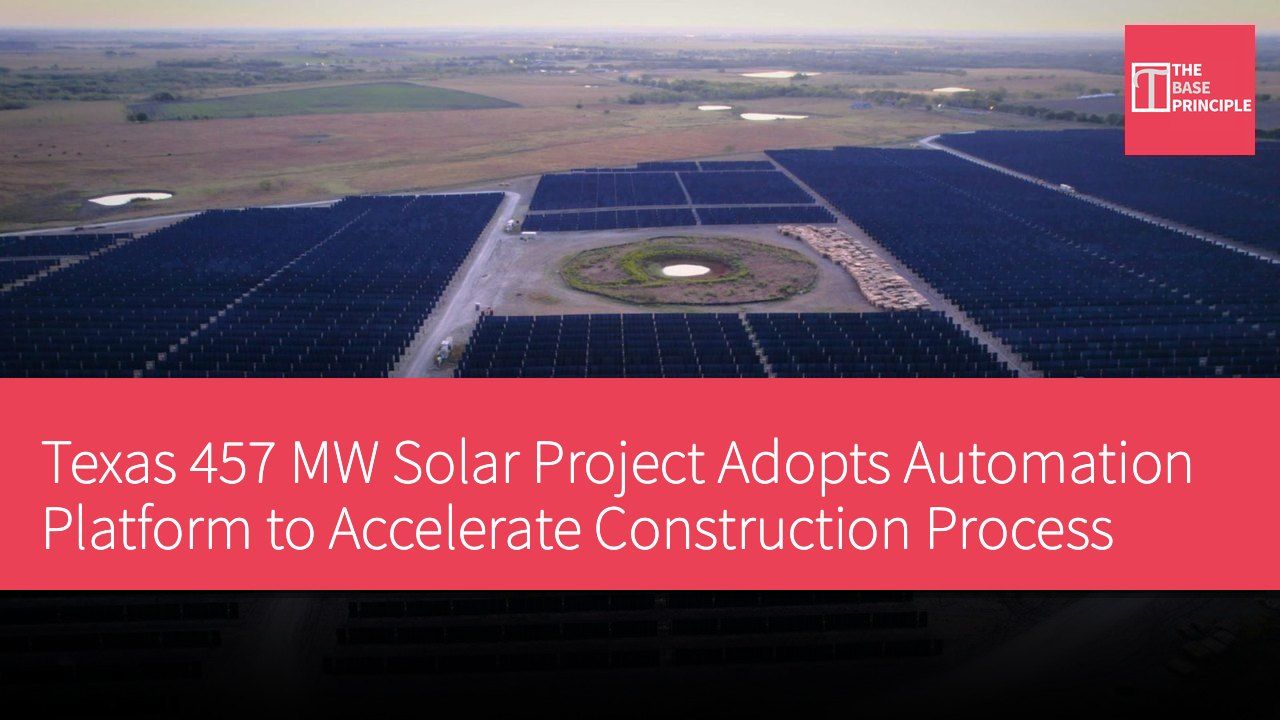
- The Texas solar project is turning to an automation platform to speed up construction.
- The Terafab V2 system can assemble one unit approximately every 2 minutes, enhancing output efficiency.
- The automated system integrates AI for quality checks, ensuring assembly accuracy.
- The company plans to expand system compatibility and develop more automated robots.
A solar project in Navarro County, Texas, is shifting to an automation platform to expedite the completion of its 457 MW renewable energy project. The system, named Terafab V2, resembles a small portable modular robotic factory that assists in the assembly and installation of solar modules on-site. Notably, the system is also responsible for the overall management and planning of the project. The U.S. company Terabase Energy describes its upgraded system, launched in April, as a modular "factory" specifically designed for assembling solar components for quality checks and on-site placement.
The company claims that once installed, these systems can assemble one unit approximately every 2 minutes during continuous operation, achieving an output of 20 MW per week.
Automation Platform Enhances Assembly Efficiency
This commercial application is being implemented by the Spanish company Matrix Renewables at the Tormes solar project in the southern state. These upgraded automated solar construction platforms have been field-tested and are currently optimized for First Solar Series 7 modules and Nextpower trackers. Many tasks at solar sites are typically labor-intensive, time-consuming, and involve high transportation costs for bulky raw materials. To address these challenges, Terabase Energy has established a temporary production line on the farm and automated the process.
Before portable robotic assembly begins, solar panels and metal hardware such as tracker torque tubes, frames, brackets, and mounting supports are delivered to the farm.
The system's robots secure photovoltaic modules onto long rotating steel tubes known as tracker torque tubes, which provide support for the solar panels to follow the sun. Once the automated system completes the assembly of finished units, it utilizes AI-assisted tools for quality checks to confirm the correct positioning of all components. Subsequently, an automated vehicle known as a rover transports the assembled units to the solar site for final installation. Finally, on-site workers remove the assembled solar panels and place them onto the fixed tracker supports anchored to the ground.
Combining Automation with Management Software
These modular and portable robotic systems can be set up in about four hours, allowing for rapid deployment and easy relocation as construction progresses within the solar site. Terabase Energy emphasizes that multiple such assembly line modules can be created within a single project to increase capacity. In addition to the advantages of quick deployment and repositioning of assembly line production units, Terabase's platform also integrates automated hardware and software. The platform is not just about deploying robots; it combines planning, material tracking and logistics software, along with a digital replica of the construction site, enabling managers to monitor and coordinate projects more effectively.
The company anticipates accelerating solar project construction by integrating robotic systems at different stages. Compared to traditional utility-scale photovoltaic installation methods, its automated construction approach could double labor productivity. However, actual output depends on project configuration, equipment utilization, and site conditions. Terabase states that since 2022, the first-generation Terafab platform has installed approximately 40 MW of tracker-installed solar capacity across multiple U.S. projects, including in Arizona and Texas.
Looking ahead, the company aims to expand the system's compatibility with other modules and tracker technologies and is developing additional robots to automate the final installation steps that still require human involvement.
Impact of Automation Technology on Solar Construction
As demand for renewable energy rises, the application of automation technology in solar construction is becoming increasingly important. Terabase Energy's Terafab V2 system not only enhances assembly speed but also incorporates AI for quality checks, demonstrating the potential of automation to reduce labor costs and improve efficiency. This innovative technology addresses the challenges of traditional construction methods and offers more flexible solutions for future solar projects. With increased system compatibility and automation levels, future solar construction will be more sustainable and economically viable.