
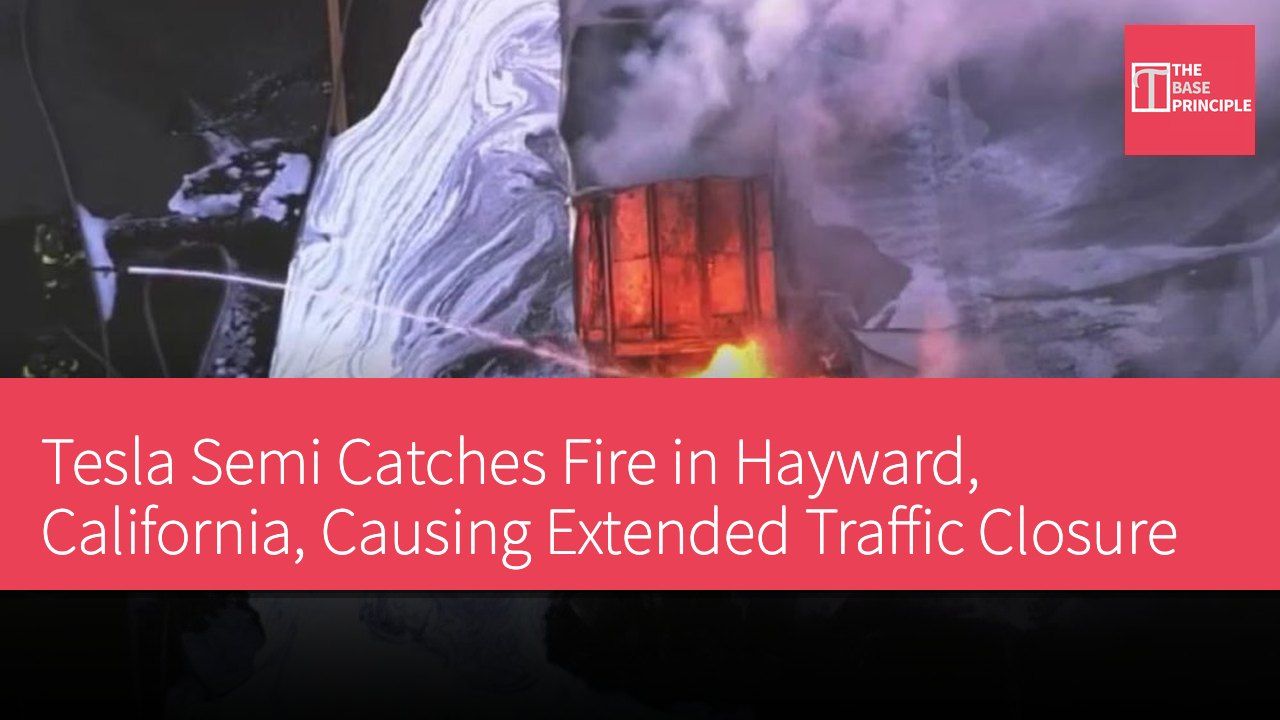
- A Tesla Semi caught fire in Hayward, California, causing hours of traffic disruption.
- The cause of the fire remains unclear and may be related to earlier designs.
- Lithium batteries are difficult to extinguish, with the driver reporting that the Semi caught fire spontaneously.
- No injuries have been reported, and traffic was restored on Wednesday.
A Tesla Semi caught fire in Hayward, California, leading to hours of traffic disruption in both directions until full access was restored on Wednesday morning, according to the California Highway Patrol (CHP). The fire occurred at approximately 5:30 PM local time on Tuesday, when the Semi ignited in the southbound lane of I-880, prompting CHP officials to close both directions to mitigate the potential risk of harmful chemical smoke. No injuries have been reported in the incident.
Cause of the Fire Under Investigation
The cause of the fire is currently unclear, as neither Tesla nor the CHP have determined the reason for the blaze. However, some images taken before the Semi was completely destroyed by flames suggest it may be an earlier unit, as it appears to belong to the design Tesla sent out during its pilot program, which began mass production after revisions a month ago. According to TESLA RATI, there are approximately 5,000 to 7,000 fires involving semitrailers and large commercial vehicles in the U.S. each year.
Challenges in Extinguishing Lithium Batteries
According to NBC Bay Area, the CHP stated that lithium batteries are "very difficult to extinguish." The truck's driver reported that the Semi caught fire spontaneously, but he could not provide a specific explanation. At the time of publication, the CHP had not responded to our request regarding additional details about the involved Semi and any potential collaboration between CHP and Tesla in the investigation. The southbound lane reopened at 3:30 AM on Wednesday, while the northbound lane was opened a few hours after the fire occurred last night.
Potential Impacts of the Tesla Semi Fire
The fire incident involving the Tesla Semi highlights the safety challenges of electric commercial vehicles, particularly the fire risks associated with lithium batteries. As electric vehicles become more prevalent, such incidents may prompt stricter scrutiny of battery technology and safety standards. Although no injuries resulted from this incident, the prolonged traffic closure illustrates the potential impact of accidents on public safety and transportation. As the investigation progresses, it may influence Tesla's production and design decisions in the future.