
- Tesla plans to launch the all-electric autonomous ride-hailing service Cybercab in December.
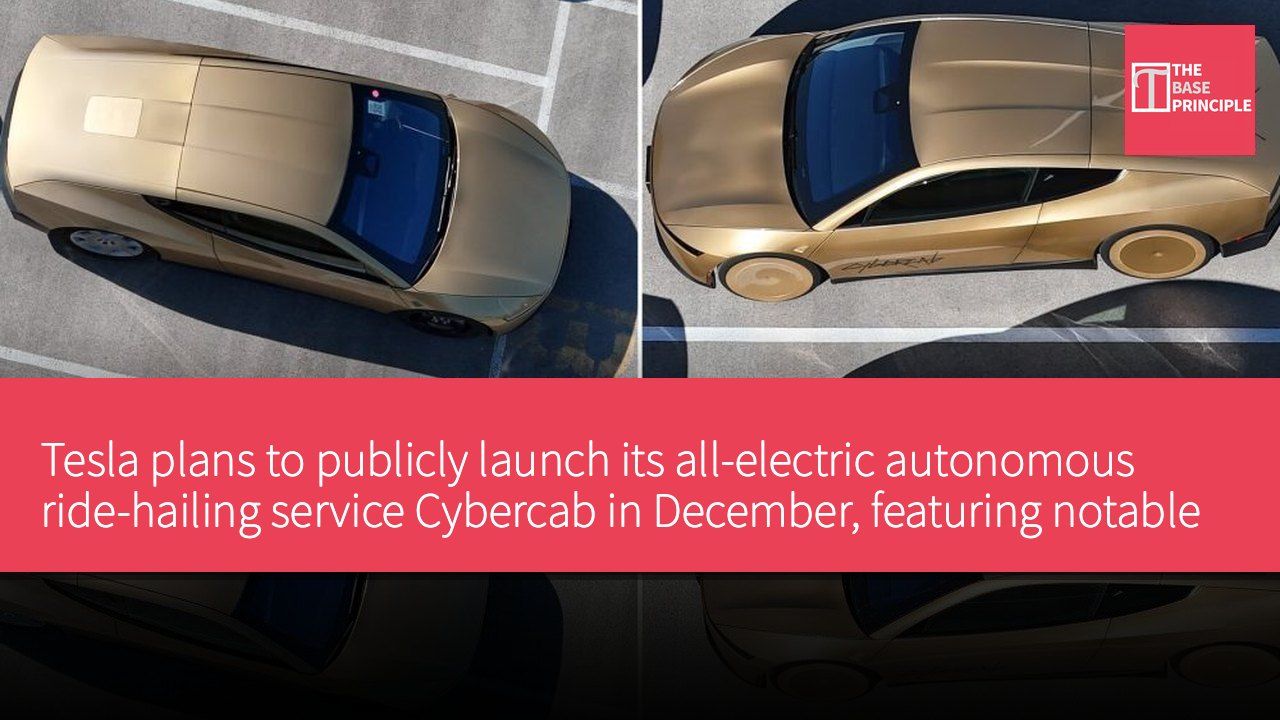
- Recent images show significant updates to the Cybercab's exterior, with a more refined design.
- The current Starlink terminal on the Cybercab is more integrated with the vehicle's lines.
- These vehicles exhibit a production-ready appearance, rather than being early prototypes.
Tesla is preparing to unveil its all-electric and fully autonomous ride-hailing vehicle, Cybercab, with plans to start customer deliveries in December. However, the units rolling out today from the Texas Gigafactory appear different from what we have seen previously. According to aerial footage captured by drone photographer Joe Tegtmeyer on November 18 at Giga Texas, Tesla's Cybercab shows a noticeable exterior update.
The outbound area is filled with golden production vehicles, each equipped with a smoothly mounted Starlink V5 terminal, which appears more refined than the version first showcased months ago.
Cybercab Exterior Updates
When Tesla first revealed the integration in July and showcased a physical example in August, the Starlink hardware was presented as a relatively prominent rectangular panel. Subsequent images in September showed numerous Cybercabs leaving the factory still displaying a lighter and more pronounced rectangular cover, roughly matching the vehicle's golden paint: images from Joe Tegtmeyer show that the latest batch of vehicles has a cover that blends with the roof lines, with observers and responses to Tegtmeyer's article describing the result as more compact and intentional, with the cover flush along the vehicle's contours rather than as an added panel.
All Cybercabs in the latest images also feature prominent "Cybercab" branding on the doors and trunk, confirming that these are completed production units rather than early prototypes. These vehicles are parked near the factory building, at the end of the production line, and covered in transport trailers, with some already queued for shipment. The scale and consistency of the installations suggest this is a result of factory tooling rather than retrofitting. Observers also noted that the color of the Starlink cover is darker than the earlier lighter panels. Tegtmeyer himself left open the possibility of whether this deeper appearance was intentional.
Production Readiness Status
This could be interpreted in various ways: perhaps for thermal performance, signal characteristics, or simply visual identification, or just batch variation still being adjusted. Regardless, the overall effect presents a more integrated, production-ready appearance. For a Robotaxi relying on Starlink for fleet connectivity, customer service, and backup data links in areas with weak signals, a clearer trunk design is not merely an aesthetic improvement. It indicates that Tesla is refining the final visual and hardware details as Cybercab production ramps up at the Texas Gigafactory, preparing for a broader Robotaxi deployment.
These vehicles now appear to be built directly with Starlink rather than being added later.
Impact of Cybercab Updates on Autonomous Services
Tesla's Cybercab exterior updates reflect its ongoing advancements in autonomous technology and design. These changes not only enhance visual appeal but may also improve thermal performance and signal characteristics, which are crucial for the Starlink-dependent Robotaxi service. With production readiness accelerating, Tesla is clearly paving the way for future autonomous services, which will have a profound impact on its market competitiveness.