
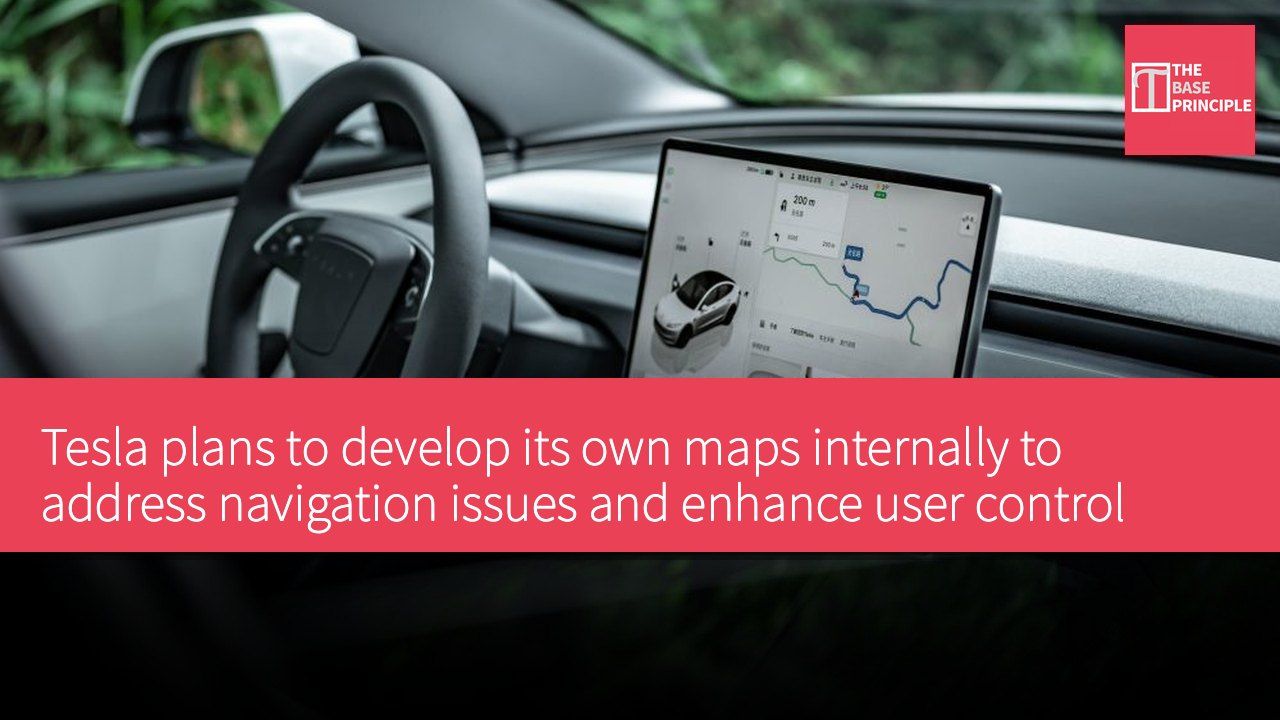
- Tesla plans to internally develop its own maps to address navigation issues.
- The new maps will be AI-based and integrated with voice commands.
- Current navigation features still have flaws, leading to owner dissatisfaction.
- Route planning and navigation have long been pain points for owners.
Tesla announced plans to internally develop its own maps to resolve navigation issues and provide owners with greater control over their routes. During the company's Q3 2026 earnings call, questions were raised regarding FSD (Full Self-Driving) navigation, particularly concerning speed limit recognition, parking, and route planning. These issues have persisted across different versions and appear to be quite challenging for Tesla's AI team. Ashok Elluswamy, head of Tesla's AI department, stated in response to the questions, "You are absolutely correct; we should not rely on external maps."
Purpose of Developing Internal Maps
Therefore, we are building our own maps, but not in the way OneMoreMap does. We are creating a completely new architecture, essentially an AI-based map and navigation system."
He continued, "This will be fantastic. It will be integrated with voice commands. You can converse with it and request different routes. It will learn your personal preferences, along with the preferences of the entire fleet. The collective intelligence of all vehicles will flow into the creation of the maps and navigation, making it super cool." Elluswamy noted that this issue should be resolved, and the maps should be available when version v15 begins deployment to customers. "In the coming months, this will completely take over all navigation functions, parking, and destination handling. It will understand your needs in driving tasks better than you do and handle everything comprehensively."
Challenges of Existing Navigation Features
Tesla Summon performs quite well in FSD v14.3.2, but the navigation features may not meet expectations. Navigation is one of the most apparent complaints about FSD; despite improvements, flaws remain. Most of the time, FSD chooses routes that some drivers do not prefer, and Tesla is attempting to address this issue with route planning features in the summer 2026 update. Tesla currently relies on Google for map data, but it seems counterintuitive that the company would depend on third parties to resolve this issue.
These improvements will be welcomed, as route planning and navigation have long been pain points for many owners.
Potential Impact of Tesla's Internal Map Development
Tesla's plan to develop maps internally demonstrates its commitment to enhancing user experience, particularly in navigation and route planning. This not only addresses the current reliance on third-party map data but also leverages AI technology to learn users' personal preferences, further improving the accuracy and intelligence of navigation. As owners express dissatisfaction with navigation features, this initiative could enhance the driving experience and strengthen Tesla's competitiveness in the field of autonomous driving technology.