
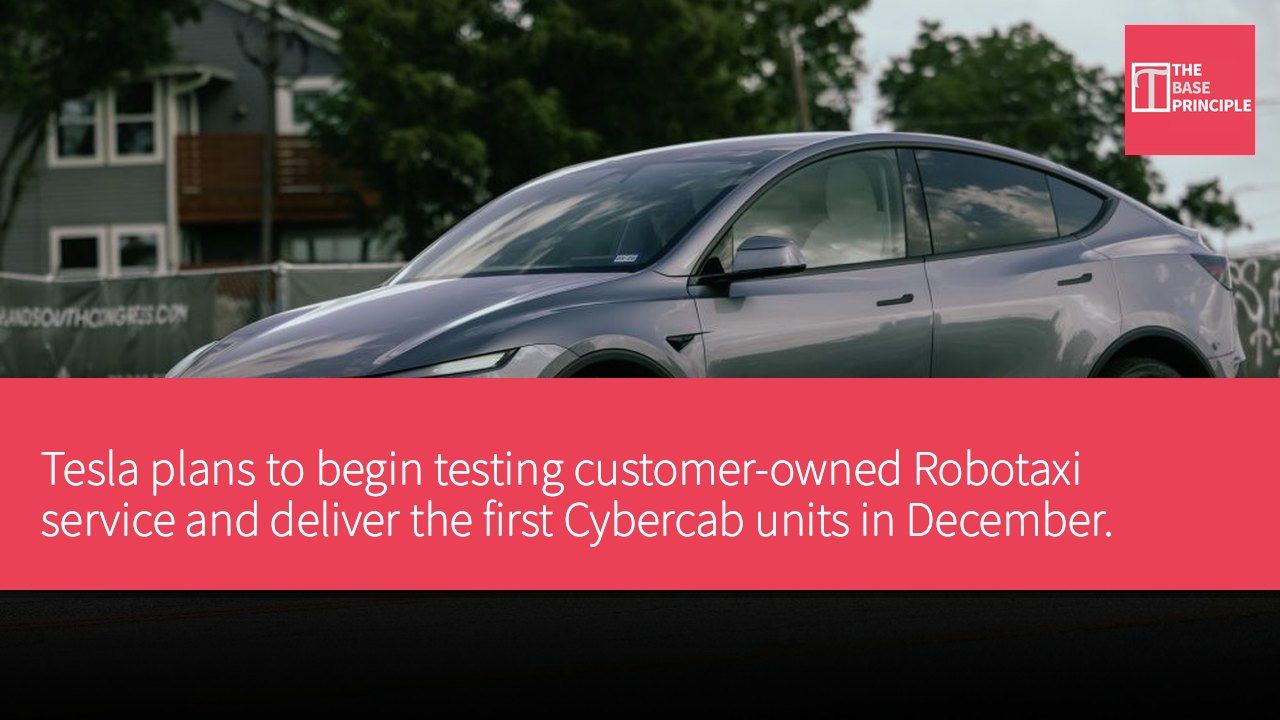
- Tesla may begin testing customer-owned Robotaxi service in December.
- The first deliveries of Cybercab are also scheduled for December, priced at US$29,990.
- Successful trials will realize the vision of owners earning income while not driving.
- Tesla's Robotaxi service will operate alongside customer vehicles, expanding the ecosystem.
Elon Musk indicated that Tesla may start testing the integration of customer-owned vehicles into the Robotaxi platform in December. In response to an Austin Uber driver using a fully autonomous Model Y, Musk noted, "Coming soon. If all goes well, we might start pilot testing next month. Managing an entire fleet is much better than just driving one car!"
This exchange highlights the appeal of generating passive income from autonomous vehicles, as opposed to actively driving for ride-sharing platforms. The potential December start date is technically earlier than the company's previous guidance but aligns with the currently anticipated delivery timeline for the Tesla Cybercab, which lacks manual controls. However, Tesla plans to incorporate customer vehicles into the fleet later. During Tesla's third-quarter earnings call, the AI division indicated that customer vehicles would join the network around the second quarter of 2027. Musk's comments suggest an accelerated pilot, most likely starting in Austin, where Tesla's Robotaxi service has been operational the longest, and new features are typically launched first.
Details on Cybercab Customer Deliveries
December is also the target month for the first deliveries of Cybercab. In mid-November, Tesla began inviting select buyers to purchase the two-seat vehicle designed for personal use at a price of US$29,990, along with a monthly autonomous driving subscription fee of US$299, expected to be delivered in Austin. These initial private Cybercabs are limited to personal use within existing Robotaxi zones and do not automatically include participation in the commercial network; most Cybercabs are still expected to remain as fleet vehicles owned by Tesla.
Operational Model of the Robotaxi Service
The coincidence of these two December milestones underscores Tesla's parallel paths. Customer Model Y vehicles already on the road, equipped with FSD hardware, can quickly expand the pool of vehicles for unsupervised testing, while the Cybercab, lacking a steering wheel or pedals and equipped solely with dedicated Robotaxi hardware, is launched as a purpose-built platform. Hardware differences, such as additional cameras or cleaning systems on the company's Robotaxi, may limit which Model Y qualify in the early stages. Additionally, regulatory approvals, insurance arrangements, and software readiness will determine whether the conditions of "if all goes well" are met.
For vehicle owners, successful trials will fulfill Musk's vision first outlined in Tesla's 2016 Master Plan: vehicles earning income while their owners sleep or work.
Combined with the arrival of privately owned Cybercabs in the same month, December may mark a transition for Tesla-controlled Robotaxi operations toward a broader ecosystem, where the company's fleet and customer vehicles contribute to the company's autonomous ride-hailing platform and continue to expand.
Synergistic Development of Robotaxi and Cybercab
The overlap in the launch timing of Tesla's Robotaxi service and Cybercab demonstrates the company's progress in autonomous driving technology. By incorporating customer vehicles into the Robotaxi platform, Tesla not only expands the vehicle pool but also creates new revenue models that allow owners to earn passive income while not driving. This strategy not only enhances Tesla's market competitiveness but also lays the groundwork for the future autonomous driving ecosystem, fostering collaboration between the company and consumers.