
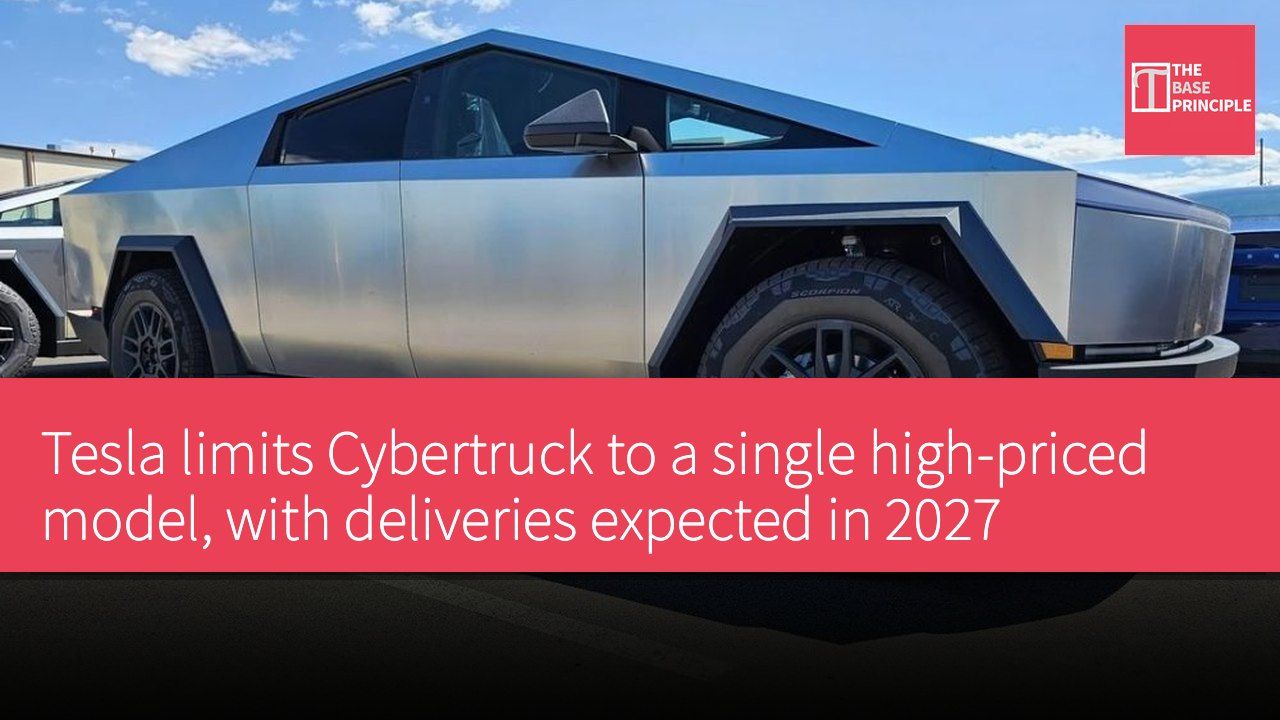
- The only price for the Cybertruck is US$109,990, and orders for the Cybertruck Premium AWD have ceased.
- Tesla is focusing its resources on long-term growth between autonomous driving and commercial vehicle models.
- The narrowing of Cybertruck orders may lead to a reconfiguration of the supply chain.
- If the Cybercab is successful, Tesla could improve cash flow and capital returns.
Tesla has announced that the Cybertruck is now available in a single pricing and model configuration: the Cyberbeast is the only variant available for order, priced at US$109,990; the Cybertruck Premium AWD is no longer available for order, and the entire lineup is gradually being reduced to high-priced versions. The company noted that production adjustments at the Texas Gigafactory are underway, with expected delivery times now set between March and June 2027, aligning with the company's timeline to halt production in 2027. This move is seen as Tesla's attempt to attract remaining orders by standardizing high-priced models and testing market acceptance of extreme positioning. According to disclosures on social media, risks accompany the overall contraction of the production line and a shift in capital allocation.
Cybertruck as the Only High-Priced Model
Since its announcement in 2019, the Cybertruck has significantly differed in design and positioning from traditional pickups; the current changes indicate that Tesla may be focusing its resources on long-term growth between autonomous driving and commercial vehicle models. On the other hand, the prospects for the Cybercab autonomous driving taxi are viewed as a key part of the company's new phase, but they also involve stringent regulatory scrutiny and technical challenges. Musk has repeatedly emphasized on social media that to maintain large-scale production, there is no choice but to focus on high-priced versions, reducing lower-tier options to enhance overall profitability potential.
Market observers note that the narrowing of Cybertruck orders, price adjustments, and capacity restructuring may lead to a reconfiguration of the supply chain; resources for steel, vehicle parts, and assembly lines will need to be reallocated to accommodate the new capacity strategy. While significant revenue growth may not be evident in the short term, if the Cybercab gains further market acceptance, Tesla could potentially center its business growth around autonomous driving and mobility services, impacting the competitive landscape of the global pickup market in the long run.
Impact of Supply Chain Reconfiguration
The Cybertruck's shift towards a higher-priced strategy reflects that Tesla is adjusting resource allocation to address cost pressures while responding to the long-term development path of autonomous driving technology. If the Cybercab can successfully enter the market, it could bring new mobility service opportunities, thereby improving the company's cash flow and capital returns. However, uncertainties regarding current regulations and safety reviews remain high, especially given the strict regulatory requirements for autonomous driving models in the U.S. market.
At the same time, the export prospects for the Cybertruck in the global market face differences in regional regulations, emissions, and safety standards; transportation costs and logistics arrangements may also affect final sales performance. Tesla appears to be adjusting its global layout by focusing on regions with higher cost efficiency and long-term growth drivers. Consumers may see more models centered around autonomous driving and mobility services in the coming years, gradually reducing the singular positioning of traditional pickups.
Based on currently known figures, the Cybertruck has shown relatively conservative sales performance since deliveries began at the end of 2023, prompting the company to reassess its product lineup and pricing strategy to address cost and competitive pressures. If the Cybercab is successfully launched, Tesla may focus on autonomous driving models and related services with higher growth potential in the long term, driving overall operational growth and capital returns.
Overall, the changes in the Cybertruck production strategy reflect Tesla's response to current market conditions: high costs, elevated pricing, and an unstable autonomous driving technology roadmap, prompting the company to optimize capital expenditures and direct resources towards models and mobility services with long-term growth potential. In the coming years, the strategic direction showing different model combinations will have a lasting impact on the overall market landscape and investor confidence.
Tesla Adjusts Strategy to Address Market Challenges
Tesla's high-priced strategy for the Cybertruck reflects its realistic considerations in facing cost pressures and market competition. With the challenges of developing autonomous driving technology, Tesla must optimize resource allocation and concentrate on models with long-term growth potential. In the coming years, if the Cybercab can be successfully launched, it could bring new opportunities for the company, improving cash flow and capital returns. This move may also alter the competitive landscape of the global pickup market, particularly in the context of the increasing importance of autonomous driving and mobility services.