
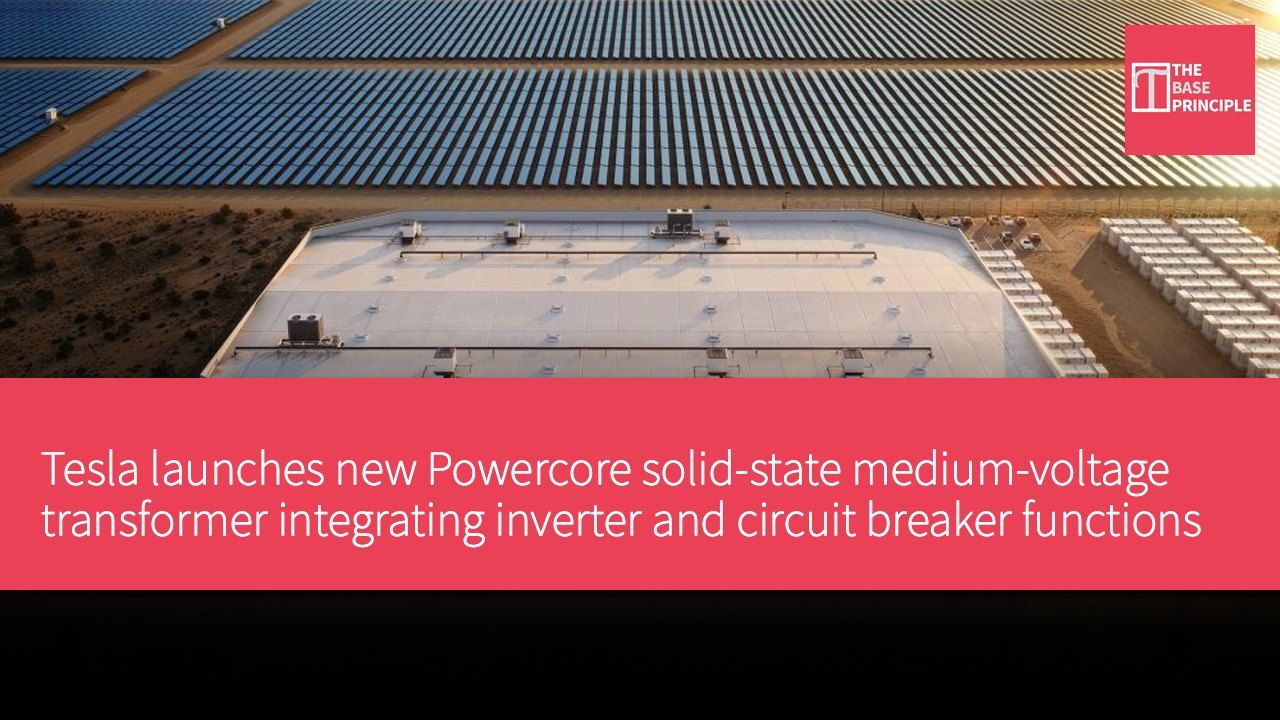
- Tesla has launched Powercore, which integrates the functions of a transformer, inverter, and circuit breaker.
- Powercore has a continuous output power of 7.4 MW and boasts a peak efficiency of up to 98.86%.
- This product fills the gap left by Tesla in transformer production last year.
- The introduction of Powercore comes at a time when traditional transformer delivery times have been extended.
Powercore has a continuous output power of 7.4 MW or 9 MVA, with a voltage of 34.5 kV AC, and supports grid-forming with a peak power of 10 MVA. Technical specifications provided by Sawyer Merritt indicate a peak efficiency of up to 98.86%, with a DC voltage range of 800 to 2,000 volts, and an integrated solid-state circuit breaker capable of clearing faults in about 100 microseconds. Tesla has not yet disclosed pricing, factory location, or the identity of its first customer.
Technical Specifications of Powercore
This product fills the gap left by Tesla last year. When Tesla launched Megapack 3 and Megablock in September 2025, it stated that it would produce transformers in-house but revealed little related information.
Megablock combines four Megapack 3 units with transformers and switchgear into a single medium-voltage module, as reported by Teslarati. Powercore appears to be the missing piece of that puzzle.Current typical battery or solar projects use low-voltage inverters to convert DC to AC, and then employ large oil-immersed transformers to step up the power to grid voltage. Solid-state units utilize power electronics technology to handle both steps simultaneously, meaning fewer required devices, smaller footprint, and no need for combustible oil. The grid-forming capability allows it to actively help maintain voltage and frequency stability, rather than merely following changes in the grid.
Market Demand and Supply Challenges
The timing of the introduction of Powercore is one of the key selling points. As artificial intelligence data centers and renewable energy projects squeeze utility connection queues, traditional transformer delivery times have extended to several years. Tesla Energy executive Max de Zegher pointed out in a post shared by Elon Musk, "Transformers have hardly changed since the 1890s: copper coils immersed in oil tanks," while batteries, solar, and computing all operate on DC. Powercore offers "one conversion, and approximately halves the losses."Tesla also stated that the supply of Megapacks for 2027 is nearly sold out. In the third quarter, Tesla deployed 13.7 GWh of energy storage, setting a record for the second-best quarter. On Tuesday, the company also noted that the solar systems deployed by Tesla Energy customers now generate more electricity than the total annual consumption of its global business.
Item Specification Continuous Output Power 7.4 MW / 9 MVA Voltage 34.5 kV AC Peak Efficiency 98.86% DC Voltage Range 800 to 2,000 volts Fault Clearing Time Approximately 100 microseconds
Impact of Powercore on the Energy Market
The launch of Powercore comes at a time of rising demand for renewable energy, making it a significant innovation in the energy market. With traditional transformer delivery times extended, Tesla's solid-state transformer can provide faster solutions while reducing equipment footprint and energy losses. This product not only enhances energy efficiency but also actively maintains grid stability, demonstrating Tesla's foresight and competitiveness in the energy technology sector.