
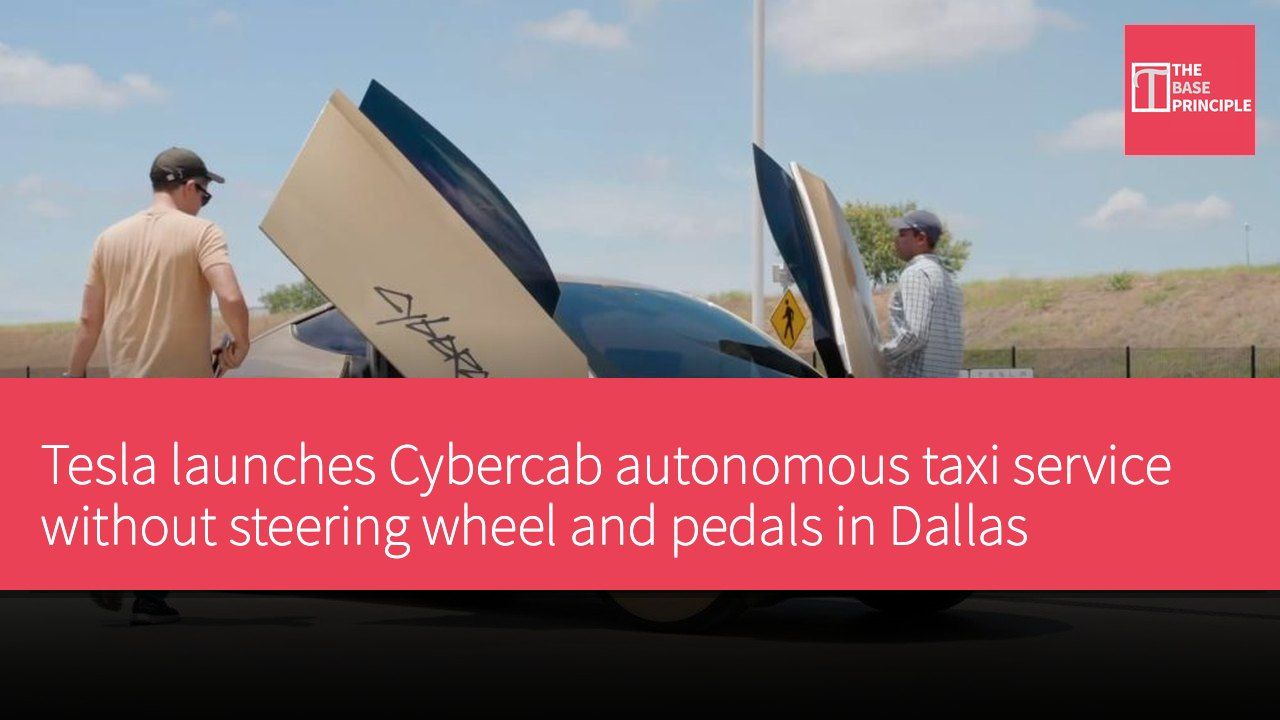
- Tesla launches Cybercab autonomous taxi service in Dallas.
- Passengers can book Cybercab services through the app.
- The expansion of Cybercab shows Tesla is deploying autonomous taxis in multiple cities.
- Most Cybercabs will remain company-owned to control usage rates.
Tesla has opened its dedicated Cybercab autonomous taxi ride-hailing service in Dallas, making it the second U.S. city, after Austin, to receive the two-seat, steering wheel-free vehicle. The company officially announced this on November 19 and posted on social media, saying, "Howdy Dallas. Cybercab has arrived in your city." Tesla has been hinting at an expansion to Dallas over the past few weeks.
Passengers can book rides through the Tesla Robotaxi app. Since April, Tesla has been operating unmonitored Model Y Robotaxis in Dallas, and the addition of Cybercab brings its dedicated autonomous vehicles into the same network. Notifications from the app and official posts confirmed that the service is now open to the public, following a teaser the day before, and AI software head Ashok Elluswamy promised during the Q3 2026 earnings call that Dallas would be the next city.
Launch of Cybercab Service
The Cybercab ride-hailing service was first launched in early September 2026 in a limited area of Austin. Following an exclusive invitation event on September 3, the public ride-hailing service began immediately. The fleet in Austin grew rapidly, with Elon Musk later noting that the growth in the first few weeks was about tenfold, and the service has been operating unmonitored, gradually expanding to 24/7 availability. The vehicle model is produced at the Texas Gigafactory, featuring butterfly doors, no pedals or steering wheel, and relies entirely on Tesla's unmonitored full self-driving software.
Importance of Multi-City Deployment
Expanding Cybercab beyond Austin is a significant signal that Tesla is shifting from a centralized pilot to a multi-city deployment of its dedicated autonomous taxis, confirming that its software stack and vehicle-specific data can transfer to new environments. Executives have described plans to expand to more cities by the end of 2026, using the same software as Model Y Robotaxis. This move intensifies Tesla's competition with Waymo, which operates a larger unmonitored fleet in more markets, while reinforcing Tesla's long-term bet on transportation services as a core business.
Most Cybercabs are expected to remain company-owned rather than sold privately, allowing Tesla to control usage rates and scale. Elon Musk claimed that your Tesla could enter the Robotaxi fleet next month. On the other hand, Tesla has begun inviting select customers to purchase Cybercabs for personal use, aiming for deliveries in December. Tesla has priced the Cybercab at a pre-tax RMB¥29,990 (approximately HK$32,509), with a monthly full self-driving subscription fee of RMB¥299 (approximately HK$325), and a non-refundable deposit of RMB¥1,000 (approximately HK$1,090).
The initial deliveries will primarily focus on Austin. Company executives emphasized that customer purchase volumes will be relatively small, while the vast majority of vehicles will remain within Tesla's Robotaxi network.
Tesla's Market Strategy for Autonomous Taxis
Tesla's launch of the Cybercab service in Dallas demonstrates its ongoing advancements in autonomous driving technology. This is not only a continuation of the successful operation in Austin but also a strategic expansion into multiple cities. By keeping most Cybercabs company-owned, Tesla can effectively control operations and scaling, enhancing its competitiveness in the autonomous driving market. This initiative also reflects Tesla's recognition of the importance of future transportation services, particularly in competition with other rivals like Waymo.