
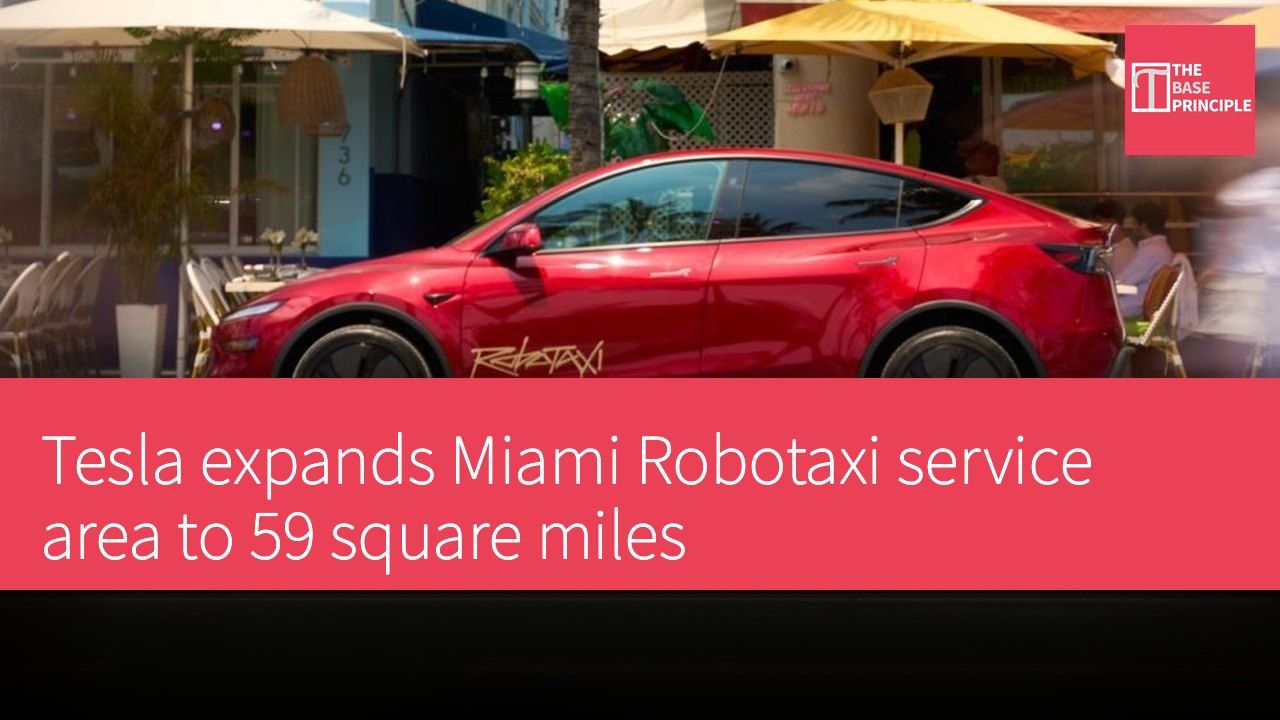
- Tesla's Robotaxi service area in Miami has expanded to approximately 59 square miles.
- The new area includes downtown and other popular locations, attracting more passengers.
- The expansion is expected to increase ridership and enhance Tesla's competitiveness in the market.
- The service area in Miami now exceeds the total area of Orlando and Tampa combined.
Tesla has recently doubled the service area of its Robotaxi platform in Miami, Florida. On November 16, Tesla announced that the service area in Miami would be significantly expanded and released a map showing the new service boundaries. The new map indicates that the expanded area is approximately twice the size of the original geographic boundary, incorporating major urban areas into the Robotaxi service for the first time. The geographic boundary for Tesla's Robotaxi in Miami has been greatly expanded.
Tesla launched its driverless Robotaxi ride-hailing service in Miami on July 3, making it the company's first market outside Texas and California. The initial geographic boundary covered only a small portion of western Miami-Dade County, including West Miami, Doral, Sweetwater, and Miami International Airport, with an area of about 25 square miles. A subsequent minor expansion increased it to approximately 31 square miles. Now, downtown Miami, the popular Brickell neighborhood, and Miami Beach—areas that were initially deliberately excluded—are now included in the service area.
Details of the New Service Area
Passengers can now book Model Y vehicles through the Tesla Robotaxi app, which has been operating around the clock since mid-November.
The new map's area is now approximately 59 square miles, representing an increase of about 92%. The new geographic boundary on the east side now includes downtown, Brickell, Wynwood, Little Havana, and the Biscayne Bay waterfront, covering many attractions popular with Miami visitors. Additionally, the new geographic boundary extends north to Hialeah and increases coverage near the airport corridor. At its widest point, the area stretches about 11 miles from west to east. Miami Beach remains outside the service area, although Elon Musk has previously indicated that beach coverage is "coming soon" following calls from Florida Governor Ron DeSantis.
Compared to Tesla's other markets, the approximately 59 square miles area in Miami is now larger than the combined areas of Orlando (about 26 square miles) and Tampa (about 24 square miles), but still smaller than central cities in Texas, such as Austin (about 443 square miles), San Antonio (about 275 square miles), Houston (about 254 square miles), and Fort Worth (about 143 square miles). However, rapid growth brings it closer to competitor Waymo's approximately 60 square miles Miami service area, which already includes beach areas.
Impact of the Expansion on Residents and the Market
For residents and visitors in Miami, this expansion allows driverless ride-hailing services to operate between the city's busiest commercial and residential hubs, providing a new option in a traffic-heavy environment with limited parking. For Tesla, covering high-demand downtown corridors should increase ridership, generate more real-world autonomous driving data, and strengthen its competitive position. As the Robotaxi network moves toward broader profitability and the eventual deployment of the Cybercab, this growth also reflects accelerated operational confidence less than five months after the city's launch.
Strategic Significance of the Robotaxi Expansion for Tesla
The expansion of the Robotaxi service area in Miami demonstrates Tesla's growing confidence in its autonomous driving technology. This expansion not only attracts more residents and tourists to use the service but also provides convenient transportation options in busy commercial districts. Furthermore, such growth aids in collecting more autonomous driving data, further optimizing the technology and enhancing its competitive edge against rivals like Waymo. As the service area expands, Tesla is also paving the way for future profitability and a larger-scale autonomous driving network.