
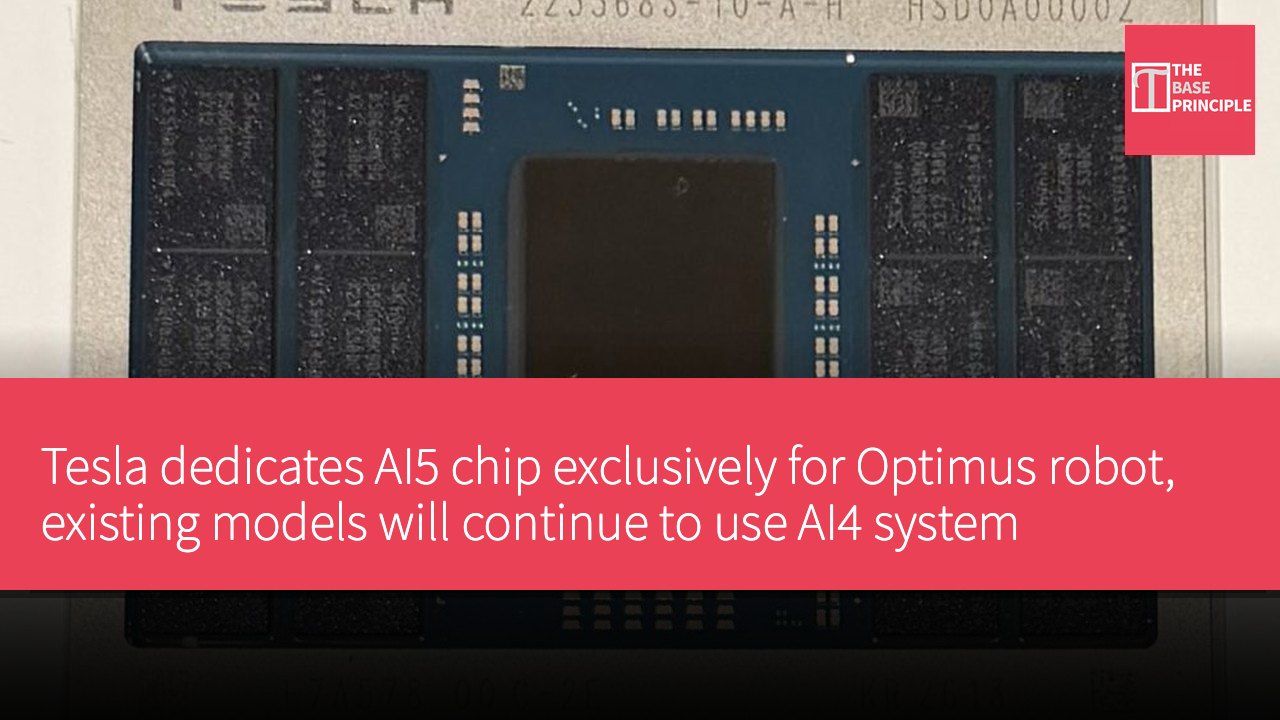
- Tesla will dedicate the AI5 chip to the Optimus robot, while existing models will continue to use the AI4 system.
- Musk believes AI4 is sufficient for achieving superhuman driving without the need for the AI5 chip.
- Tesla will develop an upgrade plan for Hardware 3 owners to enhance hardware performance.
- The AI5 chip is planned for mass production in 2027, focusing on humanoid robots and training infrastructure.
Tesla will reserve the AI5 chip specifically for the Optimus robot, with CEO Elon Musk stating he believes this product will become the largest globally in the future. This decision has sparked discussions about the performance and capabilities of AI4 as an autonomous driving chip, while also evoking unpleasant memories for many owners regarding the Hardware 3 predicament. Musk stated on November 22 that Tesla vehicles will continue to be equipped with the AI4 computer, which he believes is sufficient for achieving "superhuman driving," while the next-generation AI5 chip will be dedicated to Optimus.
Musk was responding to a question from a Hardware 3 Model Y owner asking when AI5 would appear in new vehicles.
Musk wrote on Twitter: "This will be for Optimus. Cars will remain on AI4, which is sufficient to solve the superhuman driving problem." This response quickly garnered significant attention from owners and led to follow-up questions regarding potential upgrades for AI3 vehicles and their FSD status. This statement aligns with some of Musk's comments made during the first-quarter earnings call. In April, he mentioned that AI5 would be prioritized for Optimus and the company's AI training cluster, rather than vehicles, as AI4 has already proven capable of providing sufficient computational power for achieving autonomous driving beyond human safety levels.
Continued Use of AI4 Hardware
Musk also indicated during the call that Hardware 3 vehicles would lack autonomous driving capabilities, and Tesla would develop an upgrade plan for these owners if they wish to enhance their vehicles with new cameras and computers. At one point, HW3 owners were told their vehicles would be capable of achieving full autonomous driving FSD. This revelation was ultimately dismissed, and earlier this year, they received clearer information. AI4, also known as HW4, is the computer currently installed in new Tesla vehicles.
It powers the latest FSD software, including the v15 series, which introduces real-time generated "reality view" top visualizations.
Future Plans for AI5 Chip
Tesla also discussed a mid-tier AI4+ or AI4.5 variant focused on memory enhancements and moderate performance improvements, partly due to rising costs of memory and storage. Musk mentioned that the cost of the AI4 computer has roughly doubled due to the rising prices of these components. By directing AI5 towards Optimus, Tesla is allocating its highest-performing silicon to humanoid robots and training infrastructure. The AI5 has already been laid out and has entered the trial production phase, with plans for larger-scale mass production in 2027.
This decision underscores Tesla's view that the existing AI4 hardware can address the challenges of automotive autonomy, while more complex perception, planning, and motion control needs will require support from the next-generation chip.
For current and prospective Tesla owners, Musk's information indicates that AI4 vehicles already have the hardware space needed for achieving full autonomous driving. Customers should view this as a welcome clarification that may influence their future purchasing decisions.
The AI5 chip will be exclusively used for the Optimus robot.
Existing Tesla models will continue to use the AI4 system and will not be equipped with the AI5 chip.
Tesla will develop an upgrade plan for Hardware 3 owners, allowing them to enhance their vehicles with new cameras and computers.
The AI4 computer has proven capable of providing sufficient computational power for achieving autonomous driving beyond human safety levels.
The AI5 chip is planned for larger-scale mass production in 2027.
Tesla's Focus on Robotics Technology Strategy
Tesla's allocation of the AI5 chip exclusively to Optimus demonstrates its commitment to robotics technology. Musk emphasized that the existing AI4 hardware is already capable of meeting the demands of automotive autonomy, which not only reduces reliance on new chips but may also influence consumer purchasing decisions. With the trial production and future mass production plans for AI5, Tesla is paving the way for its robots and AI training infrastructure, which could reshape the entire landscape of autonomous driving and robotics markets in the future.