
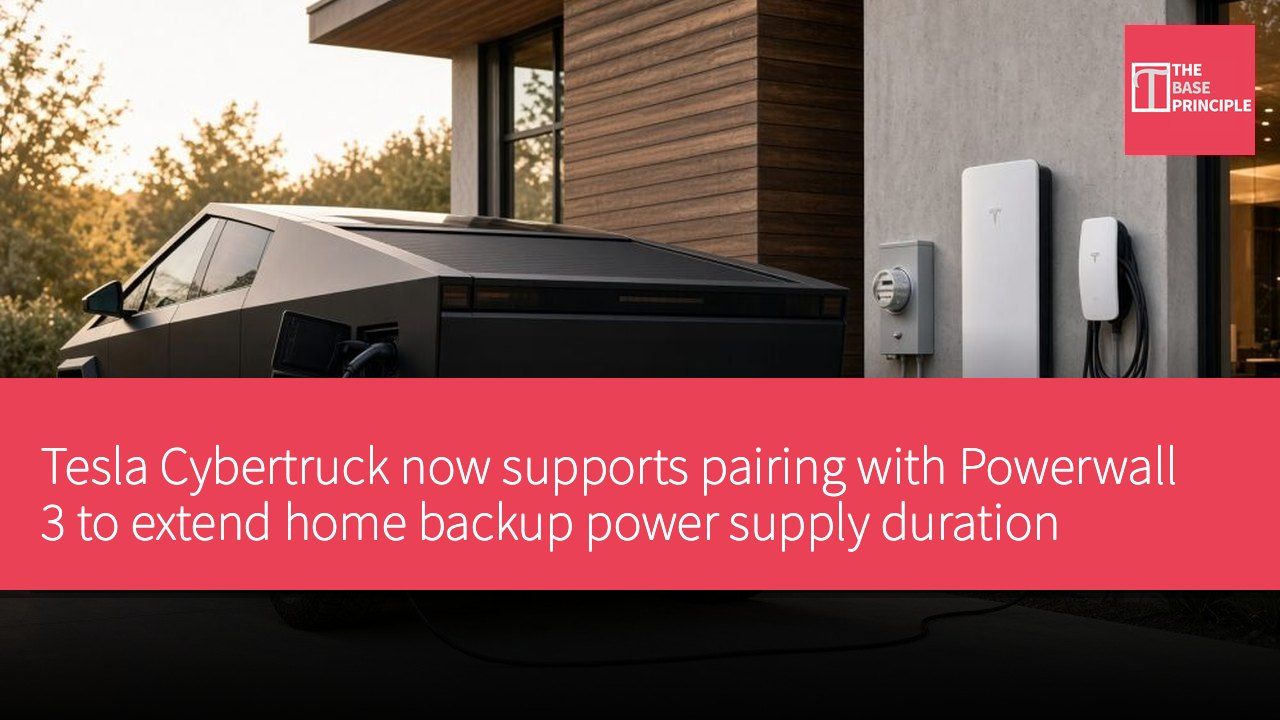
- The Cybertruck can now pair with Powerwall 3 to extend home backup power.
- This marks the first time a vehicle and home battery are working together, enhancing backup power flexibility.
- The Cybertruck can provide about three days of backup power without additional installation costs.
- Tesla will roll out the home backup power feature in 2024, expanding its role in energy setups.
Tesla's Cybertruck can now be paired with Powerwall 3 to help homes stay operational for longer during power outages, a feature the company first promised when it launched the truck in November 2023. The Cybertruck's official account announced the update on the X platform Thursday, stating: "Powerwall 3 and I can now power your home together. This will extend your home backup power for more than 3 days, equivalent to 9 extra Powerwalls."
Cybertruck Chief Engineer Wes Morrill confirmed the rollout, noting that this is the first time a vehicle and home battery have worked together in this way.
Powerwall 2 and Powerwall+ Compatibility
According to the Cybertruck account and Morrill, Powerwall 2 and Powerwall+ compatibility will be introduced later this year. "Powerwall 3 and I can now power your home together, extending your home backup power for more than 3 days, equivalent to 9 extra Powerwalls," the account stated.
Powershare itself is not new. Tesla enabled the Cybertruck to power tools, home appliances, or other electric vehicles through its bed outlets when it launched in 2023. The home backup power feature through Powershare Gateway and the Universal Wall Connector was introduced in 2024, and Tesla expanded the support to homes with solar systems the following year. However, until now, the ability for Powershare to work with existing Powerwalls was missing, rather than acting as a standalone backup source, competing with the same task.
Advantages of Cybertruck Providing Backup Power
The significance of this pairing lies in the fact that a single Powerwall home battery typically only covers a home's power needs for about a day, and even less if electricity usage is high or the outage extends into a heatwave or cold snap. The cost of installing additional Powerwalls to provide more backup storage can run into the thousands of dollars. In contrast, the Cybertruck can utilize the battery the owner already has, which is sufficient to provide about three days of backup power, without the need to install another unit or schedule an installation service.
For homes located in areas prone to wildfires, hurricanes, or winter storms, this ensures that refrigerators and medical equipment can continue to run without interruption. Tesla told owners in October 2024 that Powerwall integration would arrive sometime in 2025. That date came and went, and in December 2025, Tesla pushed the target to mid-2026, with Morrill explaining at the time that the two grid-forming devices needed to negotiate which one would manage the home during an outage, and the certification process across multiple generations of Powerwalls was taking longer than expected.
For those who purchased Powershare hardware and expected it to be compatible with their existing battery setups, Thursday's update fills a gap that has been a recurring complaint from owners since Cybertruck deliveries began. Tesla is also launching a standalone Powershare grid support program in Texas, allowing the Cybertruck to send power back to the grid during peak demand periods, thus continuing to expand the truck's role in home energy setups, even if individual components arrive later than expected.
Impact of Cybertruck and Home Battery Integration
The integration of the Cybertruck with Powerwall 3 demonstrates Tesla's innovative approach to home energy management. This not only enhances the home's ability to maintain power during outages but also reduces the financial burden on users when installing additional batteries. Particularly in areas affected by natural disasters, such a solution can ensure the operation of essential equipment, thereby increasing the safety and comfort of the home. As Tesla continues to expand the capabilities of its energy products, future home energy management will become more flexible and efficient.