
- The Cybertruck is a continuously evolving product with ongoing improvements.
- Tesla has switched to polypropylene for the air dam, enhancing durability and reducing costs.
- These changes positively impact the Cybertruck's durability and aerodynamics.
- Tesla's approach to changes differs from traditional automakers, focusing on immediate improvements.
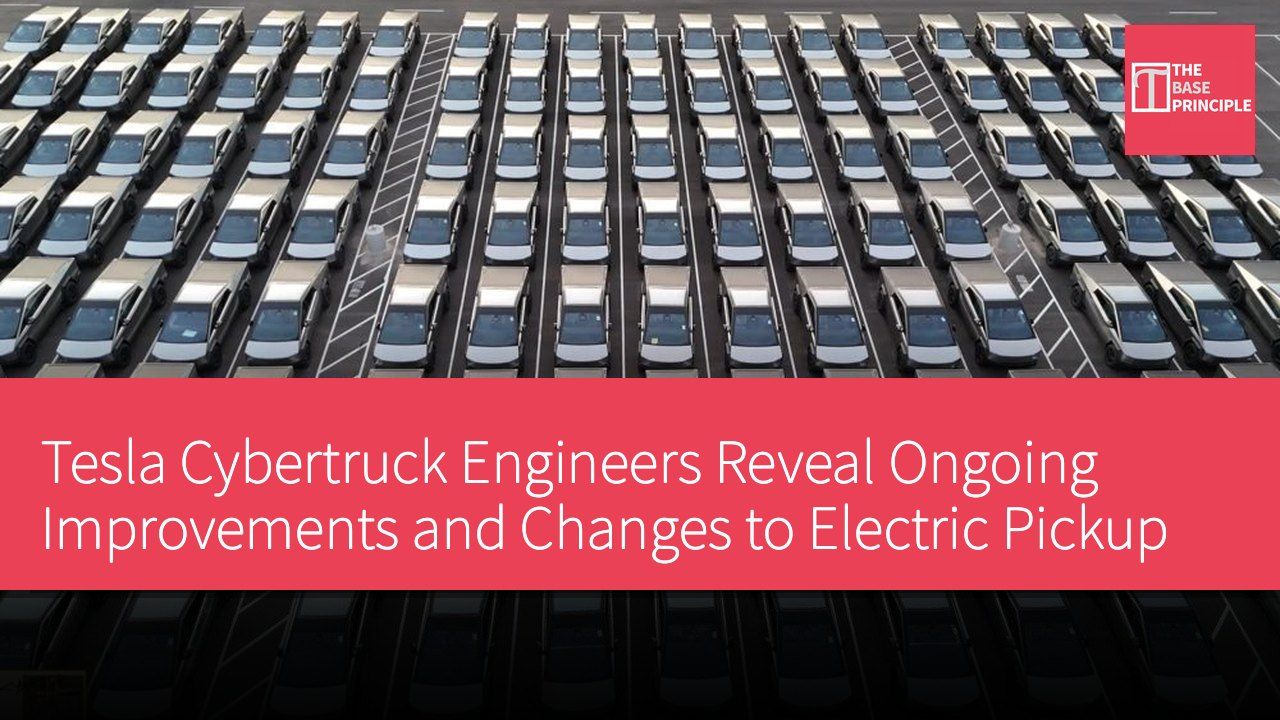
Tesla's Cybertruck chief engineer Wes Morrill has revealed multiple alterations to the all-electric pickup, describing it as a "living, evolving, and improving thing." The Cybertruck is produced at Tesla's Gigafactory Texas near Austin, and over the past few years, Tesla has been making incremental adjustments to the pickup to enhance cost-effectiveness, reliability, repairability, and production capacity.
Morrill added, "The finish line is not entering production. The product is a living, evolving, and improving thing."
Air Dam Material Change
Some changes have not yet been made public, but one of the most notable alterations is Tesla's modification to the air dam located at the bottom of the truck. Previously, this dam was made of aluminum, but now the Cybertruck uses self-reinforced polypropylene. Morrill explained that this polypropylene "is stretched into fibers and then laminated," offering greater durability, lighter weight, and significantly lower costs in this production method compared to aluminum. This has also facilitated improvements in the Cybertruck's geometry, enhancing the manufacturing process for bolts and edges, and implementing some minor shape changes.
These adjustments have had positive effects on the Cybertruck in multiple ways, particularly in terms of durability and reducing drag. I am amazed by the level of interest people have shown in what is a relatively minor change to the Cybertruck's air dam, a part of the vehicle that most people won't even see. So, I will share a few more details. Here are two photos, with the one on the left showing the latest version of the truck...
Tesla's Approach to Changes
Typically, Tesla's vehicle models are not necessarily identified by production year because changes are fluid and occur whenever the company deems appropriate. This differs from other automakers, which usually implement major manufacturing changes with new annual models. Instead, Tesla typically identifies its vehicles by "generations" or "eras." For example, owners of newer Model Ys might refer to their vehicles as "Juniper," similar to the Model 3, where many people call the new body style "Highland."
Tesla's production changes demonstrate the company's commitment to continuously improving products and advancing vehicle technology. If a product can be improved immediately, there is no need to wait until next year, which is exactly the approach Tesla is taking with the Cybertruck.
How Tesla Continuously Advances Product Improvements
Tesla's ongoing improvements to the Cybertruck highlight its focus on product innovation and technological advancement. Compared to traditional automakers, Tesla's fluid change strategy allows it to quickly adapt to market demands and technological progress, enhancing the product's competitiveness and reflecting its flexible production processes. This approach enables Tesla to maintain a leading position in the ever-changing market and ensure its products consistently meet consumer expectations.