
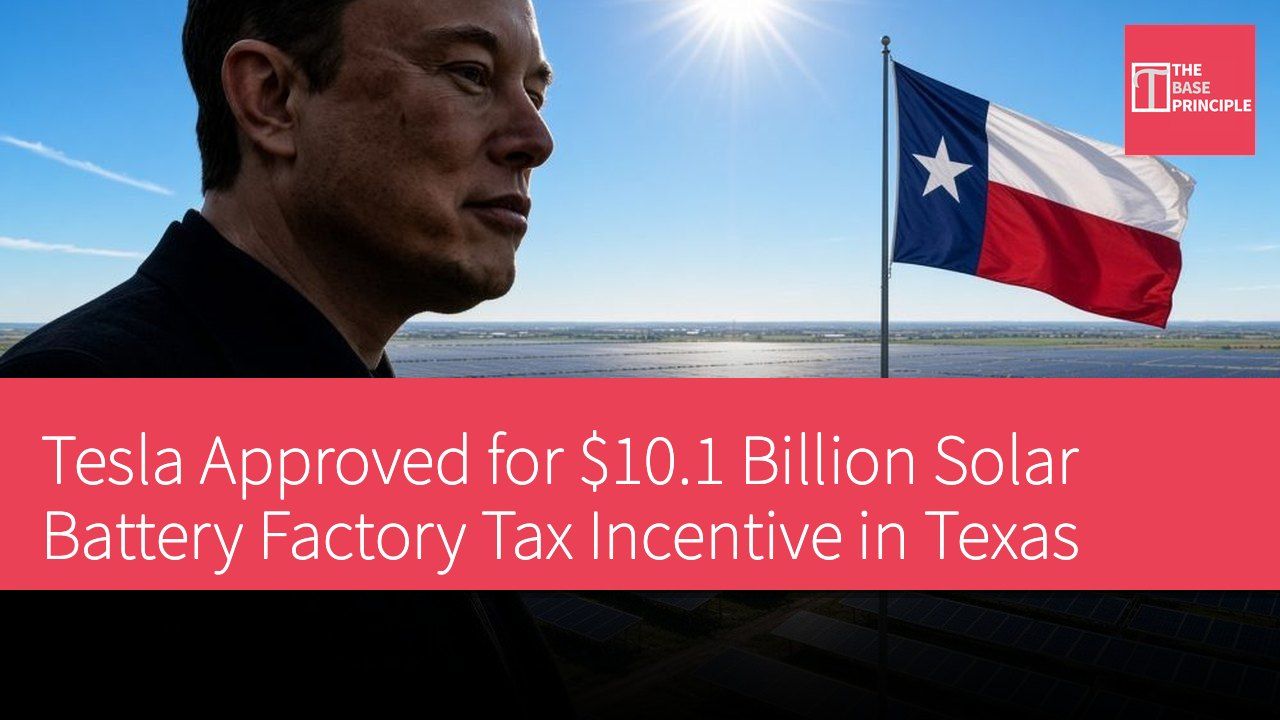
- Fort Bend County approved Tesla's tax incentive plan for the solar battery factory.
- The factory, named "Project Crystal Sun," is expected to create nearly 10,000 jobs.
- Tesla is still considering other locations, with competition from out-of-state rivals.
- The factory will handle the entire battery production process, aiming for an annual output of 100 GW.
The Fort Bend County Commission approved a tax incentive plan for Tesla's proposed $10.1 billion solar battery factory in Needville, Texas, on Thursday, granting the company the final local approvals needed before deciding on the construction site. All four agreements with Tesla passed with a 4-0 vote. The voting items included property tax abatements for Reinvestment Zone No. 34, a Chapter 381 economic development agreement, a foreign trade zone non-opposition letter and alternative payments for certain taxes, as well as a separate tax “true-up” agreement, according to the agenda records from the Fort Bend Commission meeting.
Overview of Project Crystal Sun
The project, internally referred to as "Project Crystal Sun," will produce solar cells and finished modules on approximately 3,000 acres of land located between FM 762 and FM 1994, south of the Brazos River. According to information first disclosed by Teslarati in August, Tesla plans to invest $1.5 billion in tangible assets and $8.6 billion in equipment under the state's JETI program, with an expected creation of 9,712 permanent jobs by 2033, and plans to begin commercial operations in the first quarter of 2029.
The factory will handle the entire process from ingot and wafer production to battery testing.
Site Competition and Future Plans
The approval of Tesla's "Project Crystal Sun" application does not lock in a specific location. Tesla informed the Texas Comptroller's office that the company is still considering other sites, with site consultant David Dennison telling trustees of Lamar Consolidated ISD in September that the competition has narrowed down to Fort Bend and another out-of-state competitor with a "very attractive proposal," according to the Houston Chronicle. Tesla aims to make a decision by the end of 2026, with the incentive plan still requiring final approval from the Comptroller's office and the Governor's office.
Local officials have now completed nearly all controllable matters. The commission created the reinvestment zone at a special meeting on August 24, and acting County Judge Daniel Wong formally withdrew his past partnership with Tesla's engineering firm.
Trustees of Lamar CISD voted 7-0 on September 15 to approve a JETI agreement that will charge 50% of taxes on Tesla's qualified property from 2029 to 2038. The factory's goals align with those set by Elon Musk during Tesla's Q4 2025 earnings call, where he stated that the company would "strive to achieve an annual production of 100 GW of solar cells, integrating the entire supply chain from raw materials to finished solar panels."
Reportedly, Tesla was in negotiations in March to acquire $2.9 billion worth of solar manufacturing equipment from China, which will be shipped to Texas. The Houston area already hosts Tesla's Megafactory in Brookshire, where production of the Megapack 3 has already begun. Tesla stated during its Q3 earnings call that the supply of Megapacks for 2027 is nearly sold out, and Musk wrote on the X platform on Thursday that the company is "working to ramp up Megapack production as demand from data centers is rising."
Strategic Significance of Tesla's Solar Factory
Tesla's plan for a solar battery factory in Texas demonstrates its commitment to the renewable energy market. As global demand for clean energy rises, Tesla's "Project Crystal Sun" not only aims to enhance its production capacity but also to create a significant number of jobs, further solidifying its market position. Although still in the site selection phase, the intensity of competition indicates that other states are also actively vying for high-tech investments. This dynamic reflects the competitive landscape of renewable energy in the U.S. and may influence future policies and economic developments.