
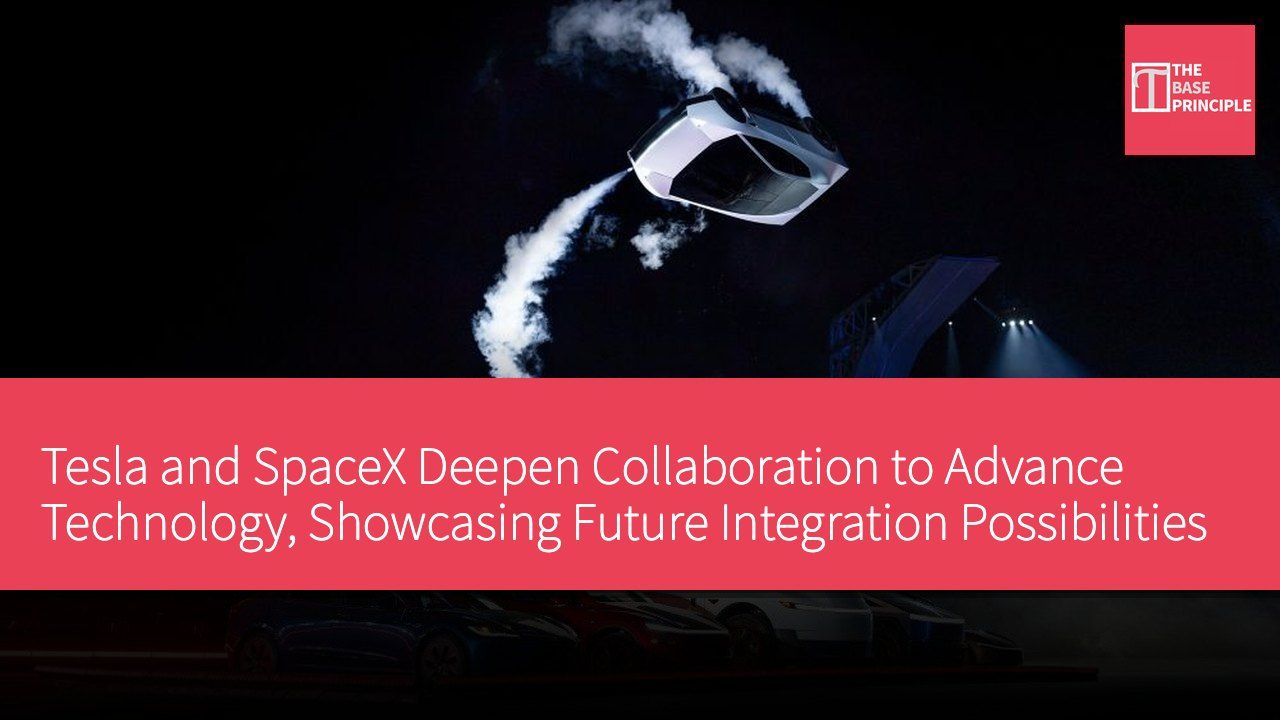
- Tesla and SpaceX's collaboration on propulsion technology showcases future integration potential.
- Analysts predict that integration news may be announced within the year, potentially in an all-stock deal.
- Musk emphasized the possibility of cross-company integration in the future but did not make specific commitments.
- SpaceX's spectrum advancements will enhance indoor and outdoor connectivity, creating new competition in the market.
Tesla and SpaceX concluded a Roadster demonstration event in Waco, where attendees noted that the vehicle's propulsion technology is derived from SpaceX's cold gas thrusters and pressure vessels. This demonstration has been viewed by several analysts as a clear indication of the deep collaboration between the two companies. Dan Ives from Wedbush pointed out that this event places Tesla and SpaceX's relationship on a concrete level, focusing on the layout of propulsion, pressure vessels, and control hardware in Tesla's product line; while Gene Munster from Deepwater Asset Management described the demonstration as "an absurd showcase of engineering technology," suggesting it lacks immediate commercial value aside from intimidating traditional automakers, though he acknowledged Musk's willingness to push for a partnership between the two.
Dan Levy, an analyst at Barclays, noted that if all goes well, integration news could be announced before Tesla's annual shareholder meeting (which must occur by December 6 at the latest), potentially as early as late October or early November; if not, the bank estimates there will be new developments within 6 to 12 months. Barclays estimates that SpaceX would acquire Tesla in an all-stock transaction, with Tesla shareholders exchanging shares for a premium, based on a valuation of approximately $2.1 trillion for SpaceX and about $1.5 trillion for Tesla.
Possibilities for Future Integration
During the Roadster demonstration, Tesla showcased systems similar to the cold gas thruster devices and pressure tanks used by SpaceX on the Falcon 9, sparking considerable discussion; Musk stated that this collaboration was a joint effort by engineers from both Tesla and SpaceX, reiterating the potential for future cross-company integration, but he has not publicly committed to specific actions that will occur. Ives maintains that the timeline for 2027 remains unchanged, while Musk emphasized at the All In Summit that he does not rule out any actions in the face of various collaborations, but has yet to make a clear commitment to integration.
The next critical milestone is Tesla's Q3 earnings call, originally scheduled for October 21; the market generally believes that unless conditions are favorable, there will be no clearer explanation in the short term. However, this event has already introduced a new topic of "star-ground network integration" to the market, increasing discussions about the potential for SpaceX and Tesla to jointly develop technologies. More background information indicates that analysts generally believe that if regulatory processes go smoothly, integration could gradually be realized around 2027, potentially redefining the mobile communications and transportation ecosystem in the U.S. and globally.
Impact of Spectrum Advancements
SpaceX's recent advancements in spectrum resources have also garnered attention: the U.S. Federal Communications Commission has approved the second-generation Starlink satellite plan, involving the optimization of global 2GHz spectrum and capacity enhancements for the new generation, allowing the launch of up to 15,000 new satellites. This decision provides more stable support for Starlink Mobile's future long-distance connectivity and indoor penetration capabilities, paving the way for the "star-ground integration" strategy between Tesla and SpaceX.
For SpaceX, the introduction of the 800MHz low-frequency paired spectrum, combined with the 2GHz mid-frequency resources, can significantly enhance indoor penetration and wide-area coverage, especially in rural and remote areas; at the same time, most existing mobile phones already support this frequency band, making it relatively easy for the new system to integrate with existing devices. SpaceX indicated that once regulatory approval is obtained, it will adopt a "flexible architecture" to integrate the Starlink star-ground network with ground base facilities, achieving seamless connectivity anywhere, potentially becoming a true new competitor for existing operators in cross-device collaboration.
The approval from the U.S. FCC also means that the second-generation Starlink satellite plan is expected to achieve greater native support between 2027 and 2028, allowing chips and terminal devices across different frequency bands to be natively integrated, enhancing the fluidity of cross-band switching. These technological trends also bring new pressure to existing operators' indoor coverage strategies, prompting the market to advance broader indoor coverage and multi-band collaborative network deployments.
In the long term, SpaceX aims to transform Starlink into a "platform for synchronous operation of star-ground networks," combining satellite and ground networks to provide seamless data and voice services for outdoor and indoor scenarios. This direction could have far-reaching implications for the competitive landscape of mobile communications in the U.S. and globally, and may drive existing operators to accelerate adjustments to their network layouts and enhance multi-band collaborative capabilities, while also setting new standards for stability and coverage.
Current progress indicates that the combination of the 800MHz low-frequency spectrum and the 2GHz mid-frequency resources can enhance the continuity between indoor signal penetration and outdoor coverage, particularly improving performance in both long and short-distance transmissions, which will bring practical value to rural and remote areas. SpaceX anticipates that through the collaboration of Starlink and ground infrastructure, the reduction of indoor coverage and blind spots will be significant, also aiding in communication recovery and rescue efficiency following natural disasters.
Here are the key points and risk observations of the new developments, facilitating an understanding of the dynamic changes in regulatory processes and market acceptance: SpaceX's acquisition of the 800MHz low-frequency spectrum, combined with the 2GHz mid-frequency resources, clarifies its positioning in the U.S. market: seamless indoor and outdoor connectivity and efficient cross-device switching are core selling points, aiming to break the existing telecom monopolies in the long term.
At the same time, spectrum coordination, cross-operator interoperability, and rapid adaptation of terminal devices are practical challenges; if the regulatory process goes smoothly, the hybrid deployment of the Starlink network and ground cellular architecture is expected to gradually open the market around 2027, providing global users with a new type of seamless communication experience. Technical details and specific timelines are still pending official announcements, but this series of strategies indicates that SpaceX is transforming Starlink into a "platform for synchronous operation of star-ground networks," setting new standards for global coverage.
The introduction of the 800MHz low-frequency spectrum, combined with the 2GHz mid-frequency resources, can significantly improve the continuity between indoor signal penetration and outdoor coverage, particularly suitable for rural and remote areas; at the same time, the increasing demand for multi-device and scenario connectivity makes it feasible to lower the difficulty of terminal adaptation, as most existing smartphones already support this frequency band, and the market adoption speed is expected to increase. SpaceX is attempting to establish seamless collaboration between ground infrastructure and the Starlink network, providing stable connections for indoor and blind spots, creating new competitive pressure on existing operators, especially in under-covered areas.
The U.S. FCC's approval of the second-generation Starlink satellite plan authorizes the launch of 15,000 new satellites, focusing on the optimization of the global 2GHz spectrum, providing Starlink Mobile with higher capacity and long-distance stability. If this development is realized, it will provide a viable alternative for high-density urban and indoor coverage scenarios in the long term, and also facilitate native support for cross-band chips and terminal devices, promoting the fluidity of cross-band switching.
In terms of long-term market dynamics, SpaceX's deep integration of the Starlink star-ground network may reshape the mobile communication landscape in the U.S.; if regulatory approvals proceed smoothly, Starlink Mobile, with broader coverage and lower indoor signal barriers, could become one of the most competitive options; this trend may also prompt existing operators like AT&T, Verizon, and T-Mobile to accelerate their indoor coverage and multi-band collaborative layouts to maintain market position.
The actual impacts extend beyond market structure, also encompassing new challenges at the policy and technical levels, such as spectrum allocation coordination, cross-operator interoperability, and rapid adaptation of terminal devices. Even if the long-term prospects for integration are bright, there are still risks related to regulatory approvals, business models, and user education in the short term. Overall, this strategy indicates that SpaceX has transformed Starlink into a global hybrid communication platform, providing seamless data and voice services for users in outdoor and indoor scenarios, which could fundamentally rewrite the mobile communication ecology in the U.S. and globally.
Potential Impacts of Tesla and SpaceX Integration
The deep collaboration between Tesla and SpaceX marks a close technological integration between the two companies, particularly in propulsion technology. This could not only change the competitive landscape of the electric vehicle market but also promote a more efficient transportation and communication ecosystem. As SpaceX advances in spectrum resources, future star-ground integration strategies will provide users with more stable connections, especially in remote areas. These trends will put pressure on existing operators, prompting them to accelerate technological innovation and layout adjustments, thereby influencing the overall development direction of the industry.