
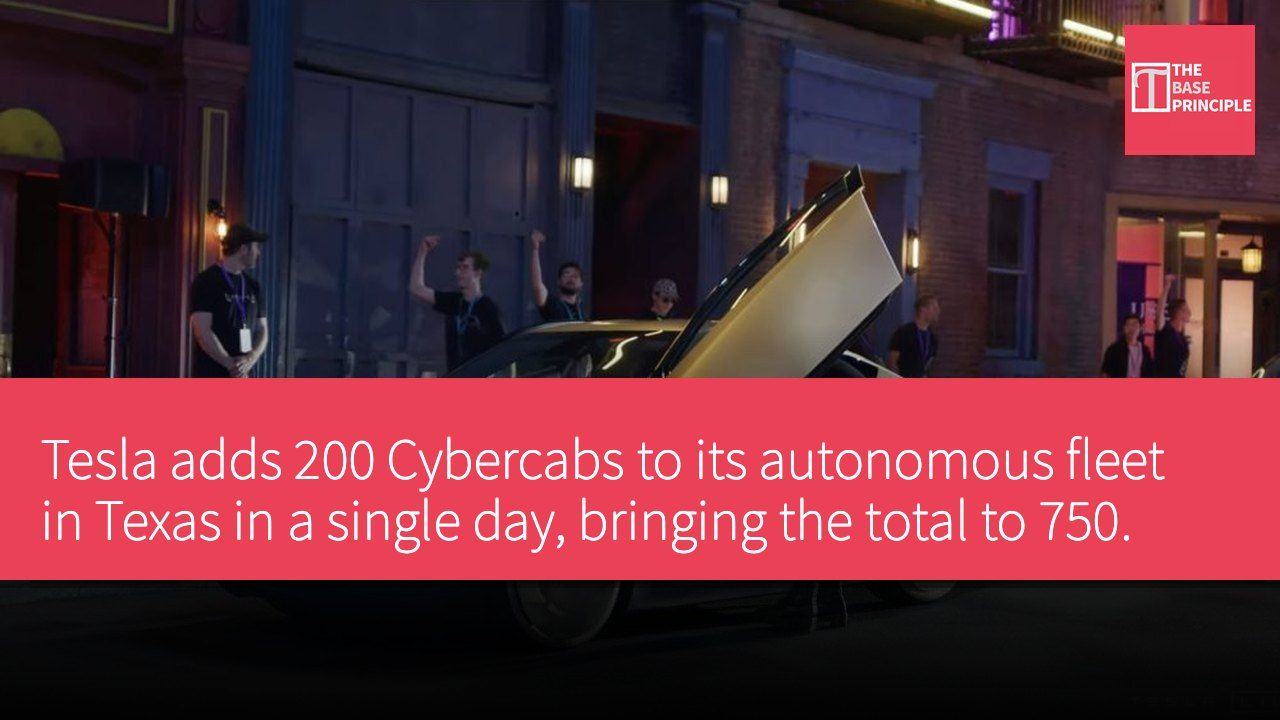
- Tesla's Cybercab fleet in Texas has added 200 vehicles, bringing the total to 750.
- Currently, Tesla has 1,507 registered autonomous vehicles in Texas, surpassing Waymo's 1,321.
- Dallas has become one of Tesla's busiest Robotaxi markets, with Model Y operating around the clock in the city.
- Tesla plans to end Cybertruck production in 2027 to focus on the growth of Cybercab.
Tesla has added a record 200 Cybercabs to its Robotaxi fleet in Texas in a single day, bringing the total number of this two-person designed model registered in the state to over 750. These vehicles were registered on the Texas Department of Motor Vehicles' autonomous vehicle list at 3:45 PM Central Time on November 17, including 200 Cybercabs and one Model Y. Since the end of October, the number of Tesla's Cybercabs had remained at 573, and this latest addition has allowed Tesla to once again surpass Waymo.
Tesla now has 1,507 registered autonomous vehicles in Texas, 186 more than Waymo's 1,321. Previously, Waymo had a 15-vehicle lead before the latest additions. According to Teslarati, Tesla first surpassed Waymo on November 10, after which Waymo briefly regained the lead.
Tesla Surpasses Waymo in Vehicle Count
Currently, Cybercabs account for 51.3% of Tesla's registered fleet in Texas, totaling 773 vehicles compared to 734 Model Ys. Waymo's fleet in the state consists of 874 Jaguar I-PACE and 447 Ojai vehicles. Registration does not indicate that the vehicles have begun carrying passengers, nor does it specify the operational locations of the vehicles. However, this timing aligns with Tesla's plans in Dallas. During the company's third-quarter earnings call in October, AI director Ashok Elluswamy stated, "Next month, we will launch in Dallas."
A video released last weekend showed over 50 Cybercabs lined up in a parking lot in Dallas, with more vehicles on transport trucks nearby. Tesla has not announced a specific activation date.
Dallas has become one of Tesla's busiest Robotaxi markets. Since November 11, Model Y Robotaxis have been operating around the clock in the city without a driver monitoring the seat. According to Tesla's first Robotaxi safety report, the city has logged 608,130 miles driven between January 22 and October 18, second only to Austin. Since September, public Cybercab passenger services have been limited to Austin.
Cybercab Fleet Growth Plans
As Tesla shifts more production capacity towards Cybercabs, fleet growth is expected to follow. The company plans to end Cybertruck production at Giga Texas in the summer of 2027 to make room for this shift and announced this week a €3 billion expansion at Giga Berlin, aiming to produce up to 1 million Cybercabs annually starting in 2029.
Some Cybercabs will soon be available to private owners. Tesla began inviting select customers last week to purchase the model for personal use, priced at US$29,990, with a monthly subscription fee of US$299 for autonomous driving, aiming for deliveries in December across the same five Texas cities.
Tesla's Expansion in the Autonomous Driving Market in Texas
Tesla's growth in the autonomous vehicle fleet in Texas demonstrates the company's competitiveness in autonomous driving technology, particularly in its rivalry with Waymo. With the rising number of Cybercab registrations, Tesla appears to be establishing a dominant position in this market. The successful operation in Dallas further proves Tesla's technological maturity and lays the groundwork for future expansion. Additionally, Tesla's production plans highlight its commitment to Cybercab, which could potentially transform the business model for autonomous vehicles.