
- Research from the University of Oxford shows that antimony sulfide materials can significantly reduce solar energy loss.
- Antimony sulfide has an unusual internal energy structure that can retain charge for longer periods.
- This material is not yet commercialized but provides a roadmap for designing new semiconductors.
- The non-toxic antimony sulfide can replace traditional toxic materials, offering environmental advantages.
Researchers at the University of Oxford have found that antimony sulfide materials can overcome a major limitation in solar energy utilization. The issue lies in the fact that materials that strongly absorb sunlight often lose charge too quickly, making it ineffective in generating energy. The semiconductor material identified by the researchers possesses an unusual internal energy structure, akin to a temporary waiting room. Specifically, it is able to retain captured energy for a longer duration, reducing charge loss by approximately 75% at room temperature. Professor Laura Herz, the corresponding author from the Department of Physics at the University of Oxford, stated, "A long-standing challenge in developing efficient solar materials is that the characteristics that make semiconductors very good at absorbing sunlight often also lead to the rapid disappearance of the generated charge."
Our research shows that this trade-off is not inevitable."
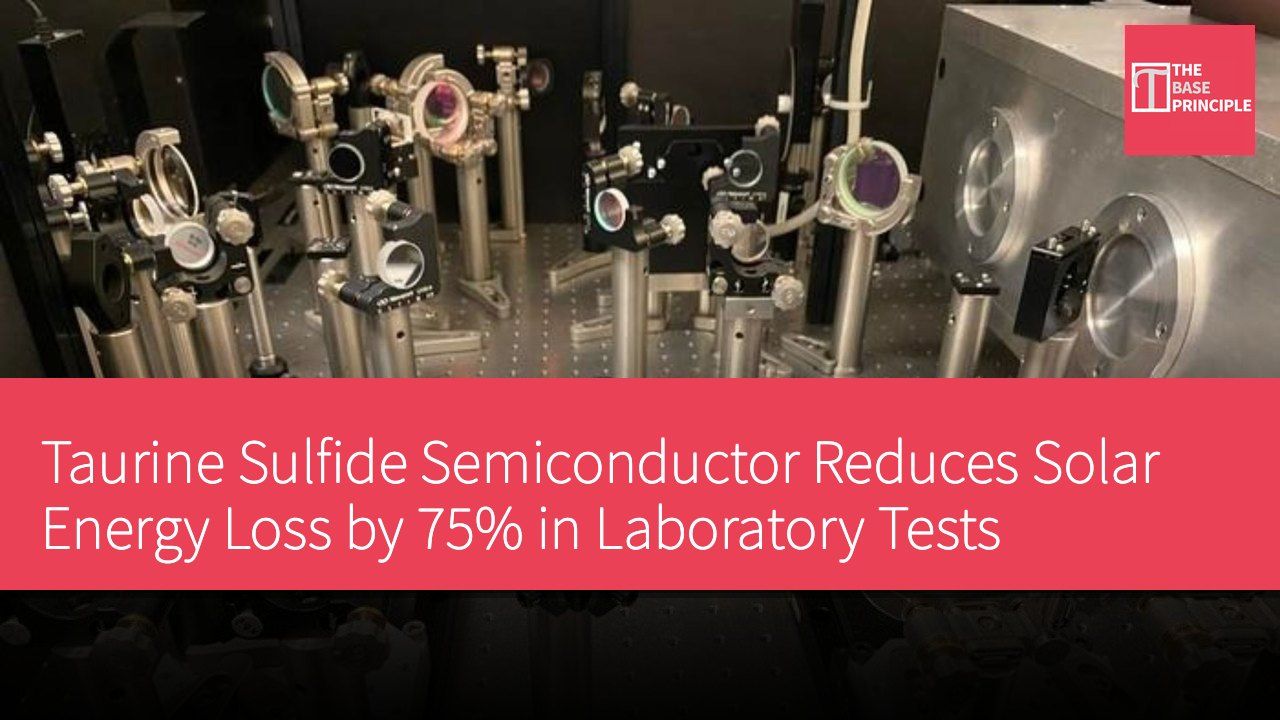
The key technology involves solar panels generating electrical energy by capturing released electrons, preventing these charges from recombining with positively charged holes and dissipating as heat. Materials designed to maximize sunlight absorption naturally create a crowded environment, causing these charges to collide almost instantaneously. This rapid recombination sets an efficiency barrier for standard light-collecting semiconductors. Antimony sulfide-based semiconductors help to change this status quo. The Oxford team employed ultrafast terahertz spectroscopy, which essentially involves firing laser pulses lasting several microseconds, to help probe the thin films of the material.
Quantum Arrangement Properties of Antimony Sulfide
The results they discovered surprised them. Antimony sulfide possesses a rare quantum arrangement known as a pseudo-direct semiconductor. Light energy enters through a primary high-energy channel, where sunlight is strongly absorbed. Immediately below this entry point, a lower energy state appears for capturing excited charges. Acting as a temporary storage pool, this lower energy state safely stores the charges before releasing them. This lower energy pathway does not easily dissipate charges, allowing electrons to remain safely stored until the moment for collection arrives. At room temperature, this microscopic waiting room reduces charge loss by 75% compared to traditional materials.
Professor Herz added, "By revealing how an unusual electronic structure combines strong light absorption with slower recombination, we have identified a new principle for designing semiconductors that may help us collect solar energy more efficiently." The non-toxic antimony sulfide material has not yet become available as rooftop panels on the market. The Oxford team noted that this research demonstrates a fundamental physical mechanism rather than a commercial product. However, knowing that this electronic shortcut exists is the most important aspect. Researchers can now scan material databases to design customized semiconductors with the same "shortcut" characteristics.
Potential for Future Semiconductor Design
Professor Herz stated, "What is particularly exciting about this discovery is that we are not just improving the characteristics of existing semiconductors, but we are identifying a different way that semiconductors can perform. Understanding this mechanism provides a roadmap for discovering and potentially engineering other materials with similar advantageous properties."
This could not only unlock solar panels but also enable longer-lived charges for converting solar energy into chemical fuels. Antimony sulfide, as an earth-abundant and non-toxic alternative material, offers environmental and manufacturing advantages by replacing lead or cadmium-containing materials. Researchers can efficiently produce these films using accessible methods such as low-cost solution processing, thermal evaporation, and chemical bath deposition. The study was published on October 28 in the journal Nature.
Item Specification Processor Antimony Sulfide Charge Loss Reduction 75%
Potential Impact of Antimony Sulfide Materials
The discovery of antimony sulfide materials not only has the potential to improve the efficiency of solar cells but may also change the design thinking of semiconductors. The unique electronic structure of this material allows it to effectively capture and store charges, thereby reducing energy loss. As researchers gain a deeper understanding of this mechanism, they can explore more materials with similar characteristics, advancing renewable energy technologies. Additionally, the environmentally friendly properties of antimony sulfide make it an attractive alternative, promoting sustainability.