
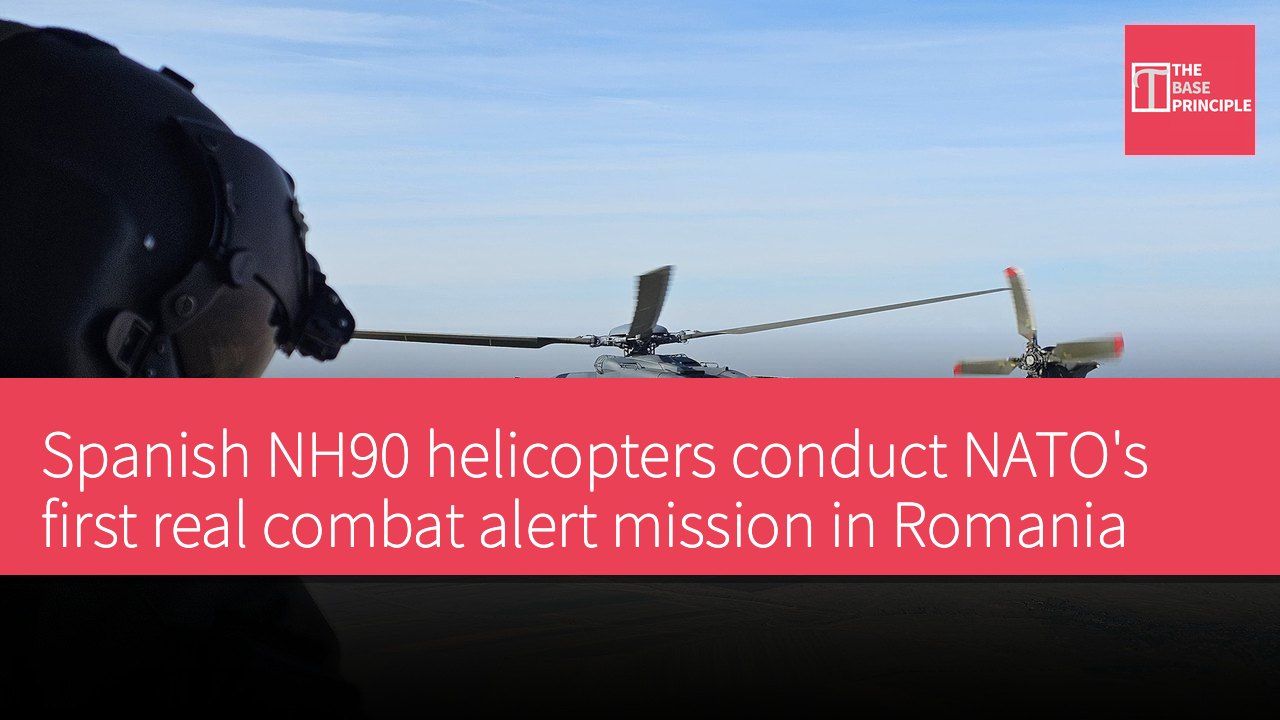
- The Spanish NH90 helicopters have taken off for a NATO alert mission for the first time.
- This takeoff was part of NATO's "Alpha Scramble" mission, aimed at quickly responding to unidentified flying objects.
- The NH90 helicopters provide supplementary capabilities against low-speed, low-altitude threats, enhancing operational flexibility.
- Other militaries are also testing helicopters' capabilities against drones, highlighting the importance of this technology.
Two NH90 helicopters from the Spanish Air and Space Force took off on November 5 in Romania for a NATO alert mission after detecting an unidentified drone, marking the first time Spanish helicopters have flown in a NATO operation. According to a report from the Spanish Ministry of Defense, the drone disappeared before it needed to be neutralized, and the helicopters returned to base immediately. This takeoff was part of the "Alpha Scramble," a term used by NATO to describe real alert takeoffs rather than exercises. These helicopters belong to the Spanish Paznic detachment based at Mihail Kogălniceanu Air Base, with crews responsible for Quick Reaction Alert (QRA), a standby state that requires them to be ready to take off upon detecting unidentified flying objects.
Detachment commander Lieutenant Colonel Alberto B. Calvo López stated that the NH90 helicopters provide supplementary capabilities. He noted, "They do not replace the F/A-18, but rather complement it." According to NATO Allied Air Command, the helicopters can counter low-speed, low-altitude threats, increasing operational flexibility. The report from the Ministry of Defense indicated that this takeoff aligns with NATO's Integrated Air and Missile Defense (IAMD) strategy, which is a layered system combining alert aircraft with ground-based air defenses and counter-drone measures. The Spanish detachment operates F-18 fighter jets and NH90 helicopters in NATO air defense missions, currently comprising about 200 air force personnel, who have reportedly conducted 37 Alpha Scramble missions to date.
Role and Capabilities of the NH90 Helicopter
Scramble missions.
The report also mentioned a drone that was neutralized on August 16, 2026. Reuters reported that the Romanian Ministry of Defense credited the downing of the drone to a Spanish F-18, marking the fourth drone shot down by Romania this year. NATO Allied Air Command described the same incident and included a photo of a gunner inside an NH90 helicopter monitoring Romanian terrain for potential threats. Calvo López stated in the report that fighter jets provide speed and powerful sensors, while helicopters are suited for other missions.
The Ministry of Defense did not specify how many drones were detected, their types, or their origins.
Drone Countermeasures Testing by Other Militaries
Other militaries are also testing helicopters' capabilities against drones. The U.S. Central Command shared footage of Apache helicopters firing upgraded Hellfire missiles to shoot down drones during a training exercise in Saudi Arabia in 2024. The Army also conducted live-fire tests with the Apache using 30mm (1.2-inch) proximity-fused munitions, which detonate near the target rather than directly impact it. These tests utilized the Apache helicopter, primarily designed for anti-armor missions, rather than the NH90 helicopter. Sources described this as an alert takeoff rather than an interception.
Since there was no engagement with the drone, the NH90's interception capabilities have not been tested during this deployment. The Ministry of Defense did not provide details on the circumstances surrounding the drone's disappearance, and the term "first" applies only to the use of Spanish helicopters in NATO missions.
The Paznic detachment remains stationed at Mihail Kogălniceanu Air Base, and the Ministry of Defense has not disclosed an end date for this deployment. The Spanish Ministry of Defense released a report on the incident on November 6, while NATO Allied Air Command followed up on November 9.
Strategic Significance of the Spanish NH90 Helicopter in NATO
The Spanish NH90 helicopter's first real combat alert takeoff in NATO demonstrates its importance in modern air defense. The flexibility of this helicopter allows it to effectively respond to low-speed, low-altitude threats and complement other fighter jets, enhancing overall operational capability. Additionally, as the threat from drones increases, militaries around the world are increasingly testing helicopters' countermeasures, reflecting the complexity of future combat environments and the demand for new technologies.