
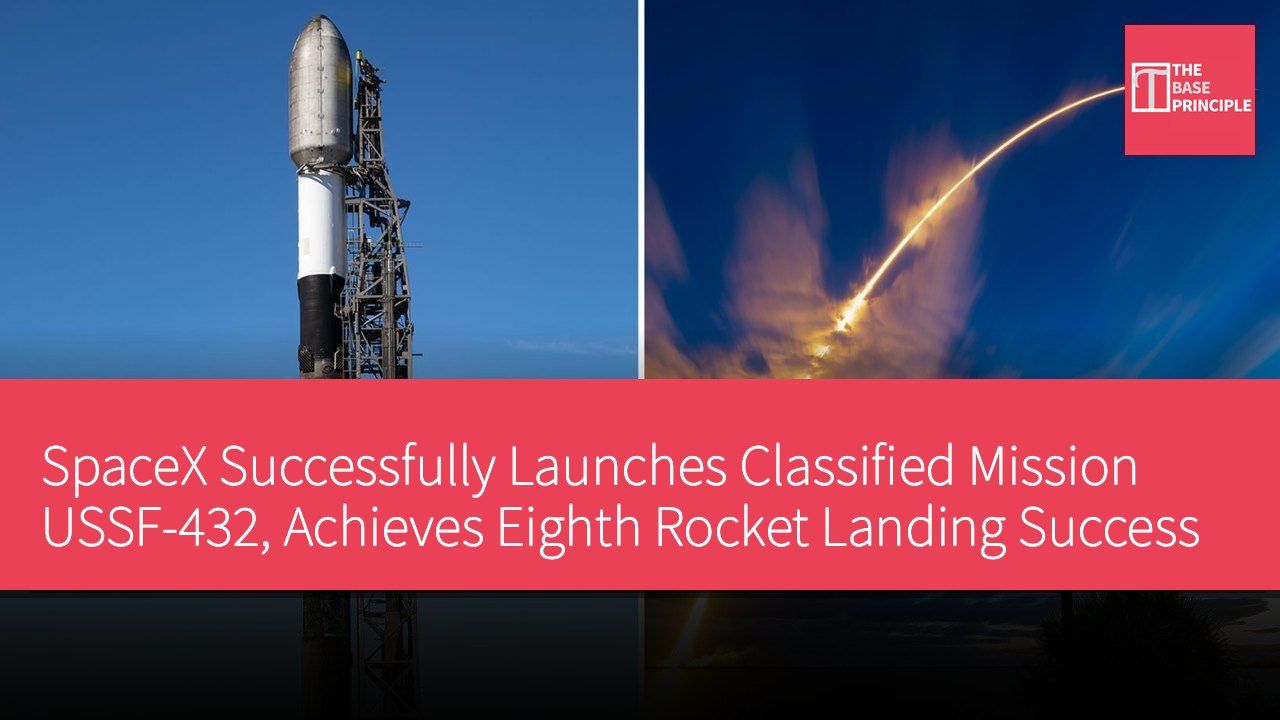
- SpaceX successfully launched the USSF-432 mission, further enhancing the capabilities of the U.S. Space Force.
- USS-432 is related to military satellite programs and may involve SpaceX's Starshield platform.
- The Falcon 9 first stage booster B1095 completed its eighth flight, demonstrating the advantages of reusability.
- The mission's secrecy leaves the payload configuration and operational roles unknown.
SpaceX has completed another national security launch for the U.S. military, sending its Falcon 9 rocket into orbit with the classified USSF-432 payload. The mission lifted off on November 7 from the 4E launch site at Vandenberg Space Force Base in California. The first stage booster subsequently returned to Earth and landed on the autonomous drone ship "Of Course I Still Love You" in the Pacific Ocean. This mission, designated USSF-432 and R-4, adds another classified payload to the growing orbital operations of the U.S. Space Force.
Officials have not disclosed the identity, capabilities, or exact mission objectives of the spacecraft. However, its association with military satellite programs provides some clues about the technology involved.
USS-432's Connection to Military Satellite Programs
In this classified mission, USS-432 is part of a series of national security launches related to the Space Force. Analysts link the R series missions to the military's space-based sensing and targeting combinations. The program aims to enhance the military's ability to collect information and support operations from orbit. The suspected payload may include satellites based on SpaceX's Starshield platform. SpaceX has developed Starshield specifically for government and national security customers, drawing on the technology of its commercial Starlink network.
However, Starshield supports more specialized needs, including secure communications and Earth observation. Neither SpaceX nor the Space Force has confirmed the composition of the payload, and the number and individual capabilities of the satellites remain undisclosed. Therefore, any association with Starshield remains speculative rather than established mission details.
This launch marks the eighth flight of the Falcon 9 first stage booster B1095. Its previous missions included the GPS III-8 navigation satellite mission. The booster also supported six Starlink launches before undertaking the USSF-432 mission. During the flight, Falcon 9 separated its two stages, with the upper stage continuing toward orbit carrying the payload while the first stage began a controlled return to the designated recovery area. In this mission, B1095 targeted SpaceX's "Of Course I Still Love You" drone ship.
The autonomous recovery ship awaited in the Pacific Ocean. After completing the descent sequence, the booster landed on the platform. SpaceX can inspect and refurbish the recovered booster before assigning it to future missions. Reusing the first stage reduces the need to manufacture a brand new booster for each launch, allowing the company to maintain a high launch cadence.
Potential Applications of Starshield
Starshield provides tailored satellite technology for U.S. government customers to meet national security needs. Its potential applications include secure data transmission and space-based observation. These capabilities can support military operations that rely on information collected from outside the Earth's atmosphere. Space-based sensing and targeting systems can help military operators monitor activities across vast geographic areas while providing information to support operational planning. However, the Space Force has not detailed how USSF-432 will contribute to these capabilities. The mission's classified status leaves several technical questions unanswered.
The payload configuration and operational roles remain unknown. Nonetheless, another successful launch provides the Space Force with additional missions in its expanding military satellite program.
A Key Step in the Space Force's Expansion Plans
SpaceX's USSF-432 mission marks the continued growth of the U.S. Space Force in the national security domain. This launch not only showcases the reusability of the Falcon 9 but also underscores the importance of military satellite programs. With the potential applications of the Starshield platform, the Space Force will be able to collect and analyze information from space more effectively, which is crucial for modern military operations. However, due to the mission's classified nature, specific technical details remain unclear, leaving many unknowns for future developments.