
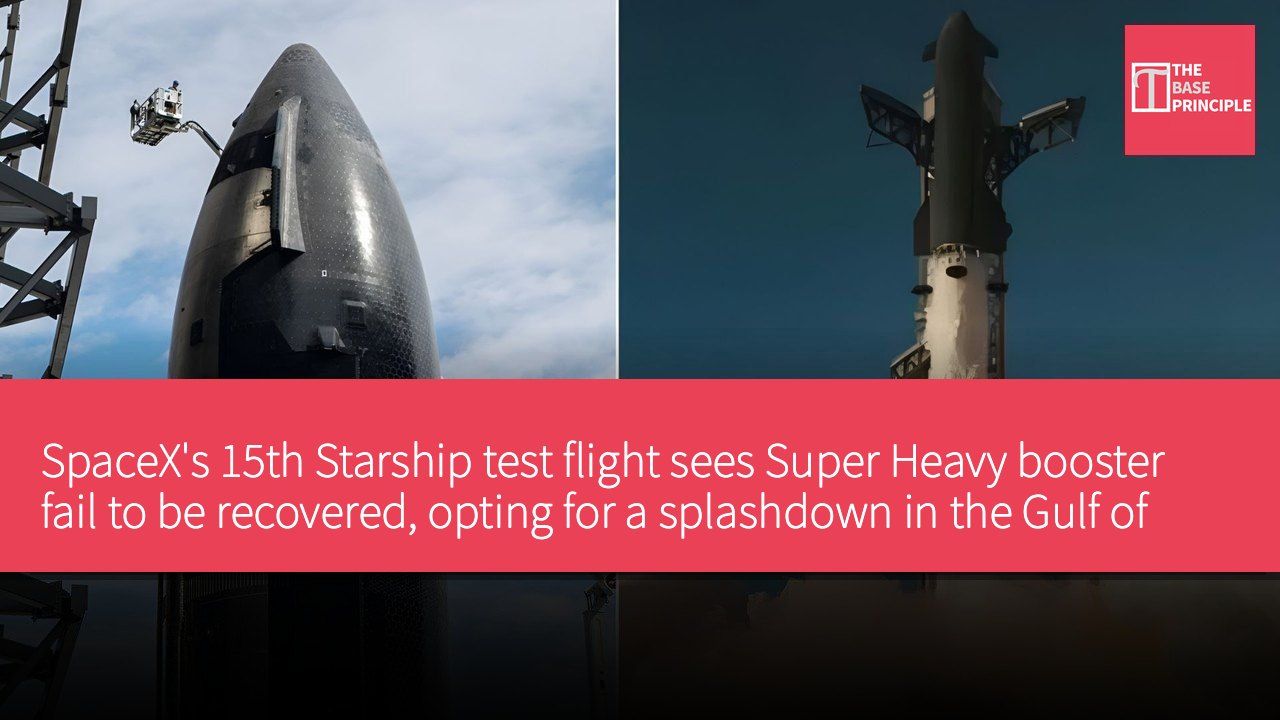
- SpaceX's 15th Starship test flight failed to successfully recover the Super Heavy booster.
- The Super Heavy booster experienced the Max Q phase during flight and prepared for separation from the upper stage.
- The recovery of Starship's upper stage would mark a significant engineering achievement, facing complex challenges.
- Successful recovery is crucial for the long-term economics and launch costs of Starship.
SpaceX recently conducted its 15th Starship test flight, with the primary goal of performing critical tests on its next-generation rocket. However, the mission has missed a challenging recovery target. The company did not attempt to catch the Super Heavy booster at the launch tower in Texas, instead opting to let the large first-stage rocket splash down in the Gulf of Mexico. The focus now shifts to Starship's upper stage, which is designed to return to its original launch site. A successful landing would represent a significant step forward for SpaceX in its goal of achieving fully reusable rockets.
The Super Heavy booster launched on Friday from SpaceX's Starbase facility in South Texas, initially powered by 33 Raptor engines. These engines provided thrust to help the 40-story rocket ascend through Earth's atmosphere. The vehicle then passed through Max Q, the point of maximum aerodynamic pressure during ascent. This phase exerts extreme pressure on the rocket's structure. After completing this challenge, the Super Heavy booster shut down its main engines in preparation for separation from the upper stage.
Starship ignited its engines during a maneuver known as "hot stage separation," a technique that uses the thrust from the upper stage to assist in separating the two components. After separation, the Super Heavy began its return trajectory.
Flight Process of the Super Heavy Booster
SpaceX initially appeared to intend to attempt recovery using a mechanical arm but ultimately decided to guide the booster for a controlled splashdown. SpaceX's Dan Huot confirmed that 32 of the booster engines remained operational during the flight. The decision to forgo catching the booster at the tower means that this mission did not demonstrate another successful first-stage recovery.
Currently, Starship's upper stage carries the most critical recovery objective of the mission. SpaceX plans to bring the spacecraft back to its launch facility in Texas. The return attempt is expected to occur approximately 22 hours after liftoff. If successful, the spacecraft will descend toward its original launch tower and use its onboard engines to control the final approach. A massive mechanical arm, known as "Chopsticks," will attempt to catch the returning spacecraft.
Challenges of Starship Recovery
Recovering the upper stage would represent a significant engineering achievement. SpaceX has previously demonstrated the capture of the Super Heavy booster, but bringing Starship itself back to the launch tower adds complexity. The spacecraft must withstand the challenges of atmospheric reentry and then execute the final landing maneuver. Its last flight in September ended with a complete splashdown in the Pacific, although the mission was initially planned for 10 hours, it lasted about 3 hours.
Starship's latest mission also has commercial significance. The spacecraft deployed another batch of operational Starlink satellites during its orbital flight. The September mission marked the first time Starship delivered operational satellites into orbit. This capability could ultimately help SpaceX expand its satellite internet network. The company also envisions using Starship to deploy orbital computing infrastructure, with the proposed Starmind network involving data processing centers operating in space. However, reliable recovery is crucial for the long-term economics of Starship.
SpaceX hopes to recover both stages of the rocket and prepare for subsequent flights, achieving this goal would help reduce launch costs and turnaround times.
Friday's flight provided another orbital mission for the developing rocket. The booster recovery target was not achieved, with the upper stage's landing seen as the next major milestone. This outcome may determine the progress of Starship toward achieving overall reusability.
Significance and Challenges of the Starship Recovery Mission
SpaceX's Starship recovery mission is not only a technical challenge but also a part of its commercial strategy. Successful recovery would significantly lower launch costs and improve turnaround efficiency, which is crucial for long-term operations. Although the Super Heavy booster did not recover as expected, the upper stage of Starship still carries an important recovery mission. This process involves atmospheric reentry and precise landing, showcasing the complexity of its design. As commercial satellite deployments progress, the successful recovery of Starship will pave the way for future space missions.