
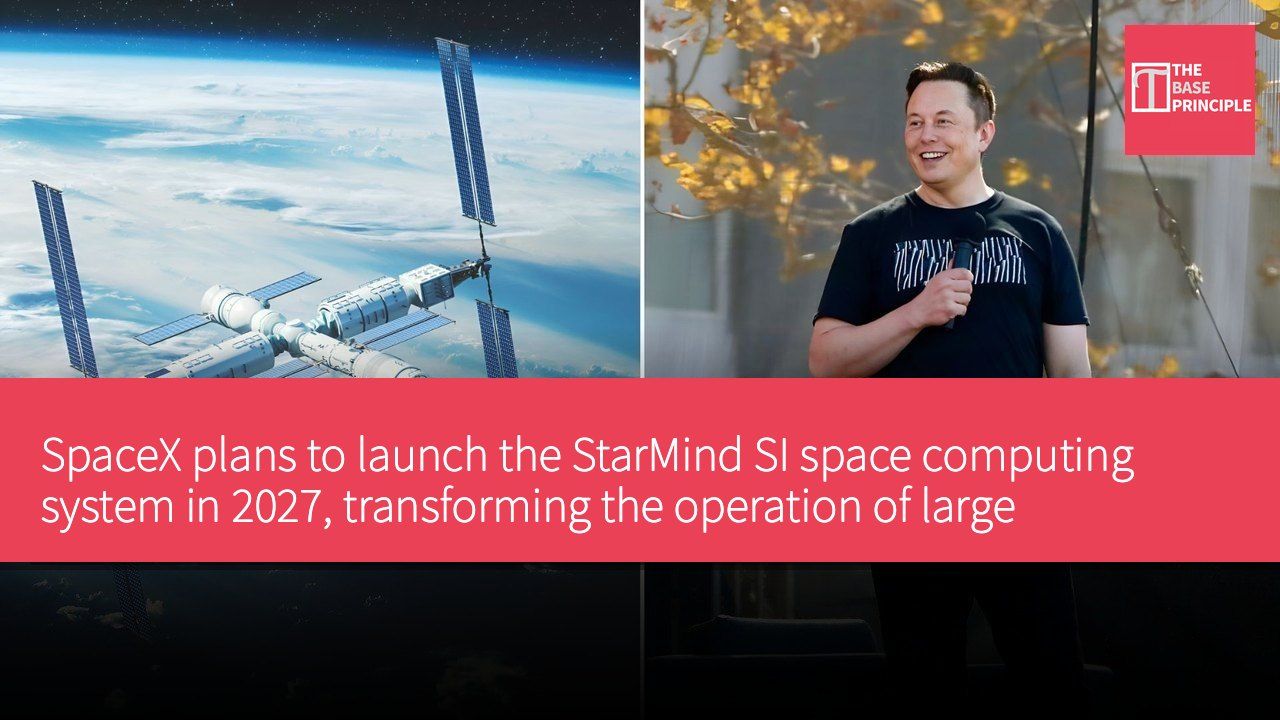
- SpaceX plans to launch the StarMind SI computing system in 2027.
- The system will be co-developed with NVIDIA, surpassing traditional data centers.
- Musk mentioned that orbital infrastructure could improve global data transmission.
- Tesla is also developing semiconductor manufacturing facilities in Texas.
Elon Musk is preparing to push high-performance computing beyond the Earth's atmosphere. SpaceX plans to begin launching its StarMind SI computing system into orbit in the third quarter of 2027. The company expects to accelerate deployment in 2028 and 2029. He stated that this project could change engineers' perspectives on large computing infrastructures. Musk shared more details about the project during the 33rd Baron Investment Conference held in New York with investor Ron Baron.
He said, "When we unveil the details of the StarMind computer next year, it will be astonishing." SpaceX is co-developing its first orbital computing system with NVIDIA. The initial hardware will focus on NVIDIA's Vera Rubin NVL72 platform. This partnership integrates advanced computing hardware into a project designed to surpass the operations of traditional ground data centers.
The Potential of Orbital Computing
Space-based computing may offer advantages that go beyond alleviating land constraints on data centers. Musk also views orbital infrastructure as an opportunity to rethink global data transmission. He discussed SpaceX's upcoming Starlink fourth-generation satellites in an interview. The capacity of the next-generation satellites could be ten times that of the third generation. Musk noted that the third generation already provides ten times the capacity of the second generation. Musk pointed out on Twitter, "When we unveil the details of the StarMind computer next year, it will be astonishing."
Laser communication will play a crucial role in this upgrade. SpaceX plans to equip each satellite with ten next-generation laser links. Each link could achieve data transmission speeds exceeding 10 terabits per second. Musk also outlined a more ambitious possibility of over 100,000 satellites. He suggested that each satellite could have around 100 laser links, ultimately challenging traditional undersea communication cables. His argument focused on the physics of transmission and network geometry. Light travels in space at about 40% faster than in fiber optic cables.
Orbital connections could also take more direct paths between distant destinations.
Musk's Hands-On Approach to Computing Infrastructure
Musk also discussed SpaceX's large computing infrastructure project in Memphis, Tennessee. He described an unusually hands-on approach to developing the facility. The billionaire stated that he lived next to the power plant in an Airstream trailer. SpaceX built the power infrastructure for the facility in about a year. Elon Musk indicated that this process typically takes around five years. According to SpaceX executives, the power plant now generates over one gigawatt of electricity. He also described personally handling all electrical and networking work on-site.
"I have pulled cables as thick as a python," Musk said. He added that he was involved in fiber connections and network switches. Musk indicated that he walks through the facility up to five times a day. He aims to directly face the engineering challenges his employees encounter. He explained that this approach helps him understand the difficulties faced by his staff. He also defended the economic impact of large data centers. Musk believes that Memphis businesses benefit significantly from SpaceX's presence. He mentioned increased activity in restaurants and hotels, rising wages, and a boost in local tax revenues.
The interview also touched on Tesla's expanding semiconductor ambitions. Musk revealed that Tesla is developing a research chip manufacturing facility at its Gigafactory in Texas. The facility aims to significantly shorten semiconductor development cycles. His goal is to reduce the traditional process, which typically takes about a year, to around one month. Tesla also plans to establish Terafab in Grimes County, Texas. These two facilities will serve different functions. The Austin research facility will experiment with chip design and manufacturing technologies, while Terafab will focus on scaling successful developments for mass production.
Tesla hopes to integrate multiple semiconductor development stages under one roof, including logic manufacturing, memory production, photolithography, and advanced packaging. The setup will also support chip testing. The broader goal is to accelerate hardware development to meet Tesla's growing computing demands. However, Elon Musk's orbital computing plans remain the core focus. SpaceX's current target is to launch its StarMind system in 2027, with expectations for larger-scale deployments to follow.
Item Specifications Computing Platform NVIDIA Vera Rubin NVL72 Number of Satellites Over 100,000 Data Transmission Speed Over 10 Tb/s Power Plant Capacity Over 1 GW
How SpaceX is Changing the Future of Computing Infrastructure
SpaceX's StarMind SI computing system plans to push high-performance computing into space, potentially revolutionizing the operation of large computing infrastructures. Through its collaboration with NVIDIA, the system aims not only to surpass the limitations of ground data centers but also to leverage the advantages of space to enhance data transmission efficiency. Musk's hands-on involvement demonstrates his commitment to the project and helps ensure the successful implementation of the technology. These efforts could not only enhance SpaceX's technological capabilities but also have a profound impact on the global data transmission industry.