
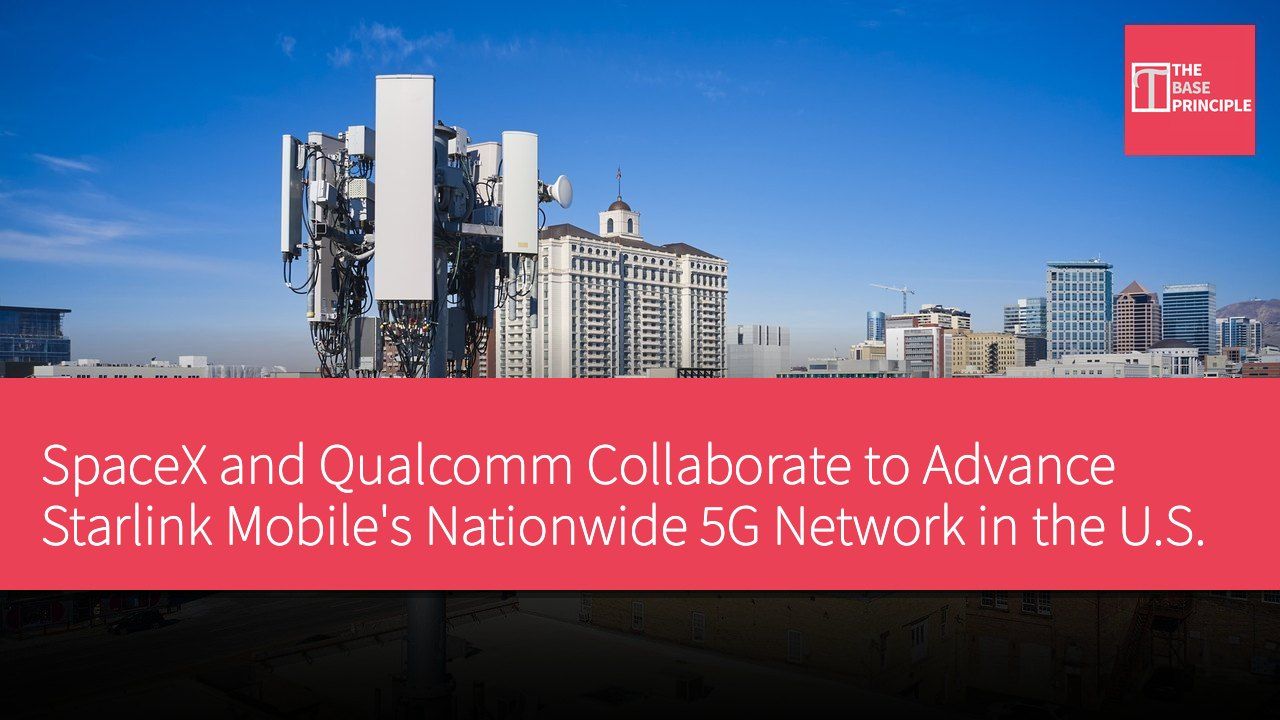
- SpaceX plans to establish a nationwide 5G network in the U.S. to support its Starlink Mobile service.
- Qualcomm will provide the Dragonwing platform to support SpaceX's ground wireless network.
- Starlink Mobile will integrate ground communication with satellite connectivity to enhance user network experience.
- This collaboration will advance the long-term vision for 6G wireless infrastructure.
SpaceX plans to establish a nationwide ground 5G network in the U.S. to support its Starlink Mobile service, with plans to deploy thousands of base stations starting in 2027, in a new collaboration with Qualcomm. The space transportation company, led by Elon Musk, has chosen Qualcomm's Dragonwing mobile communication infrastructure platform to support the network. This technology will combine high-capacity radio and baseband processing technologies with high-performance computing to facilitate large-scale mobile communication deployments.
Qualcomm Supports SpaceX Network
Under this multi-year agreement, Qualcomm will provide its Dragonwing QRU100 and QDU100 platforms, along with commercial-grade Layer 1 software, to support SpaceX's planned nationwide ground wireless network. This collaboration will support SpaceX in developing an end-to-end base station architecture for its ground network, expanding SpaceX's connectivity strategy beyond its satellite constellation.
Starlink Mobile plans to combine ground mobile communication infrastructure with satellite connectivity to provide a more integrated network for users in the U.S. A key component of the planned network is Massive MIMO technology, which uses multiple transmitters and receivers to improve wireless communication. Starlink Mobile will deploy wireless units equipped with 64 transmit and 64 receive paths, known as 64T64R. This configuration aims to enhance network coverage, increase capacity, and utilize available wireless spectrum more efficiently.
Massive MIMO directs radio signals to users using multiple antenna elements, rather than broadcasting uniformly in all directions. This technique, known as beamforming, helps the network serve more users and handle larger data traffic in specific areas.
Qualcomm's QRU100 platform will provide integrated processing for Massive MIMO wireless units, while its QDU100 platform will handle Layer 1 data transmission and reception, involving the physical transmission in mobile communication networks. Both platforms are designed to improve the performance per watt of radio and distributed unit processing, which helps reduce the energy demands and operational costs of deploying and operating thousands of mobile base stations. SpaceX plans to begin nationwide deployment in 2027, with tens of thousands of sites expected to be installed as part of this multi-year agreement.
The company has not disclosed the financial terms of this collaboration. The planned infrastructure will complement Starlink's satellite network, which provides connectivity services in areas with limited traditional ground network coverage. Ground mobile communication base stations can offer additional coverage and capacity in densely populated areas where satellite connectivity may not meet demand.
Moving Toward a Future 6G Vision
This announcement also marks a commercial step forward in the long-term vision for AI-native sixth-generation (6G) wireless infrastructure from Qualcomm and SpaceX. While initial deployments will focus on 5G, Qualcomm stated that these platforms provide a scalable foundation for future connectivity technologies and smarter network operations. For SpaceX, this collaboration enables access to specialized radio and baseband technologies to develop its ground network. For Qualcomm, this deal expands its role beyond mobile device processors into the realm of large-scale telecommunications infrastructure.
The company has not provided detailed deployment plans or indicated how many sites will be operational in the first phase.
The Significance of the SpaceX and Qualcomm Collaboration
The collaboration between SpaceX and Qualcomm represents a significant technological advancement, combining ground 5G networks with satellite connectivity, which is crucial for improving network coverage in the U.S. As mobile communication demands increase, this integration can provide additional support in areas where traditional ground networks fall short. Furthermore, this partnership not only aids in advancing 5G deployment but also lays the groundwork for future 6G technologies, demonstrating the long-term strategic planning of both companies in the wireless communication field.