
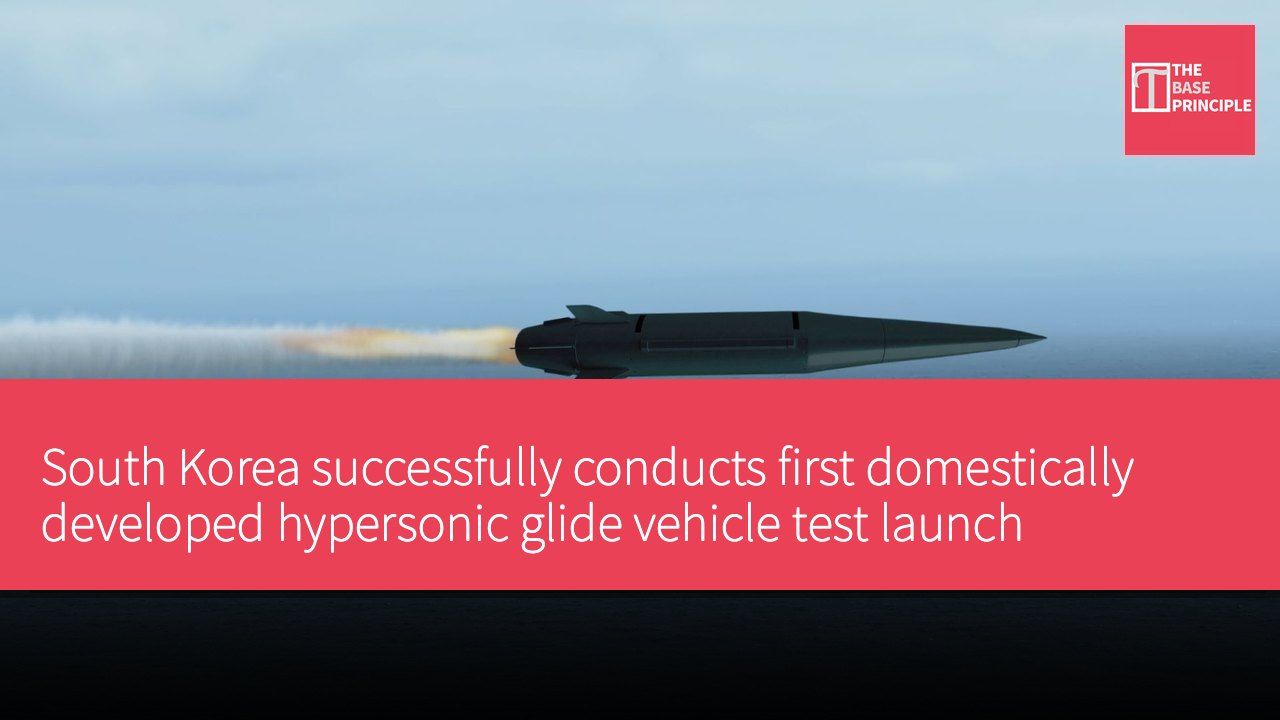
- South Korea successfully tests first indigenously developed hypersonic glide vehicle, marking enhanced defense capabilities.
- Vehicle successfully flies at hypersonic speeds and hits target, verifying key technologies.
- Further development must overcome technical challenges to ensure system reliability and precision.
- Test shows South Korea has made significant progress in military technology, gaining political support.
South Korea has successfully conducted the first test launch of an indigenously developed hypersonic glide vehicle (HGV), marking a significant milestone in the country's efforts to strengthen its defense capabilities. The test aimed to verify key hypersonic technologies, including flight trajectory, speed, navigation and control systems, and the vehicle's ability to maneuver at low altitude. The successful trial represents an important step toward developing a new strategic deterrent force capable of striking key targets on the Korean Peninsula.
According to reports, the hypersonic glide vehicle successfully separated from its booster after launch, then flew at hypersonic speeds along a planned flight path. During the test, the vehicle descended to a lower altitude and maneuvered both laterally and longitudinally, ultimately striking the designated target accurately, according to presidential spokesperson Kang Yu-jeong. The test also focused on evaluating heat-resistant materials capable of withstanding the extreme temperatures generated during hypersonic flight. Reliable navigation and control mechanisms are equally critical for ensuring precision and maintaining stability under demanding flight conditions.
Hypersonic Glide Vehicle Test Process
Although the first successful test represents a major achievement, further development and evaluation are required before the system can be considered a fully operational military capability. The development of the hypersonic glide vehicle could strengthen South Korea's ability to deter potential aggression by enhancing its capacity to threaten high-value military targets. The system's speed and maneuverability may also pose challenges for adversaries in detecting, tracking, and intercepting incoming weapons. However, the effectiveness of any hypersonic weapon does not rely on speed alone; operational reliability, targeting accuracy, command-and-control arrangements, survivability, and integration with existing military systems will all influence its ultimate strategic value.
The test comes amid global efforts to develop hypersonic weapons and countermeasures. Major military powers have invested heavily in these technologies, aiming to improve strike capabilities and address the limitations of existing air and missile defense systems. South Korea's first successful hypersonic glide vehicle test launch marks significant progress in the country's pursuit of advanced indigenous military technology. Observed by President Lee Jae-myung, the event also demonstrates strong political support for strengthening national defense capabilities.
Technical Challenges and Future Development
Despite the successful trial, South Korea's hypersonic glide vehicle still faces significant technical and operational challenges before it can be deployed as a reliable strategic asset. Maintaining structural integrity under extreme heat, ensuring precise navigation during high-speed maneuvers, and demonstrating consistent performance across varying flight conditions are all challenges associated with hypersonic weapons development. South Korea has not indicated that the system is ready for operational use; rather, the first test should be viewed as an important development milestone in an ongoing program. Further testing and technical refinements will be necessary steps to establish the weapon's reliability and how it integrates into South Korea's broader defense posture.
Strategic Significance of South Korea's Hypersonic Weapons Development
The successful test of South Korea's hypersonic glide vehicle reflects the country's efforts and progress in military technology research and development. As global attention focuses on hypersonic weapons, South Korea's development not only enhances its defense capabilities but could also alter the regional military balance. In the face of potential threats, the speed and maneuverability of such weapons will make them difficult for adversaries to counter, thereby enhancing deterrence effects. However, realizing this potential requires overcoming multiple technical challenges to ensure system reliability and operability, which will influence its future strategic value.