
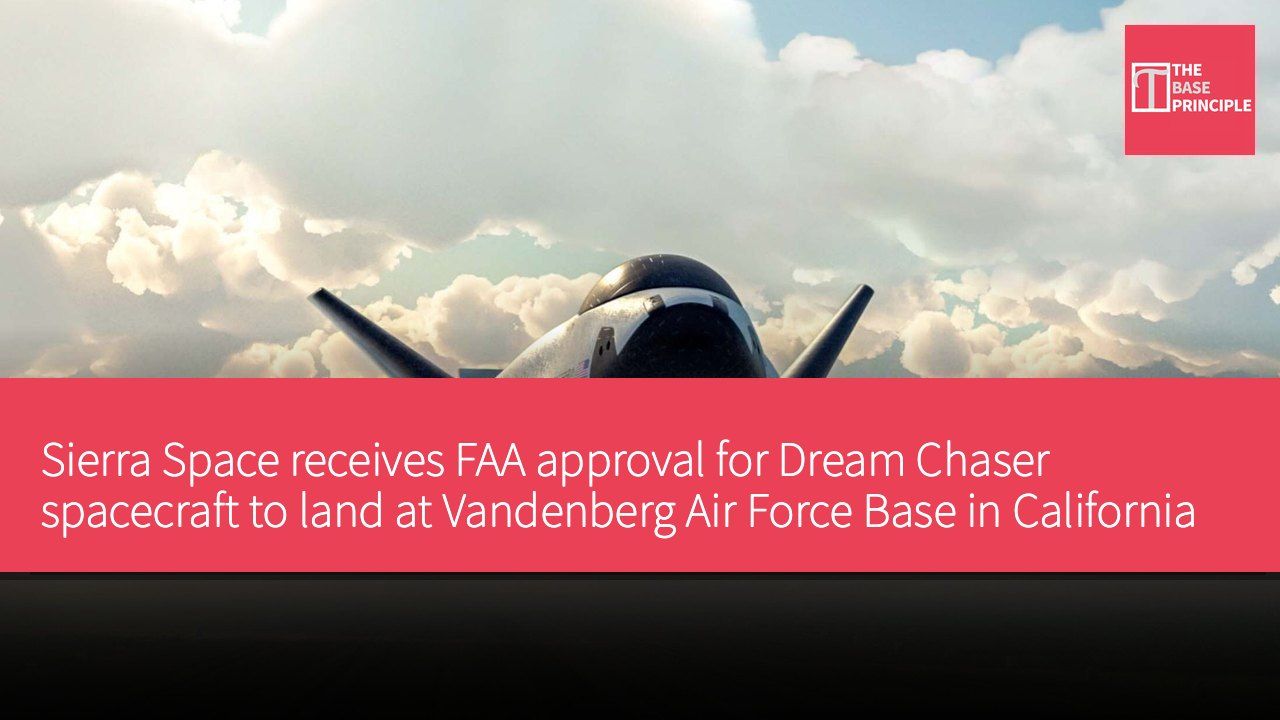
- Sierra Space has received FAA approval for Dream Chaser to land in California.
- The FAA-issued license allows for up to four return missions per year.
- Dream Chaser offers runway landings, addressing limitations of traditional cargo spacecraft.
- The first mission still depends on the availability of the Vulcan Centaur rocket.
Sierra Space has obtained critical regulatory approval, bringing its Dream Chaser spacecraft closer to its first orbital flight. The Federal Aviation Administration (FAA) has authorized the spacecraft to return from orbit and land at Vandenberg Space Force Base in California. This authorization addresses a key aspect of Dream Chaser's flight operations. The spacecraft's first mission will launch from Florida aboard United Launch Alliance's (ULA) Vulcan Centaur rocket, then traverse the Earth's atmosphere, ultimately landing on a conventional runway.
Details of the FAA License
The FAA issued a vehicle operation license for Dream Chaser on November 9, which Sierra Space confirmed the following day. The five-year license allows for up to four returns per year without changing the vehicle configuration or mission outline. Vandenberg is now designated as the spacecraft's landing site, differing from Sierra Space's original plan. In an environmental assessment conducted in 2024, the company had listed the Kennedy Space Center's former shuttle runway as its preferred landing site.
The recently issued FAA license designates Vandenberg as the landing destination for Dream Chaser and provides an approved runway for Sierra Space's first flight. However, the FAA's approval does not set a launch date, and the timing of the mission still depends on the availability of the Vulcan Centaur rocket.
Design Advantages of Dream Chaser
The first Dream Chaser spacecraft, Tenacity, combines a lifting body design with foldable wings, allowing it to fit within the payload fairing of the Vulcan during launch. Once in orbit, the spacecraft can carry approximately 12,100 pounds of cargo, with a return capacity of up to 4,080 pounds, according to the FAA's environmental assessment. This capability addresses a significant limitation of traditional cargo spacecraft, which typically land with the aid of parachutes and often involve ocean recovery.
In contrast, Dream Chaser offers runway landings.
Sierra Space states that the cargo returning from the journey experiences no more than 1.5 times Earth's gravity. The company also claims that the spacecraft can utilize runways designed for Boeing 737 aircraft, a flexibility that may benefit experiments and sensitive equipment that require careful handling after landing.
Challenges for Future Missions
Dream Chaser was originally selected for NASA's Commercial Resupply Services program in 2016, with Sierra Space awarded a contract to develop the spacecraft for cargo delivery to the International Space Station. However, multiple development delays and propulsion system issues have pushed back its debut. Ultimately, NASA and Sierra Space revised their agreement in September 2025, removing the requirement for the spacecraft to dock with the space station during its initial demonstration. Tenacity will conduct an independent free-flight mission.
If the demonstration is successful, NASA may still purchase future resupply missions.
Sierra Space has also scheduled national security and commercial customers for the maiden flight. In September, the company confirmed that these customers would provide cargo to be launched alongside NASA's cargo. However, the company has not disclosed the identities of these customers or the specific equipment planned for launch. Sierra Space previously set the target for the first mission at the end of 2026, linking that timeline to the availability of the Vulcan Centaur. As the year-end approaches, the launch window remains uncertain. The FAA's approval has removed another regulatory hurdle, but Tenacity still needs to secure a launch vehicle and complete the remaining mission preparations before its runway return becomes a reality.
Development and Challenges of Dream Chaser
Sierra Space's FAA approval is crucial for the development of Dream Chaser, marking not only its technological maturity but also its potential in the commercial space sector. While Vandenberg is now confirmed as the landing site, the launch date remains uncertain, reflecting the common time uncertainties in space missions. Additionally, Dream Chaser's design offers the advantage of runway landings, which is a significant breakthrough for transporting sensitive cargo. As future missions progress, Sierra Space must overcome several challenges to ensure its commercial success.