
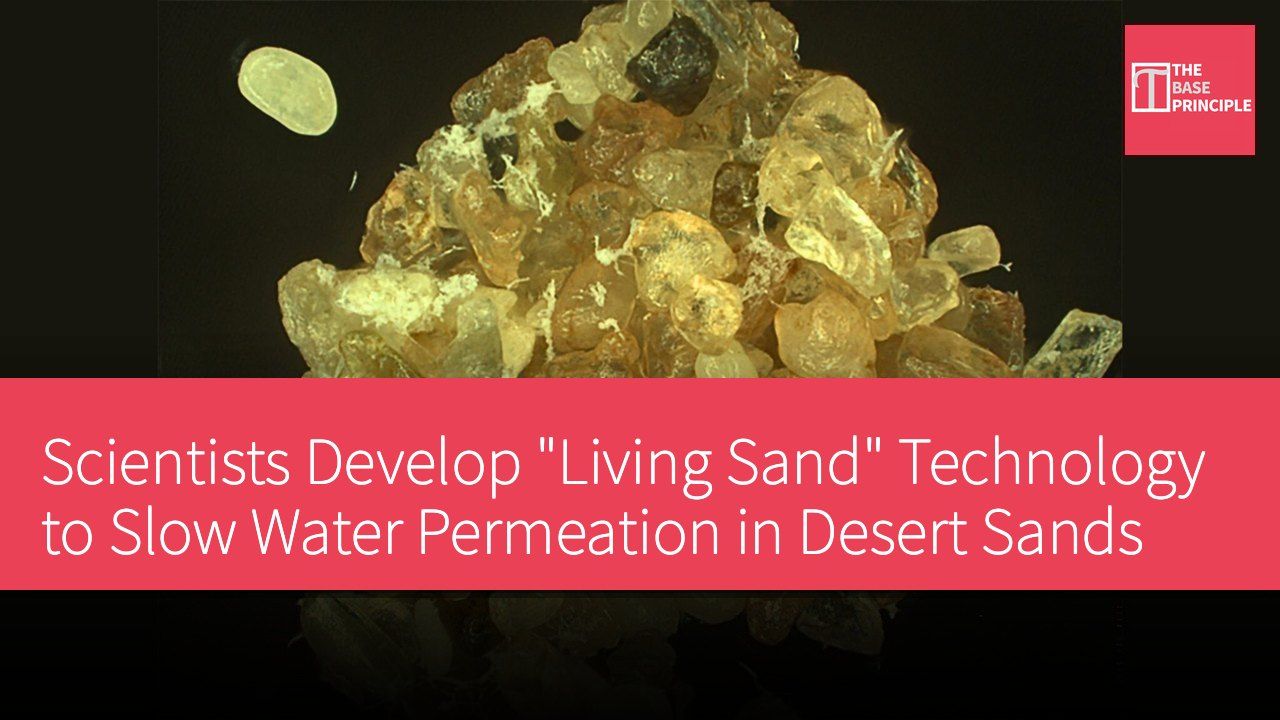
- The "living sand" developed by scientists can slow down water permeation.
- Microbial fibers can be used to stabilize soil and reduce wind erosion.
- Laboratory studies show that cellulose can effectively bind sand grains.
- The technology is still in the laboratory stage and has not been tested for practical applications.
Bacteria capable of spinning cellulose fibers can bind loose desert sand into a stronger material that drains water much more slowly than regular sand, although this research is still in the laboratory stage. Scientists from Khalifa University in the UAE, Empa in Switzerland, and ETH Zurich tested whether microbial fibers could bind sand grains together, similar to how plant roots, fungal mycelium, and microbial secretions do in soil, and alter the flow of water within it.
Methods for Producing Living Sand
The research team employed two methods to produce "living sand." The first method involved directly cultivating microorganisms in the sand to create what is termed "living sand," which reduced permeability by about six times in drainage tests. The second method involved separately cultivating sheet-like bacterial cellulose and layering it between sand, which reduced permeability to about one twenty-eighth of untreated sand. The researchers used the cellulose-producing bacteria Komagataeibacter medellinensis and two strains of the fungus Schizophyllum commune, with sand sourced from dunes near Al Ain in the UAE, as well as standardized laboratory sand for some strength tests.
They sterilized the sand before adding microorganisms and nutrient solutions. Microscopic images showed that cellulose adhered to the surface of sand grains and linked adjacent grains together.
Gustav Nyström, head of the cellulose and wood materials laboratory at Empa, described the result as "a natural composite material." The samples produced by bacteria were stronger. Within seven days, a sand column approximately 6 cm (2.4 inches) high could be securely removed from the mold and cut into small pieces, which remained intact in water. Although fungal samples could also bind sand grains, they were more fragile, with some breaking during removal from the mold or after drying and cutting. The cellulose sheets acted similarly to reinforcing fabric, effectively dispersing applied forces.
In a demonstration involving a weight of 10 kg (22 lbs), untreated sand blocks collapsed more severely than those using cellulose sheets, while sheets cultivated for longer periods typically provided stronger samples, significantly reducing water permeability.
Potential Applications of Microbial Fibers
The team believes that microbial fibers could provide biodegradable alternatives to certain synthetic materials used for soil stabilization, and stronger connections between sand grains may help reduce wind erosion. The experiments did not measure dust emissions. Nyström noted that this method allows researchers to introduce organic matter and water into the sand, stabilizing it to some extent. For sand with fibers growing between the grains, its water retention capacity increased from about 20.2% to 25.5%, a change scientists consider slight. Three researchers have disclosed a pending patent application.
However, this research remains in the laboratory stage. Microorganisms obtain moisture and nutrients under controlled conditions, requiring oxygen for growth. The growth of bacterial sand columns is uneven, with the strength at the top significantly lower than at the bottom. The experiments did not test crop growth or determine the material's longevity under desert conditions. Related research has been published in the journal Carbohydrate Polymers.
Future Potential and Challenges of Living Sand Technology
This research demonstrates the potential applications of microbial cellulose in desert environments, particularly in reducing water permeation and stabilizing soil. As the impacts of global climate change intensify, desertification becomes an increasingly pressing issue, and this technology offers a sustainable solution. However, the technology is still in the laboratory stage, lacking data on practical applications and assessments of long-term effects, necessitating further research to ensure its effectiveness and feasibility in natural environments.