
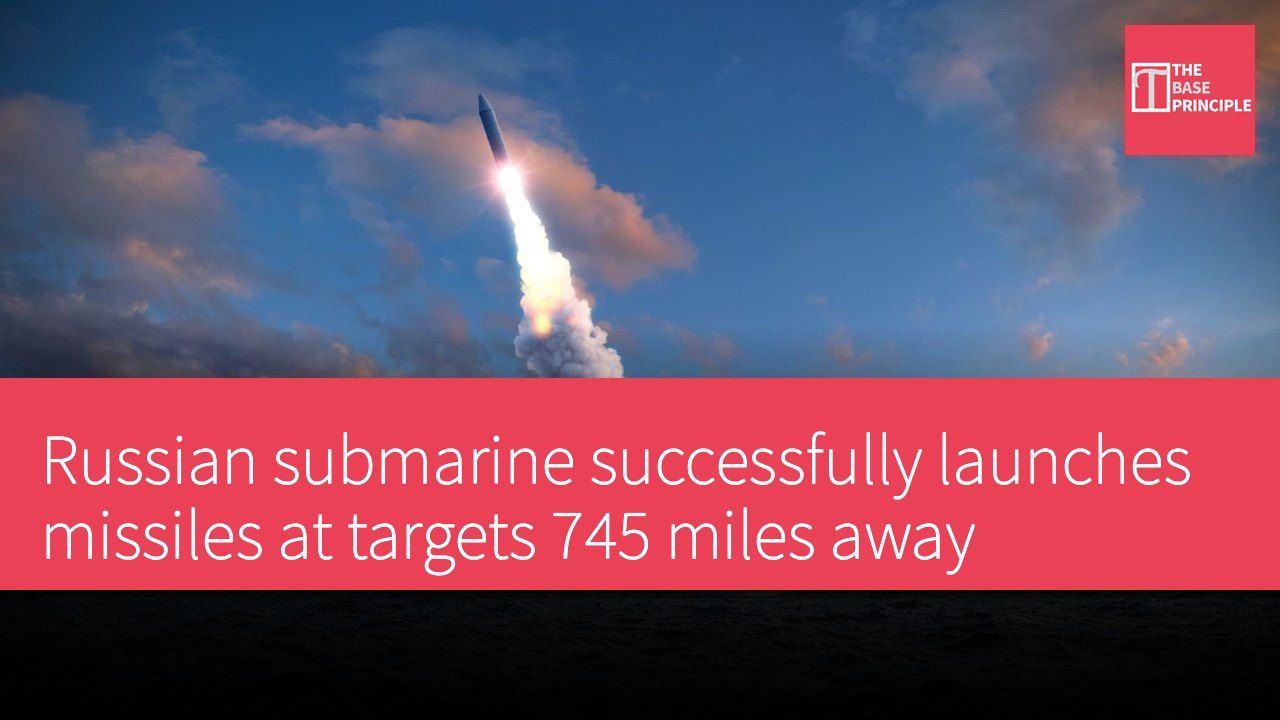
- The Russian submarine successfully launched Oniks and Kalibr missiles, demonstrating its combat capabilities.
- During the exercise, the submarine showcased its ability to attack both maritime and land targets.
- The Novosibirsk submarine is the first serial production vessel of the 885M class, equipped for various mission functions.
- This exercise emphasized Russia's submarine strike capabilities in the Pacific region.
A Russian Pacific Fleet nuclear submarine launched Oniks and Kalibr cruise missiles. These weapons were fired by the Novosibirsk submarine, which belongs to the 885M Yasen-M class of multipurpose nuclear submarines. Reports indicate that the Kalibr successfully hit its designated target from 745 miles away, while the Oniks cruise missile targeted a maritime objective, traveling 105 miles.
Submarine exercise demonstrates combat capabilities
This exercise showcased the submarine's ability to attack maritime and land targets while operating underwater in the Pacific Ocean. These launches were part of a planned military training activity aimed at testing the submarine's operational capabilities. The two launches highlighted the submarine's ability to utilize different missile systems to engage various types of targets, combining maritime strike capabilities with long-range attacks on land-based objectives.
During the missile launches, vessels from the Russian Pacific Fleet protected the exercise area, which was closed to civilian ships and aircraft. The Novosibirsk submarine is part of Russia's 885M Yasen-M class of multipurpose nuclear submarines, designed to perform multiple missions, including attacking surface ships and striking land targets with cruise missiles.
According to TASS, this submarine is the first serial production vessel of the 885M class, with its keel laid on July 26, 2013, and launched on December 25, 2019. On September 28, 2022, the submarine arrived at its permanent base in the Kamchatka region, joining the Russian Pacific Fleet alongside the Knyaz Oleg submarine, which is a 955A Borei-A class strategic nuclear submarine.
The Yasen-M program is a crucial component of Russia's modern naval capabilities, providing multipurpose submarines capable of conducting operations in various maritime environments. The Oniks and Kalibr missile series are the primary weapons associated with Russia's Yasen and Yasen-M class submarines. Oniks is an anti-ship cruise missile designed to target surface vessels. The use of Oniks in this exercise simulated an attack on opposing naval forces.
The Kalibr series includes cruise missiles designed for different missions, including strikes against land-based targets. In the reported exercise, the missile was used to attack a designated target located at the Kura test range. According to the Russian Ministry of Defense, these successful launches demonstrated the ability to simultaneously employ two missile systems within a single training event. However, the Ministry's statement did not provide independent verification results or disclose additional technical details regarding missile performance.
Importance of submarine strike capabilities
The missile exercise involving the Novosibirsk highlights Russia's ongoing emphasis on submarine strike capabilities in the Pacific region. By launching Oniks and Kalibr cruise missiles at maritime and coastal targets, the submarine demonstrated the practical application of two key weapon systems associated with the Yasen-M class. While the Russian Ministry of Defense reported that both missiles hit their designated targets, the broader significance of the exercise lies in showcasing the submarine's multipurpose role and its contribution to the Russian Pacific Fleet.
Impact of submarine exercises on regional military balance
The missile exercise conducted by the Novosibirsk submarine not only showcased its technical capabilities but also reflected Russia's military strategy in the Pacific region. The submarine's ability to simultaneously strike maritime and land targets demonstrates its strategic value as a multipurpose asset. Such exercises help enhance the deterrent capability of the Russian Navy, particularly in competition with the military forces of other nations. As regional dynamics evolve, the submarine's strike capabilities may become a significant factor influencing military balance.