
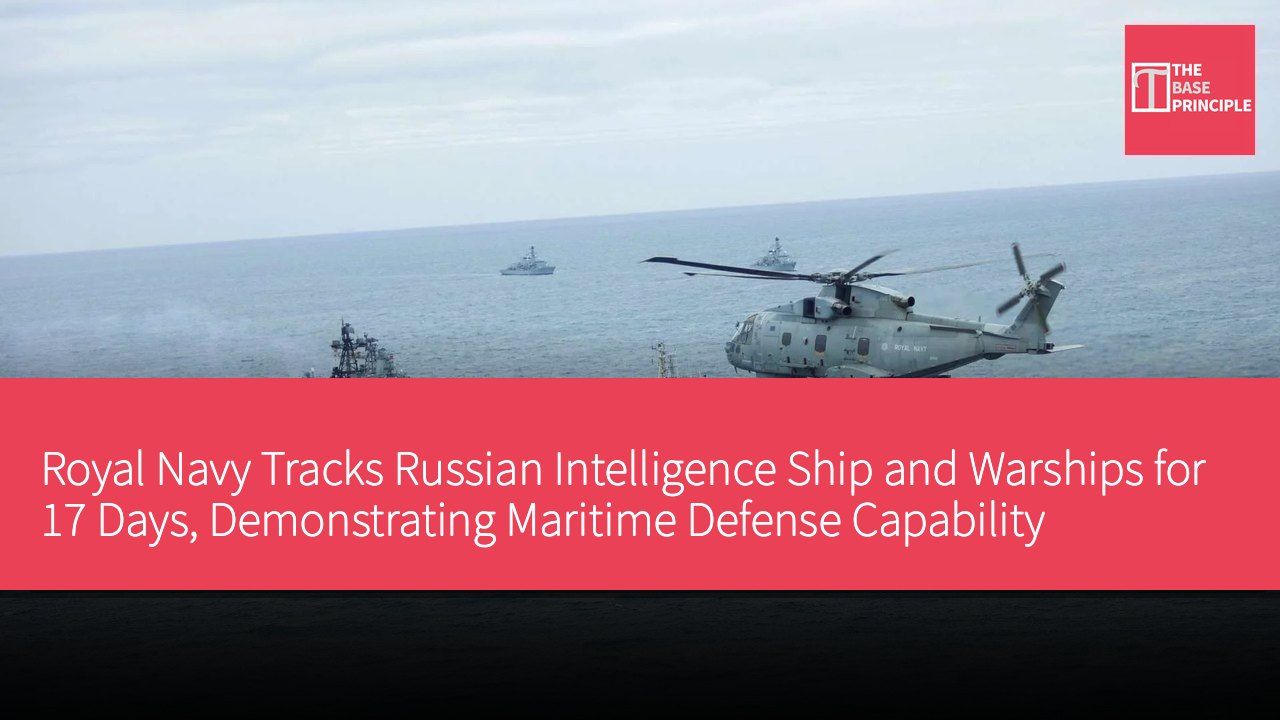
- The Royal Navy monitored Russian vessels over a 17-day period.
- Helicopters and ships were used to protect UK maritime routes and contribute to NATO defense.
- Helicopter missions monitored the movements of a Russian intelligence ship and NATO exercises.
- The surveillance operations held significant strategic importance near Scotland.
The Royal Navy conducted surveillance operations on Russian vessels over 17 days this autumn, utilizing helicopters, a destroyer, and a coastal patrol vessel to monitor a Russian intelligence ship during NATO exercises and to escort Russian warships transporting sanctioned cargo through the English Channel. The specifics of these operations were disclosed in a statement on November 2. Three independent operations took place from September 29 to October 14, involving Merlin Mk2 helicopters and Wildcat helicopters, as well as two surface vessels, HMS Dauntless and HMS Tyne.
The Royal Navy described these operations as a demonstration of its capability to protect UK maritime routes and contribute to NATO defense.
Execution of Helicopter Missions
The helicopter mission "Icebreaker" took place from September 29 to October 8. Four Merlin Mk2 helicopters and approximately 90 sailors from 814 and 824 Naval Air Squadrons quickly departed from RNAS Culdrose in Cornwall to HMS Gannet in Prestwick. From there, the crew utilized the helicopter's maritime monitoring sensors to track the Russian Vishnya-class intelligence ship Viktor Leonov, which was operating in waters near the Hebrides off the northwest coast of Scotland.
The ship was monitoring NATO vessels participating in the "Strike Warrior" exercise, which involved over 2,000 personnel from six allied nations. While Merlin helicopters are primarily used for anti-submarine warfare, they also possess strong maritime reconnaissance capabilities. The same crew also observed the arrival of the Astute-class submarine HMS Agamemnon at HM Naval Base Clyde and conducted sonar immersion training during the submarine's diving tests.
Coordinated Monitoring by Destroyer and Patrol Vessel
Simultaneously, the Type 45 destroyer HMS Dauntless and the River-class patrol vessel HMS Tyne followed the Russian frigate Neustrashimy from October 1 to 14, escorting sanctioned cargo through the English Channel. Reports indicate that Dauntless is equipped with advanced radar and Sea Viper missile systems, while Tyne provided continuous patrolling and monitoring capabilities. After Dauntless took over monitoring of Neustrashimy, Tyne shifted its focus from October 11 to 14 to another target, the Ropucha-class landing ship Aleksandr Shabalin, which was escorting the cargo ship
MV Energy-2 and the tugboat Proton towards the Baltic Sea. Tyne departed from North Shields and received assistance from the Wildcat helicopter of 815 Naval Air Squadron, which extended the vessel's monitoring range.
Analysis indicates that the surveillance operations near Scotland are of significant importance, as the area is located in the North Atlantic, close to the Greenland-Iceland-UK corridor, which is used to monitor vessel movements between the Norwegian Sea and the Atlantic. Intelligence vessels can gather information on allied naval movements, communications, and electromagnetic activities, thus posing a security risk near NATO exercises. The combination of these missions demonstrates a multi-layered response strategy: rapidly deployable helicopters, destroyers equipped with air defense radar, and patrol vessels capable of long-term presence. The Royal Navy stated that these operations show its ability to respond swiftly to Russian naval activities while monitoring its maritime routes.
Naval Operations and Geopolitical Impact
The Royal Navy's surveillance operations not only showcase its maritime defense capabilities but also reflect the current backdrop of geopolitical tensions. With increased Russian activity during NATO exercises, these operations help gather intelligence and ensure the security of maritime routes. Particularly, the surveillance operations near Scotland highlight the strategic importance of the region in the North Atlantic, effectively monitoring vessel movements from the Norwegian Sea and the Atlantic. The successful execution of these operations indicates the Royal Navy's preparedness and capability in addressing potential threats.