
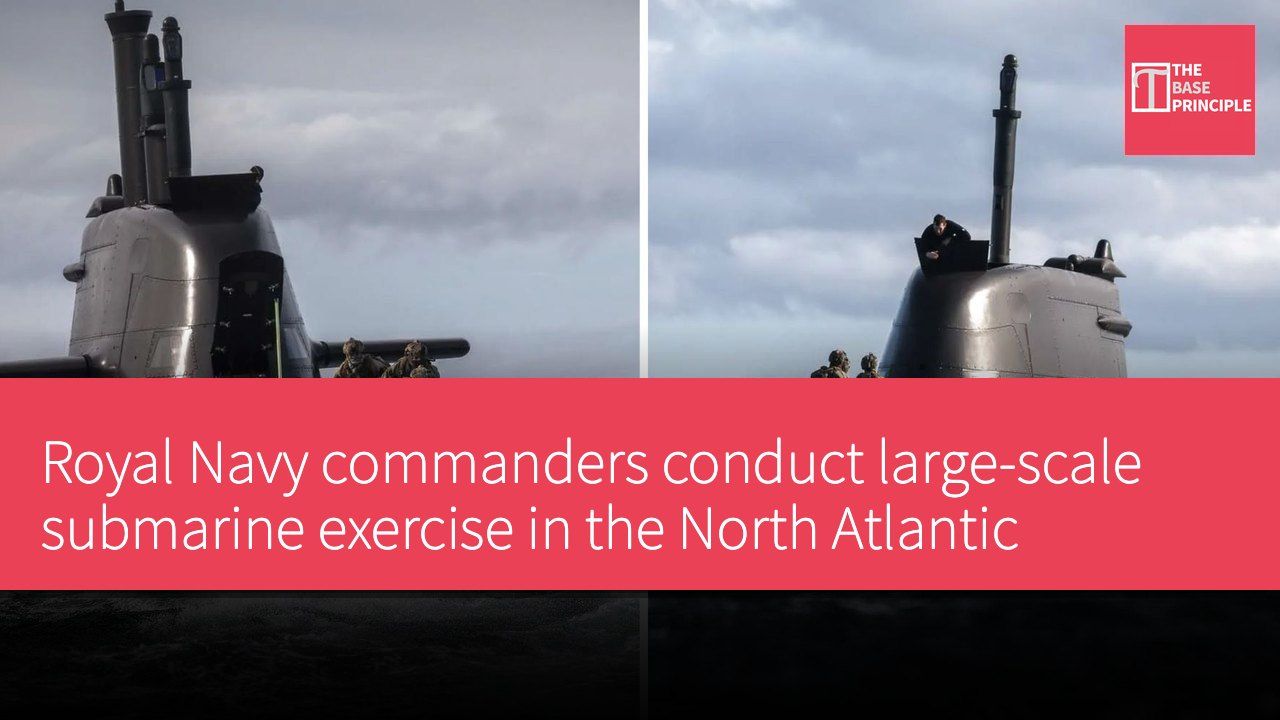
- This exercise, named "Strike Warrior," is one of the largest for UK commandos.
- The exercise involves eight warships and 19 aircraft, marking the first joint operation of all specialist elements of the UK's elite commando forces.
- The exercise aims to rehearse allied crisis response operations in the High North and North Atlantic regions.
- The exercise underscores the growing emphasis by the UK and its allies on operating together in strategically vital areas.
British special forces were spotted aboard a submarine during a daring operation in the depths of the North Atlantic, one of the largest exercises for UK commandos in 15 years. The Royal Navy said the submarine operation demonstrated a powerful combination of cooperation with allies, with a German submarine responsible for target identification while special forces conducted a clandestine landing ashore, and Portugal provided fire support. The training, named "Strike Warrior," saw special forces exercising aboard an attack submarine. The operations officer of 148 Battery said, "This level of complexity and coordination of real-time assets has not been reached in nearly 30 years.
"We want to demonstrate to the UK Commandos, the wider UK defence and NATO special operations forces community the missions we are prepared to execute against future threats," he said, declining to give his name for operational reasons. "Combat is our focus; we are ready to employ specialist assets to deliver multi-domain fires and targeting."
Exercise Scale and Participating Nations
Green Berets appeared at Cape Wrath, at the northwestern tip of the British mainland, marking the first time since the Afghanistan war that all specialist elements of the UK's elite commando forces have operated jointly. According to a released press statement, the exercise involves eight warships and 19 aircraft. In the early phase, 148 Battery controlled naval gunfire from the Standing NATO Maritime Group One, the alliance's standing maritime task group for northern European waters. The Dutch frigate HNLMS Van Amstel and the Royal Canadian Navy frigate HMCS St. John's rendezvoused with special forces at observation posts to deliver fire strikes onto "enemy" positions.
According to the press release, the entire "Strike Warrior" exercise began on September 28 and will conclude on October 9, with more than 2,000 personnel from six nations (UK, Netherlands, Canada, Germany, Norway, US) deployed across Scotland, covering the Western Isles, the North West Approaches, Galloway, the Borders, and the North Sea, conducting commando-led drills aimed at rehearsing allied crisis response operations in the High North and North Atlantic regions.
Strategic Significance of the Exercise
Specialist Royal Navy and Army commandos from 148 Battery, trained to conduct reconnaissance and direct naval gunfire from behind enemy lines, slipped quietly from rigid-hulled inflatable boats to establish observation posts from which to direct fire from the Portuguese warship NRP Dom Francisco de Almeida onto "enemy" positions. The scale of "Strike Warrior" underscores the growing emphasis by the UK and its allies on operating together in the strategically vital High North and North Atlantic regions. The exercise is designed not only to test individual unit capabilities but also to examine how ships, aircraft, submarines, commandos, and specialist units function as a coordinated multinational joint force.
New Trends in UK-Allied Military Cooperation
The "Strike Warrior" exercise not only showcases the capabilities of the Royal Navy but also underscores close cooperation with allies. As the global security environment evolves, joint operations by NATO members in the High North and North Atlantic are becoming increasingly important. Such exercises help enhance coordination and response speed among national militaries, ensuring rapid and effective action against future threats. With geopolitical tensions rising, such multinational joint exercises will become a key trend in future military cooperation.