
Key Points
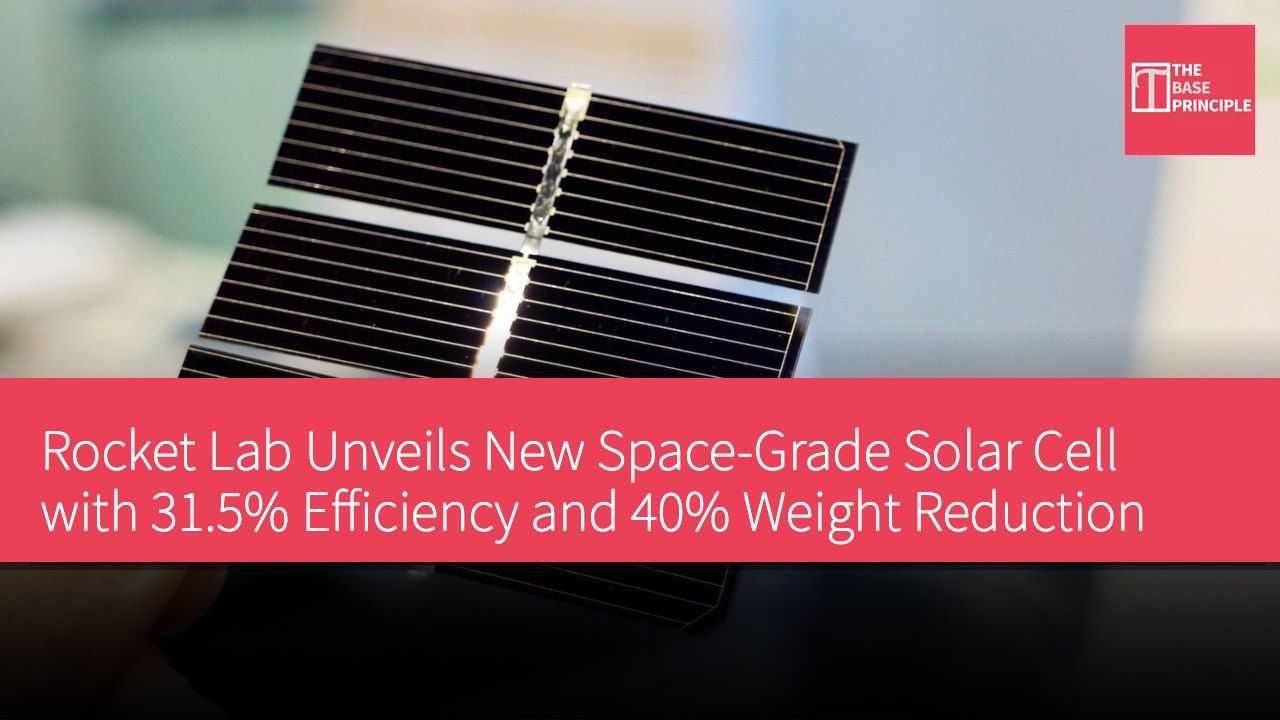
- The IMM Apex solar cell achieves 31.5% efficiency and a 40% weight reduction.
- The new cell eliminates the need for a germanium substrate, reducing reliance on the supply chain.
- The cell offers plug-and-play compatibility, avoiding costly retooling expenses.
- Rocket Lab's new technology provides a better option for commercial spaceflight.
New Cell Addresses Supply Chain Issues
This centralization poses significant supply risks for space programs. Additionally, germanium is merely a byproduct of zinc mining, so refineries cannot easily increase production. The high purity requirements further restrict the market. As a result, major importers like the United States face severe cost increases and potential shortages. However, these new solar cells could solve this problem. According to the company, the IMM Apex solar cell offers immediate compatibility for satellite manufacturers without the need to redesign systems. It serves as a plug-and-play replacement, allowing companies to avoid costly retooling expenses. The platform has proven its worth on NASA's Ingenuity Mars helicopter and is currently powering over 1,100 satellites in orbit. The upgraded facility is now producing cells in the hundreds of kilowatts range to keep up with growing global demand. The company stated, "In addition to being free from germanium supply constraints, the optimized manufacturing process and targeted capital investments enable production at a high efficiency of hundreds of kilowatts to meet the growing demand." After more than a decade of rigorous testing, the IMM Apex is now ready to meet diverse mission requirements and is undergoing future upgrades. Standard solar cells are grown on thick germanium substrates, whereas IMM cells are grown inverted on a temporary substrate and then etched away. This process creates flexible, ultra-thin radiation-hardened cells composed of layers such as gallium nitride and indium gallium phosphide. Germanium is a key foundation for efficient space solar panels and infrared satellite optics. Spacecraft solar panels avoid using standard silicon and instead opt for multi-junction III-V solar cells. These cells use layers like gallium nitride grown on germanium substrates. The germanium substrate provides structural support and absorbs infrared light. Wall Street reacted positively to the announcement, with RKLB stock rising as market analysts recognized the commercial potential of overcoming the germanium challenge.The Commercial Potential of IMM Apex
Clevenger added, "With IMM Apex, customers get a product that is efficient, lightweight, and germanium-free, combining proven reliability with faster production times. The IMM Apex is designed to power the most ambitious missions more cost-effectively without compromising performance." As galaxy expansion and interplanetary ambitions grow, power remains the ultimate challenge. Rocket Lab's combination of lighter cell weight and supply chain independence has positioned the company beyond better solar technology, clearing the runway for the next era of commercial spaceflight.
Item Specification Initial Conversion Efficiency 31.5% Battery Mass Reduction 40% Number of Satellites Currently in Orbit Over 1,100
The Impact of IMM Apex on Space Missions
The launch of the IMM Apex solar cell marks a significant breakthrough in space technology, particularly in terms of weight reduction and decreased reliance on the germanium supply chain. The weight and cost issues of traditional solar cells pose challenges for space missions, but the design of the new cells offers immediate compatibility, reducing the need for system redesign. This not only improves launch efficiency but also promotes the development of commercial spaceflight, as it meets growing demand and provides a more reliable energy solution for future space exploration.
H
About the author
Henderson