
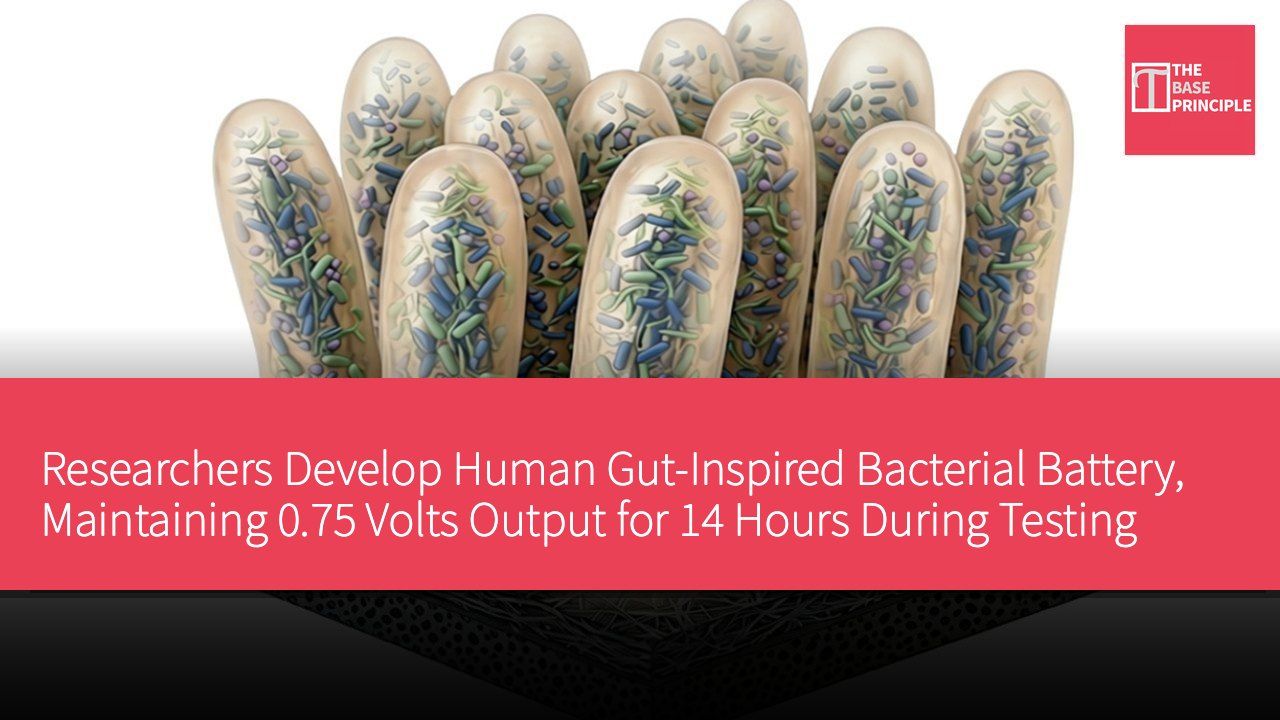
- The bacterial battery developed by researchers is inspired by the villi structure of the human small intestine.
- The battery maintained an output of approximately 0.75 volts for 14 hours during testing.
- The bacterial-powered battery generates electricity through microbial metabolic activity and can be installed in wastewater pipes.
- The research is still in its early stages, with improvements needed in bacterial distribution to enhance performance.
Researchers at Binghamton University have developed a bacterial-powered battery inspired by the human small intestine, which maintained an output of approximately 0.75 volts for 14 hours during testing. The device features a flexible, finger-like structure inspired by villi, designed to provide more space for bacterial growth while improving nutrient delivery and waste removal. These tiny projections typically help the intestine absorb nutrients, aiding in the development of a model that uses spore-forming bacteria for power generation. The research team created these structures using flexible polymer hydrogels and embedded Bacillus subtilis within them.
These structures serve as the anode of the battery, with the activity of the bacteria contributing to electricity generation. The team stated that this technology could eventually be installed in wastewater pipes, utilizing organic waste as a nutrient source to generate power for low-power devices.
How the Bacterial Battery Works
Bacterial-powered batteries generate electricity by harnessing microbial metabolic activity. However, their performance partly depends on the efficiency of bacteria in receiving nutrients and expelling waste. Traditional two-dimensional electrodes provide limited surface area for bacterial growth. While porous materials offer additional space, they can become clogged as bacteria form biofilms, restricting the movement of nutrients and waste. "Porous structures are susceptible to biofilm formation, so we encounter many issues related to nutrient delivery, waste accumulation, or uneven biofilm growth," said Professor Choi Seok-hoon of Binghamton University's Electrical and Computer Engineering department.
To address these issues, Professor Choi and his doctoral students Zhang Ruohan and Wang Botian turned to the structure of the small intestine. Villi provide a larger surface area while allowing nutrients to move over relatively short distances. The researchers aimed to replicate these advantages in flexible battery electrodes.
Future Applications and Challenges
They created finger-like projections from a polymer hydrogel commonly used in biomedical applications. This material enabled them to construct three-dimensional structures that could accommodate bacteria throughout the entire electrode. The bacteria-containing structures form the anode, while an improved carbon cloth cathode is located on the opposite side of the ion exchange membrane. These components work together to allow the device to generate electricity as bacteria metabolize nutrients. The researchers envision placing future versions of the bio-battery in wastewater pipes, allowing microorganisms to utilize organic matter in the water as fuel. "We can place this bio-battery in wastewater pipes because it can easily integrate with the surrounding environment," Professor Choi stated.
The flexible hydrogel allows the battery to adapt to different pipe shapes and sizes. Such systems could ultimately provide power to small sensors without the need for traditional batteries.
However, the research is still in its early stages. The reported voltage was maintained under continuous supply of nutrient media, and the team has yet to demonstrate the system's operation within wastewater pipes. Researchers also hope to simplify manufacturing through a single-step printing process, making the structures easier to produce at scale. Another goal is to improve the distribution of bacteria within the device. In the human gut, microorganisms are primarily concentrated in the mucus layer near the surface of the villi. The current design embeds bacteria throughout the hydrogel. Future work will explore whether replicating more of the gut's physical and chemical conditions can help maintain bacterial viability and improve performance.
Related research findings have been published in the journal Small.
Potential Applications and Development Directions for Bacterial Batteries
The development of bacterial-powered batteries demonstrates the potential of biotechnology in the energy sector, particularly in generating electricity from organic matter in wastewater. This technology could provide continuous power for low-power devices while reducing the environmental impact of traditional batteries. However, the technology currently faces challenges, including effective bacterial distribution and biofilm formation issues. Future research will focus on optimizing these factors to enhance battery performance and drive its commercialization.