
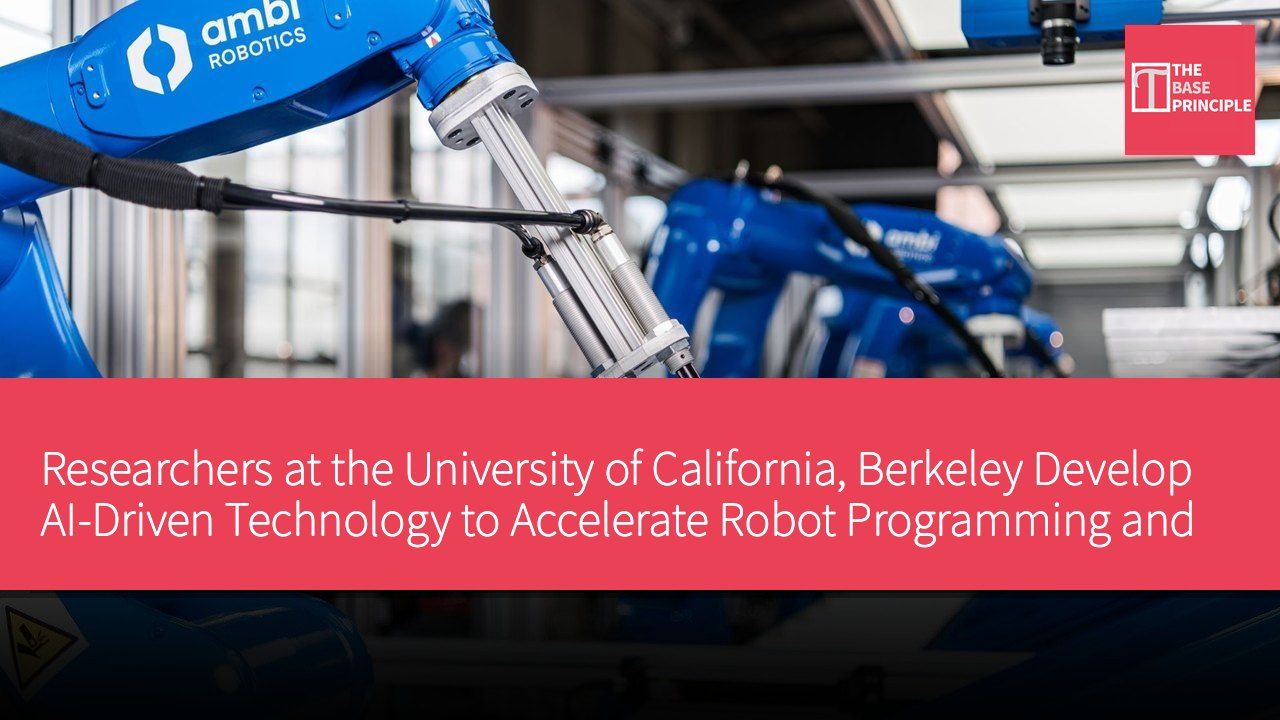
- The AI technology developed by Berkeley accelerates robot programming and training processes.
- Agent robot technology combines multiple AI agents to generate control programs, enhancing robot performance.
- This technology reduces the need for large amounts of training data and manual engineering.
- Initial applications focus on industrial environments, showing significant improvements in package sorting capabilities.
Researchers at the University of California, Berkeley have developed an AI-based technology that significantly accelerates robot programming and training to tackle real-world tasks. This method, known as "agent robot technology," utilizes multiple AI agents to generate robot control programs, test them in simulated environments, and continuously refine their performance. This technology reduces the need for large amounts of training data and manual engineering, both of which have been major challenges limiting the development of powerful robots. Early tests have shown improvements in robot task performance, indicating its potential applications in industrial automation and warehouse operations.
Advantages of Agent Robot Technology
This new robot programming method combines agent-based AI, physics-based simulation, and modular control systems to enhance robot performance without relying on large training datasets. Agent robot technology allows multiple AI agents to generate robot control programs, test them in simulated environments, identify failures, and revise their code before applying it to physical robots. This technology addresses two long-standing challenges in robotics: the extensive engineering required to program robot behaviors and the large amounts of real-world data needed for imitation learning.
The research team has released an industry-standard benchmark to assess robot performance in industrial tasks. Traditionally, robotics experts have relied on two broad approaches. Model-based robotics requires engineers to manually program how robots perceive objects, plan actions, and control behaviors, while model-free robotics uses demonstrations and imitation learning to teach robots to perform tasks. The former requires significant engineering effort, while the latter necessitates large datasets and lengthy training times. Agent robot technology aims to combine the strengths of these methods while reducing their limitations.
This approach employs a framework called "graph as policy," which breaks down complex robotic tasks into smaller, reusable skills, including object recognition, planning grasp actions, and moving the robot's end effector without colliding with surrounding objects. AI agents connect these individual skills to construct complete robot control programs. Using NVIDIA's Isaac simulation framework, researchers test these programs under various conditions, identify issues, and iteratively modify the code to enhance performance. This allows robots to undergo multiple rounds of virtual testing before engineers deploy the final program to physical machines.
One demonstration involved a robot using a sponge to wipe ink off a metal bar. Researchers provided the AI system with a short video and allowed it access to the simulation interface. Within an hour, the system generated and adjusted a physical simulation that replicated the task, including realistic sponge deformation. The AI then used this simulation and the "graph as policy" framework to generate the robot control program. It repeatedly tested and refined the code before transferring it to the physical robot. In one trial, the robot knocked over the metal bar due to not accurately considering the weight of the object.
The system updated its simulation using footage from this failure, revised the control program, and tested new approaches. This feedback loop enables AI agents to leverage failures in physical trials to improve simulations and refine subsequent attempts, potentially reducing the workload of manual engineering.
Applications of Technology in Industrial Logistics
This technology has also been tested in industrial logistics. A warehouse robotics company applied these methods to package sorting, analyzing production data and testing updates to robot behaviors. Reports indicate that each robot's sorting capacity improved by over 15,000 packages per year. The company has deployed these improvements in 30% of its U.S. fleet. Researchers have also released open-source code built on NVIDIA's Isaac simulation framework and provided an industry benchmark to evaluate robot performance across different tasks.
Initial applications focus on industrial environments, where repetitive operations provide opportunities to test and refine robot behaviors.
This approach could ultimately make robotic systems more adaptable to changing demands without the need for manual programming of every action or collecting large amounts of demonstration data for each new task. However, this does not imply that robots can independently master any real-world activity. Its immediate potential lies in making robot programming, testing, and improvement faster and more adaptable, particularly in structured industrial environments.
How AI Technology is Changing Robot Programming
The newly developed agent robot technology showcases the potential of artificial intelligence in robot programming, particularly in reducing reliance on traditional methods. By combining simulation and modular control, this technology not only enhances robot performance but also allows for rapid adaptation to changing demands in industrial environments. This is significant for improving production efficiency and reducing costs, especially in scenarios requiring extensive repetitive tasks. As the technology continues to evolve, more automation solutions may emerge, further advancing the process of industrial automation.